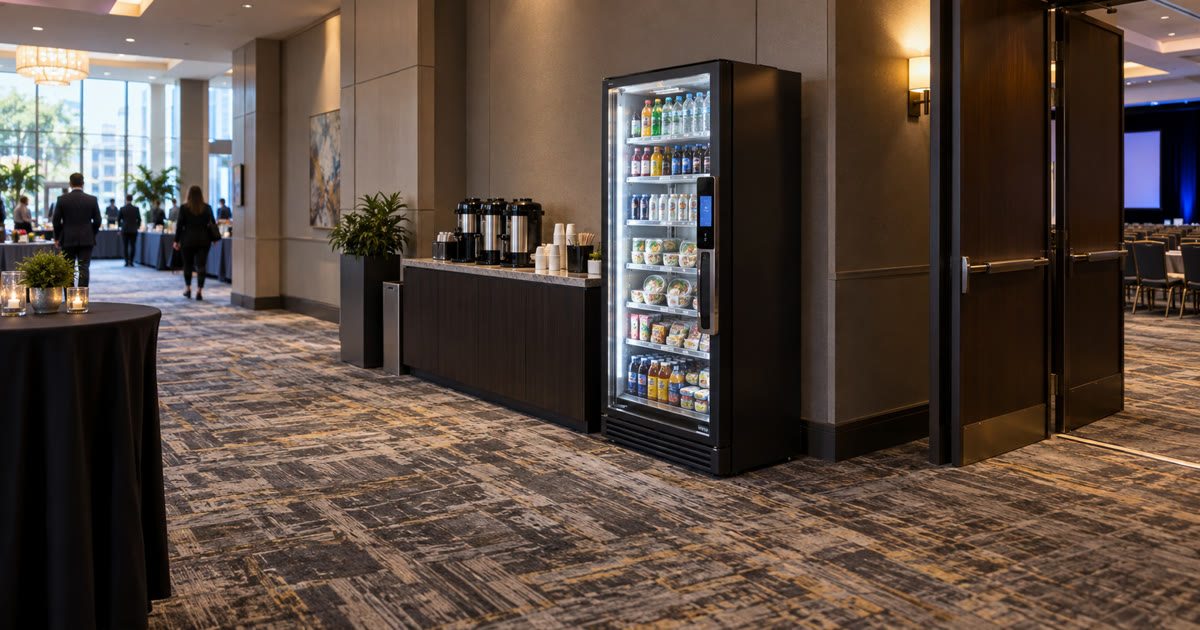
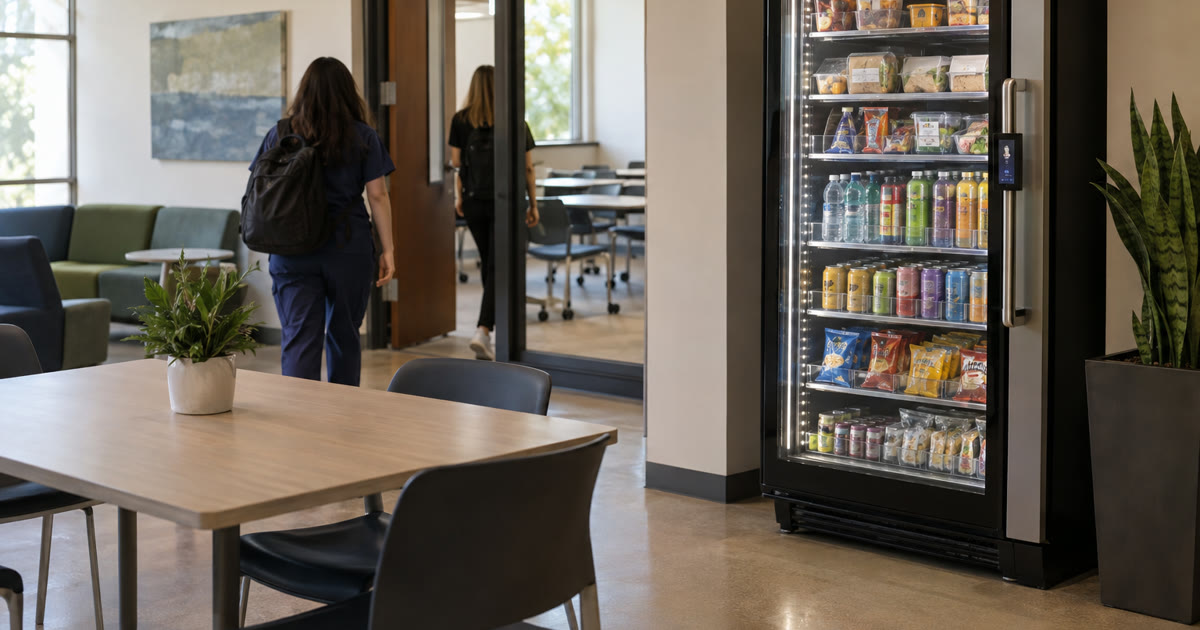
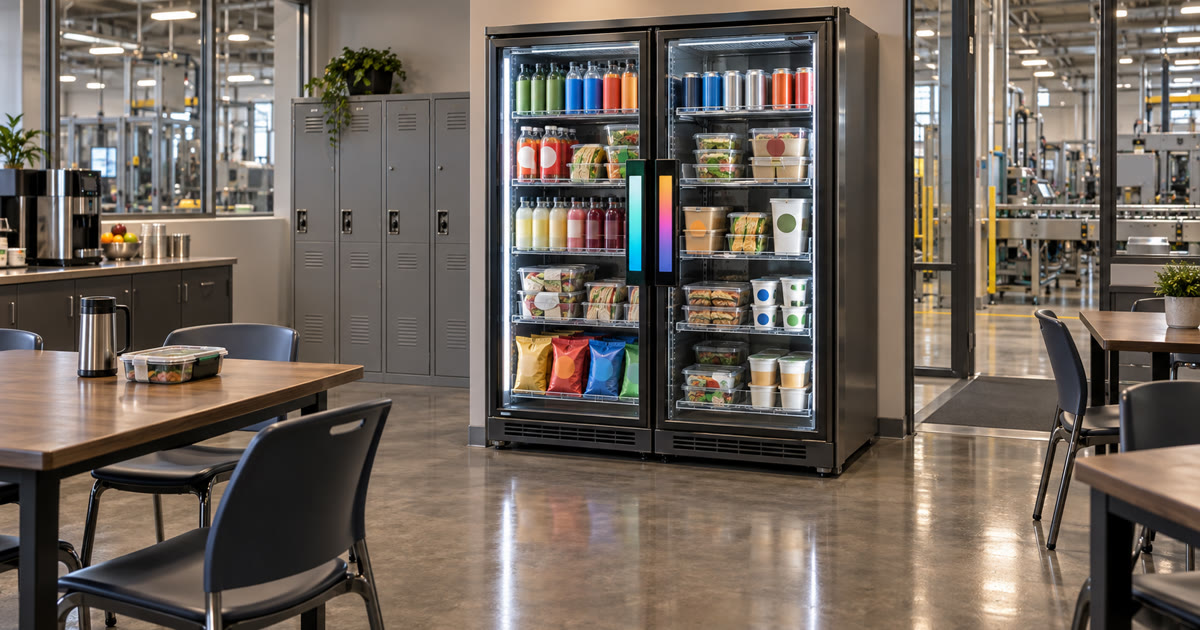
AI-powered vending machines should not be allowed to enter the building wearing a wizard hat.
That is the first thing Austin businesses should know before buying, leasing, hosting, or replacing a vending machine. “AI-powered” can mean useful inventory data, smarter restocking decisions, cashless vending, product-level visibility, and a better unattended retail experience. It can also mean someone glued the word AI to a vending machine and hoped nobody asked follow-up questions.
Ask the follow-up questions.
A modern vending machine can be a genuinely useful food-and-drink amenity for an office, apartment community, gym, hotel, clinic, warehouse, coworking space, or auto dealership. But the machine is not the strategy. The provider, placement, restocking model, payment support, service cadence, and site fit matter more than the shiniest screen on the front.
If your team is comparing AI-powered vending machines in Austin, use these questions before anyone sells you a snack robot with a LinkedIn headline.
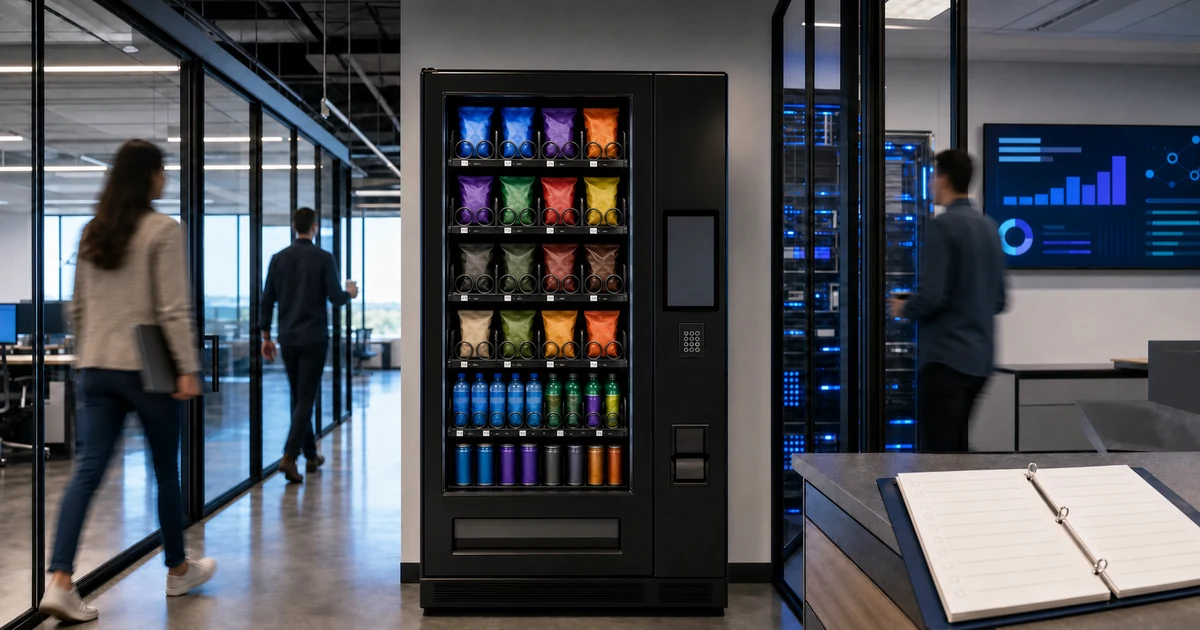
Ask what “AI-powered” actually means in the machine
The phrase “AI-powered vending machine” is doing a lot of unpaid labor right now.
Before buying or hosting one, ask the provider to explain what the system actually does. Does it track inventory? Does it report what sells and what sits? Does it help refine product assortment? Does it support cashless checkout? Does it alert the operator when restocking is needed? Does it connect to a real service workflow, or does it just produce a dashboard that everyone politely ignores?
The NIST AI Risk Management Framework says it is intended to help manage risks associated with artificial intelligence and improve the ability to incorporate trustworthiness considerations into AI products, services, and systems. That supports one narrow buying point: AI claims should be evaluated, not worshipped. It does not prove any vending machine, AI-powered vending machine, smart vending machine, smart fridge, inventory model, recommendation system, payment terminal, provider dashboard, Austin installation, future installation, Revvolto setup, or unattended retail experience is trustworthy, accurate, secure, compliant, or right for your site. Before the acronym finds a blazer and starts chairing the meeting, make it define its job. Source: NIST
Good AI vending language sounds practical:
- “The system helps show what products are moving.”
- “Inventory data helps guide restocking decisions.”
- “The operator can adjust assortment based on actual purchasing patterns.”
- “Alerts can reduce blind guessing around stock levels.”
Bad AI vending language sounds like a magician avoiding a warranty question:
- “It knows what customers want.”
- “It guarantees freshness.”
- “It optimizes satisfaction.”
- “It solves your breakroom problem automatically.”
The machine does not know your employees, residents, guests, patients, members, or customers. That language gets sloppy fast. It shows behavior. The operator still has to interpret it, stock it, clean it, service it, and stop pretending a dashboard is a food strategy.
Ask who owns the inventory learning loop
The most useful part of a smart vending machine is not that it has a screen. Screens are cheap. Vibes are cheaper. Ownership is the expensive part.
The real question is: who watches the product mix after the machine goes in?
A traditional vending machine can become snack archaeology if nobody pays attention. The good items vanish. The slow movers sit there like they are waiting for a bus from 2009. Someone notices the machine “doesn’t work for our people,” when the real problem is that nobody owned the learning loop.
AI-powered vending machines and smart vending systems should make that loop easier. They can help surface sales patterns, restocking needs, and product-level movement. But the software is not enough. Ask:
- Who reviews the vending machine data?
- How often is the product mix adjusted?
- Who decides what gets removed, added, or rotated?
- How are seasonal, shift-based, or location-specific patterns handled?
- What happens if the machine is technically stocked but practically useless?
That last question matters. A vending machine can be full and still wrong. Full of the wrong products is just failure with better shelf discipline.
For Austin businesses, the right setup should reflect the actual audience. A warehouse breakroom does not behave like a tech office. A gym lobby does not behave like a hotel. An apartment mailroom does not behave like a clinic staff area. If the provider uses the same product logic everywhere, that is not AI. That is copy-paste wearing deodorant.
Ask how payments, support, and accountability work
Cashless vending machines are now table stakes for most modern locations. People expect tap-to-pay, card payments, app-friendly checkout, and fewer coin-slot rituals from another century.
But payment convenience creates a second buying question: when something goes wrong, who handles it?
The PCI Security Standards Council publishes PCI DSS as a global standard for protecting payment account data. That supports one narrow point: payment responsibilities, processor roles, and support ownership should be clear before an Austin business adds cashless vending or smart vending. It does not prove PCI compliance for any vending machine, AI-powered vending machine, smart vending machine, smart fridge, payment terminal, processor, provider, software dashboard, Austin installation, future installation, Revvolto setup, checkout flow, employee purchase, resident purchase, guest purchase, or customer transaction. It also does not guarantee payment security, eliminate fraud risk, certify a payment experience, make the host responsible, or make “we accept cards” a complete answer. Payment language loves to sprint toward certainty with scissors. Do not let it. Source: PCI Security Standards Council
Ask the provider:
- Who owns payment support?
- What does the customer do if a charge looks wrong?
- Who handles failed transactions, refunds, or machine checkout issues?
- What payment methods are supported?
- What does the host team have to do when a user asks for help?
That last one is the sneaky cost. If every payment issue lands at the front desk, office manager, leasing desk, service advisor, trainer, or shift lead, the vending machine has quietly hired your staff without asking payroll.
A modern vending machine should reduce operational friction, not create tiny finance tickets in a snack wrapper.
Ask whether your site can support the machine
Not every business needs the same format. Some Austin locations fit an AI-powered vending machine. Some fit a smart fridge. Some fit a compact market setup. Some need a different placement plan before equipment shows up and starts asking for attention.
Site fit is where buying decisions get real.
Ask about:
- Foot traffic and daily headcount
- Access hours and audience rhythm
- Power availability
- Visibility and convenience
- Restocking access
- Nearby seating, breakroom, lobby, or shared-space behavior
- Whether the machine blocks movement, doors, packages, service paths, or staff workflow
The best location is not always the empty wall. Empty walls are persuasive little liars. They stand there with room and confidence and absolutely no opinion about whether anyone will use the machine.
A good provider should ask about the people and the path before recommending equipment. Where do users already pause? When do they need food or drinks? Who is on site after normal hours? Can restocking happen without creating hallway theater? Is the unit visible enough to be useful without turning into lobby furniture with a payment screen?
For qualified placements, Revvolto typically installs and operates the setup at no cost to the host. But “qualified” matters. Site fit depends on traffic, audience, placement, restocking access, and whether the amenity has a real job to do.
Ask whether the provider operates it or just drops it off
The biggest vending mistake is buying hardware when what you actually need is an operated service.
A vending machine without service is a side quest with refrigeration. Someone has to stock it. Someone has to restock it. Someone has to handle payment issues. Someone has to notice when the product mix gets weird. Someone has to service the machine when it acts like a printer with snacks.
That someone should not be your office manager, property manager, front desk team, service advisor, clinic administrator, trainer, or warehouse lead.
Revvolto helps qualified Austin-area businesses add smart vending, AI-powered vending machines, smart fridge options, and, where the site supports it, compact market setups without turning the host into the operator.
That is the real buying question underneath the AI language:
Are you getting a machine, or are you getting an amenity someone competent will actually run?
A good provider should be able to explain the format, placement, product mix, payment support, service cadence, restocking process, and host responsibilities in plain English. If the answer needs twelve buzzwords and a fog machine, keep asking.
Austin businesses do not need AI vending theater. They need a vending machine service Austin teams can understand without translating a sales deck, and one that makes food and drink access easier for the people already in the building.
Curious whether AI-powered vending machines, smart vending, a smart fridge, or a compact market setup fits your Austin location? Tell us about your space at https://revvolto.com/contact-us.
No-cost site assessment. No install pressure. No commitment.