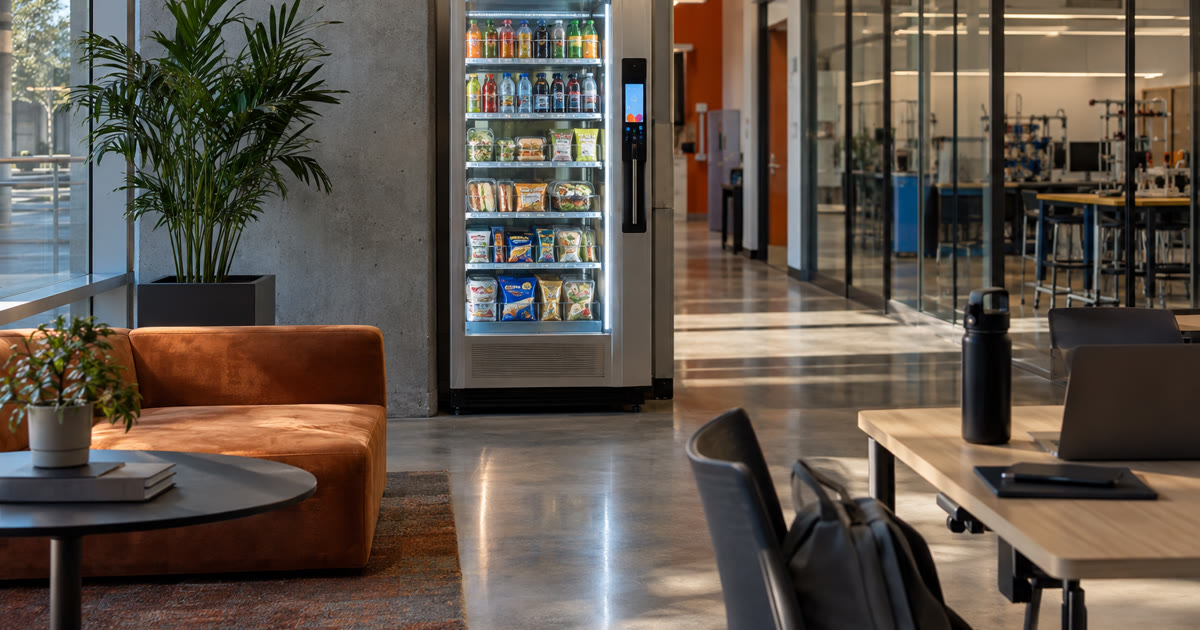
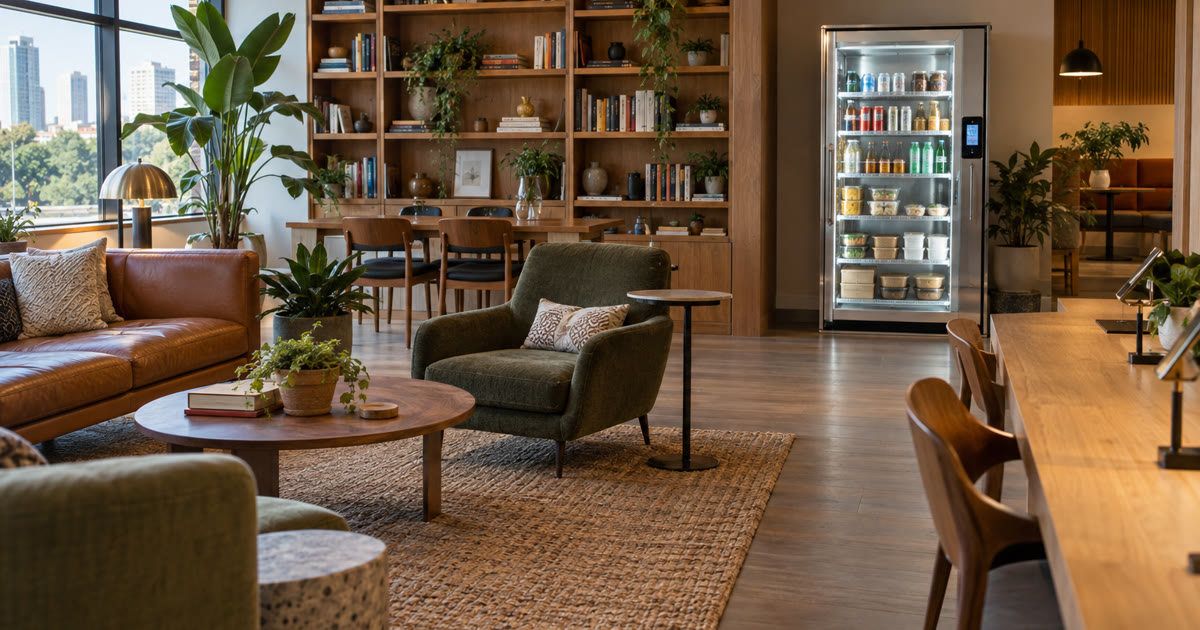
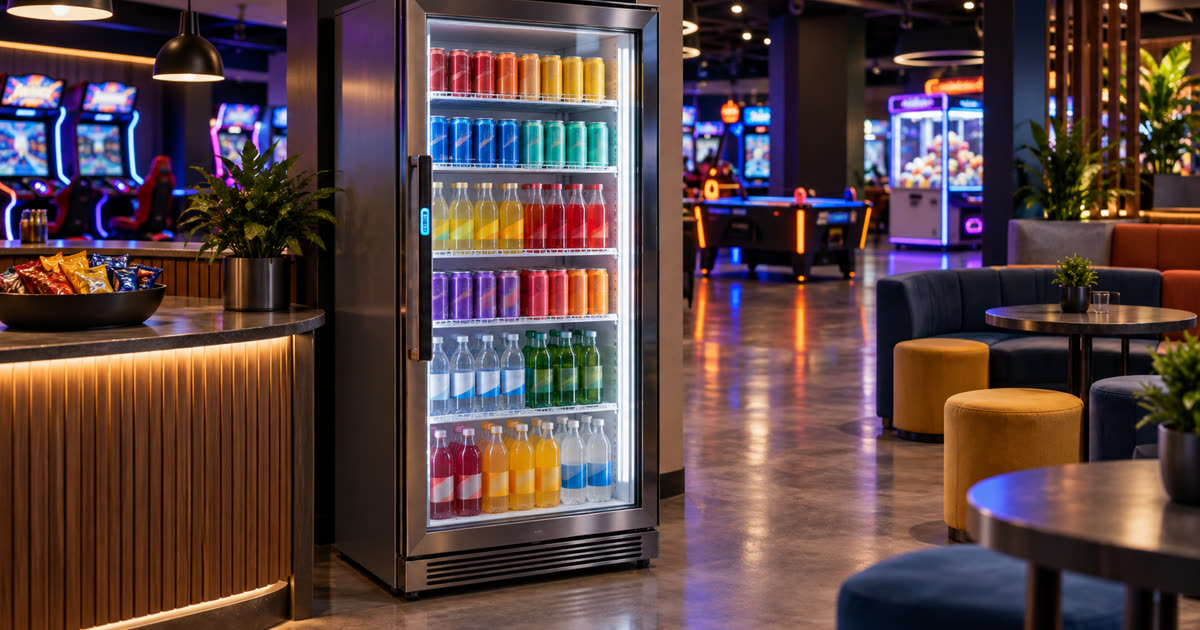
A smart fridge beats a traditional vending machine when the snack decision has stopped being about snacks.
That is the part most Austin businesses miss. The question is not “Which box has food in it?” A cardboard box can also have food in it, and nobody is making it the breakroom strategy unless things have gone beautifully off the rails.
The real question is what your people need the amenity to do. A traditional vending machine is great when the job is simple: packaged drinks, shelf-stable snacks, predictable traffic, low browsing friction, and a setup that works without much explanation. A smart fridge makes more sense when the location needs refrigerated options, a more modern grab-and-go feel, flexible product mix, and a food experience that does not look like it was designed during a coin-slot committee meeting.
Neither format is automatically better. That sentence is where weak comparison blogs usually go to take a nap. So let’s be sharper: the better format is the one your audience will actually use without turning your staff into the unpaid lunch department.
If you are comparing smart fridges for business, vending machines, smart vending machines, or compact market setups in Austin, ask these questions before choosing the equipment.
A smart fridge wins when the product mix needs breathing room
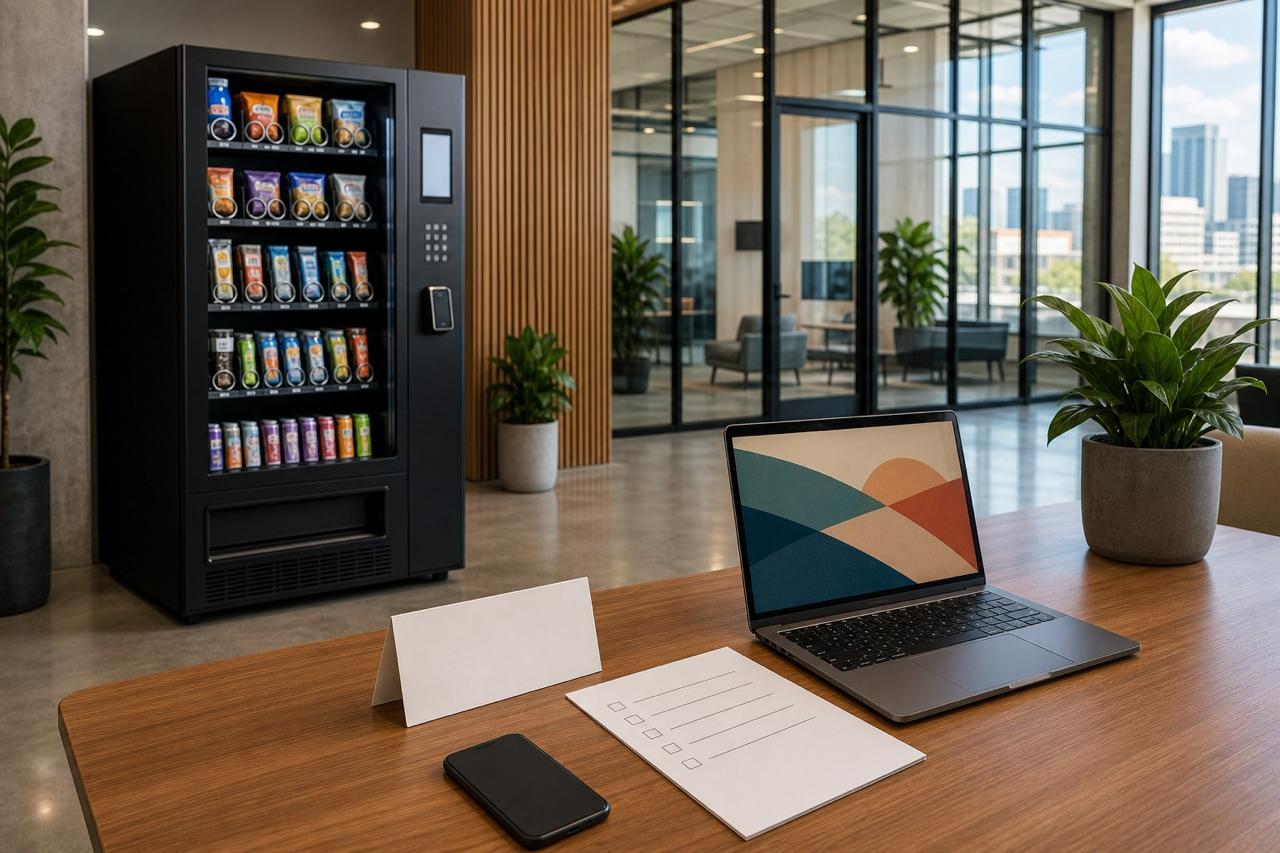
Traditional vending machines are built for tidy little rectangles. Chips. Candy. Bottled drinks. Bars. Items that behave on a spiral coil and do not require a personality management plan.
That can be perfect. There is no moral victory in overbuilding a snack setup. If your workplace, gym, hotel, clinic, warehouse, apartment community, dealership, or coworking space mostly needs drinks and packaged snacks, a vending machine may be the cleanest answer. Sometimes the right tool is the one that does not show up wearing a product-roadmap cape.
A smart fridge starts making more sense when the product mix needs more flexibility: refrigerated drinks, prepared food, fresh grab-and-go items, or a wider assortment that does not fit neatly inside the old vending-machine choreography.
The FDA says refrigerators should be kept at 40°F or below as part of food-safety guidance for slowing bacterial growth. That supports one narrow planning point: refrigerated food options require temperature-aware handling and operational discipline. It does not prove food safety, cold-chain compliance, product safety, equipment validation, temperature performance, freshness, spoilage prevention, regulatory compliance, health outcomes, nutrition quality, Revvolto equipment performance, any smart fridge installation, any vending machine installation, any Austin site, any future site, any stocked item, any restocking workflow, or any operator practice. Before the thermometer puts on a lab coat and starts giving legal advice, keep it measuring the thing it actually measures. Source: FDA
That is the smart fridge tradeoff in one sentence: better product range, more operational responsibility.
The fridge is not magic. It is a cold box with expectations. The operator still matters. Stocking still matters. Restocking still matters. Product judgment still matters. If the provider treats “fresh options” like a slogan instead of an operating commitment, the fridge becomes a tiny museum of ambition with condensation.
Vending wins when simplicity is the actual feature
A traditional vending machine still has a real job. Anyone pretending vending is obsolete is usually selling something expensive with a touchscreen and a fog machine.
Vending wins when the location needs speed, durability, familiar browsing, simple restocking, and products that do not need refrigeration. That is why vending machines still make sense in busy breakrooms, warehouse staff areas, gyms, service lounges, and locations where people want quick food and drink without learning a new ritual.
The trap is thinking “newer” means “better.” Newer sometimes means better. Newer also sometimes means the same chore with softer lighting.
Ask the blunt questions:
- Do users mainly want cold drinks and packaged snacks?
- Does the location have steady traffic but limited space?
- Would a fridge create more choice than the audience actually needs?
- Is the site better served by fast selection than wider selection?
- Can the machine be restocked and serviced without interrupting the workday?
A vending machine can be exactly right when the buying moment is simple. Someone has five minutes. Someone forgot lunch. Someone wants a drink before a meeting, a shift, a workout, a tour, a service appointment, or the part of the day where optimism quietly becomes caffeine.
Do not punish simplicity. A good vending machine is not a lesser smart fridge. It is a different answer.
The better format follows the traffic, not the brochure
Most bad amenity decisions start with a brochure. Most good ones start with the path people already walk.
Smart fridges for business need the same placement discipline as vending machines, but the questions shift. A fridge may invite browsing. Browsing needs a little room. It may need stronger visibility. It may work best near a break area, lobby, lounge, fitness zone, mailroom, or staff corridor where people already pause. If it is tucked into a corner where only the emergency mop knows it exists, the product mix does not matter.
A vending machine can be more compact and familiar. A smart fridge can feel more like a mini market. A compact market setup may work when the site has enough space, traffic, and restocking access to justify more open selection.
ENERGY STAR maintains product information for commercial refrigerators and freezers. That supports one narrow planning point: commercial refrigeration equipment has energy and equipment considerations that belong in the buying conversation. It does not prove energy savings, utility savings, cost savings, environmental benefit, ENERGY STAR certification, equipment eligibility, equipment performance, maintenance quality, refrigeration performance, Revvolto equipment performance, any smart fridge installation, any vending machine installation, any compact market setup, any Austin site, any future site, any host outcome, or any operating result. Before the efficiency badge starts tap-dancing across the proposal, ask what equipment is actually being used and who maintains it. Source: ENERGY STAR
Placement is not interior design. It is behavioral plumbing.
Put the amenity where the need already happens. If the format needs staff reminders, signage gymnastics, or a weekly “please use the fridge” email, the equipment is not solving the problem. It is asking for applause.
The payment experience should not decide the format by accident
Smart fridges and modern vending machines often share the same buyer expectation: cashless checkout should be easy, clear, and supported.
That does not mean payment is a small detail. Payment is where a clean amenity can become a weird little help-desk goblin if nobody owns the support path.
The PCI Security Standards Council publishes PCI DSS as a global standard for protecting payment account data. That supports one narrow buyer point: payment responsibilities, processor roles, and support ownership should be clear before a business adds cashless smart vending, a smart fridge, or a compact market setup. It does not prove PCI compliance for any smart fridge, vending machine, smart vending machine, payment terminal, payment processor, app checkout, software dashboard, inventory platform, operator, Austin installation, future installation, Revvolto setup, checkout flow, card tap, mobile wallet payment, employee purchase, resident purchase, guest purchase, customer transaction, refund process, charge dispute, or support workflow. It also does not guarantee payment security, eliminate fraud risk, certify a provider, bless a payment experience, make the host responsible, or make “tap-to-pay” a complete operational plan. Before payment language steals a headset and starts managing the lobby, make someone own the lane. Source: PCI Security Standards Council
The format should not be chosen because one checkout sounds shinier. Choose the format because it fits the audience, product mix, placement, and operator model.
Ask:
- Who handles payment support?
- How does a user report a failed tap, duplicate-looking charge, or checkout issue?
- Does the host team need to touch payment data?
- Does the operator manage equipment issues and user support?
- Will the checkout path make sense to a first-time user in ten seconds?
That last question is the quiet killer. If the payment experience requires a tutorial, a prayer, and the property manager’s extension, the equipment has wandered into theater.
Revvolto helps choose the format before the format chooses your workload
The worst smart fridge decision is choosing the fridge because it sounds more modern. The worst vending decision is choosing the vending machine because it feels safer. Both are lazy. Different outfits, same nap.
Revvolto helps qualified Austin-area businesses add smart vending or smart fridge options — and, where the site supports it, compact market setups — without turning the host into the operator.
For qualified placements, Revvolto typically installs and operates the setup at no cost to the host. Site fit still matters. Foot traffic, audience rhythm, product mix, placement, restocking access, payment support, refrigeration needs, and service cadence decide whether a smart fridge, vending machine, or compact market setup has a real job.
A useful format decision should answer four things clearly:
- What do people at this location actually want to grab?
- Where will they naturally see and use the amenity?
- Who stocks, restocks, maintains, and supports it?
- What happens when product mix, payment, or equipment issues need attention?
If the answer points to a vending machine, use the vending machine. If it points to a smart fridge, use the smart fridge. If the site can support a compact market setup, explore that. The equipment does not get a trophy for sounding advanced. It gets a job because it fits the building.
Smart fridges for business are not the future because they are smart. They are useful when they make the right food and drink easier to reach without handing the host a colder, shinier chore.
Curious whether smart vending, a smart fridge, or a compact market setup fits your Austin location? Tell us about your space at https://revvolto.com/contact-us.
No-cost site assessment. No install pressure. No commitment.