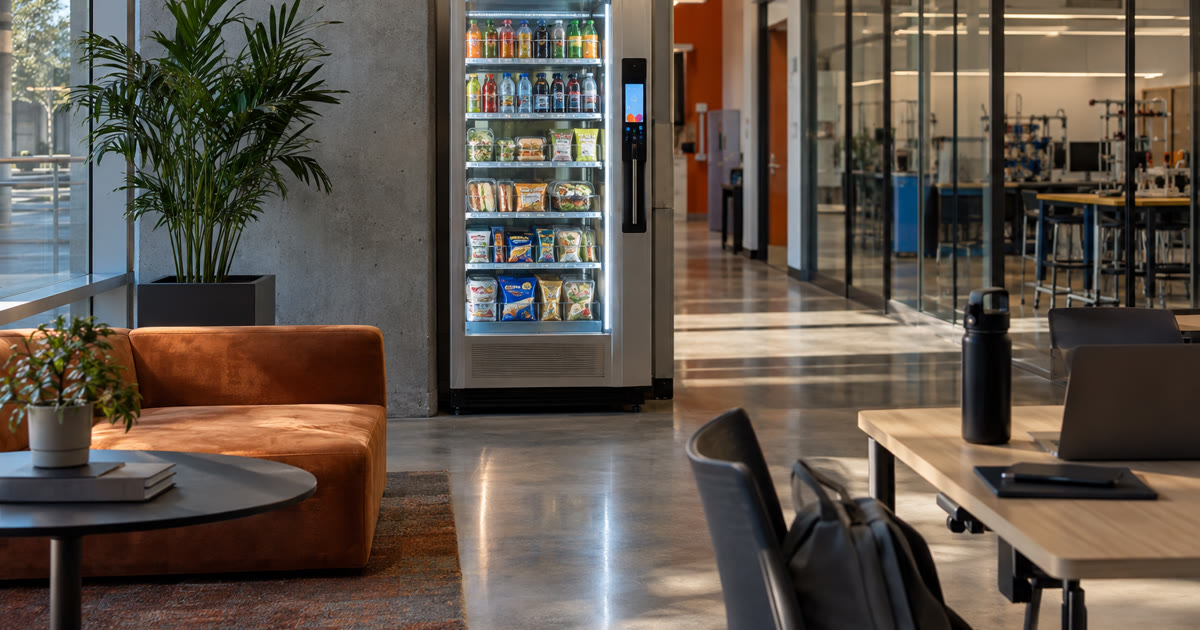
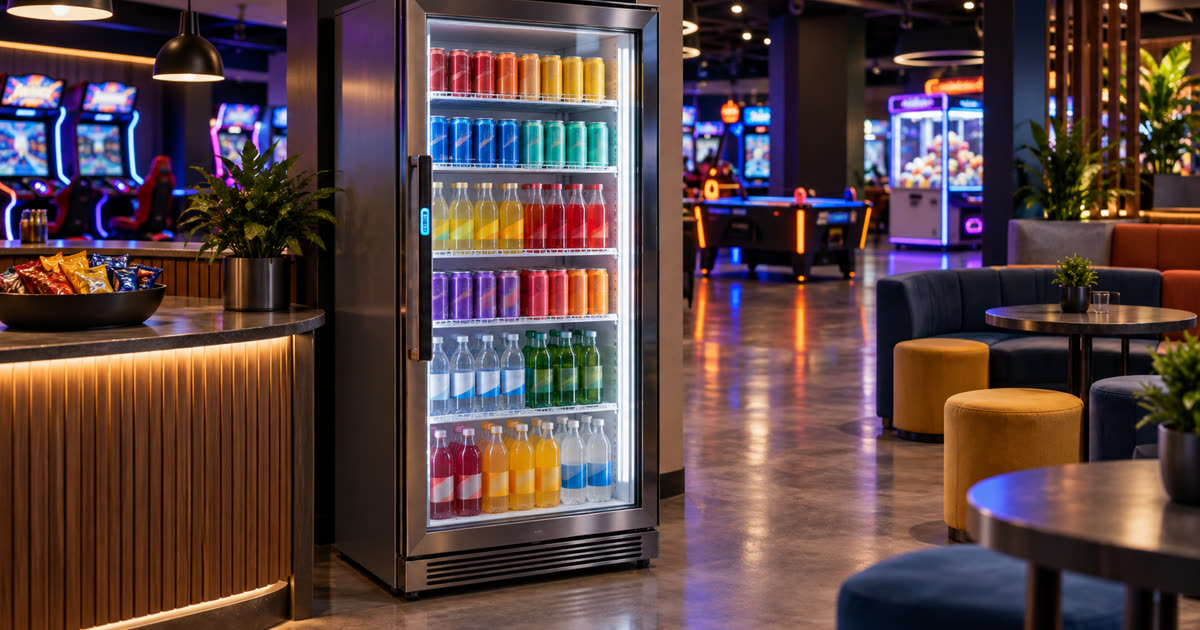
A vending machine is easy to underestimate.
People picture an old machine in a forgotten hallway, humming beside a trash can, selling the same tired snacks it has sold since 2006. That version deserves the reputation it has. It is not an amenity. It is a vending fossil.
Modern vending is different when it is placed, stocked, and operated properly.
For the right business, a vending machine, smart fridge, or compact self-service market can give customers, guests, residents, members, visitors, or employees quick access to food and drinks without asking the host team to run a snack program.
That last part matters.
A vending setup should not become someone’s second job. If the business has to buy inventory, handle payment issues, clean the machine, answer refund questions, track what sells, and chase repairs, congratulations: it did not add convenience. It adopted a small appliance with administrative needs.
The better question is not “Should we get a vending machine?”
It is: does your location have enough real demand to justify a self-service amenity that someone else operates well?
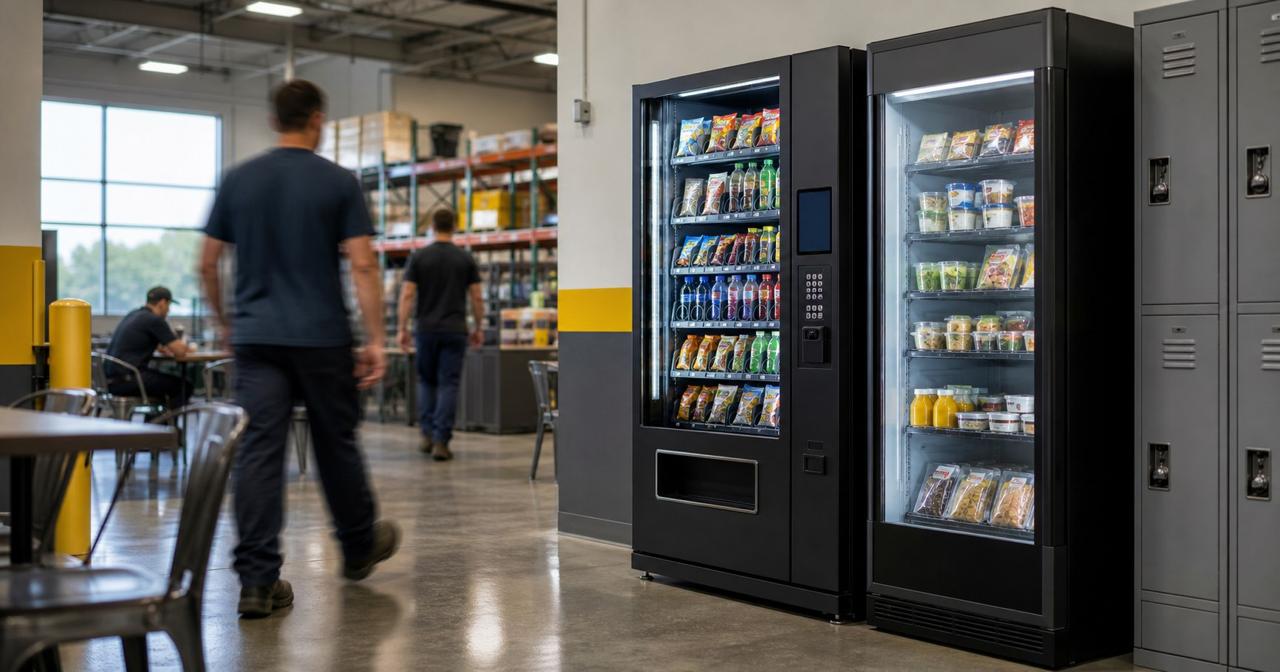
Look for the waiting, pausing, and repeat-visit moments
A vending machine works best where people already pause.
That could be a hotel guest coming back from the pool. A dealership customer waiting on service. A warehouse worker on break. A resident checking mail. A gym member leaving class. A clinic staff member between shifts. A coworking member who does not want to leave the building for one drink.
The common thread is not the building type. It is the moment.
Good vending locations usually have at least one of these:
- people waiting longer than they expected
- people taking short breaks
- people arriving early or leaving late
- people using the building after nearby food options are closed
- repeat visitors who learn the amenity exists
- limited convenient food or drink access nearby
- enough daily traffic to keep products moving
If nobody pauses, nobody waits, and nobody needs anything on site, a machine will not magically create demand. That is not pessimistic. That is math wearing sensible shoes.
But if the location already has people with small convenience needs, vending can become surprisingly useful.
The trick is choosing the right format for the moment. A waiting area may need cold drinks and snacks. A staff breakroom may need broader grab-and-go options. A residential amenity space may need after-hours convenience. A warehouse or manufacturing site may need fast access during defined breaks. One format does not fit all of them.
Think convenience first
The strongest reason to consider vending is simple: people already need small, convenient options during the day.
They need a cold drink while they wait. A quick snack before a meeting. Something easy between shifts. A better option than leaving the building for one item. A way to solve a small inconvenience without asking staff to step in.
That is where a well-operated vending setup earns attention. It turns an existing gap into a useful on-site amenity.
Better questions:
- Would people use this weekly, or only during emergencies?
- Is this mainly a customer service amenity, a staff convenience, or a resident/member perk?
- Who owns stocking and restocking?
- Who handles complaints, refunds, and machine issues?
- Is there enough traffic to keep products from sitting too long?
- Does the setup fit the business without making staff manage it?
For qualified placements, Revvolto typically installs and operates the setup at no cost to the host. “Qualified” is doing real work in that sentence. The site still needs the right audience, placement, traffic, access, and service fit.
Payment support can make or break the experience
Modern vending is usually cashless. That is good for convenience, but it also raises a simple operational question: what happens when something goes wrong?
A customer taps, the payment appears to process, and the item does not vend. A guest is charged twice. A resident has a support question. An employee wants a refund. In that moment, the nearest staff member may become the first person asked for help, even if the host is not supposed to manage the machine.
That is why payment support has to be part of the plan.
PCI DSS was developed to support technical and operational requirements for payment account data. That supports one narrow point: cashless vending needs clear roles around payment data and support. It does not prove PCI compliance for any Revvolto setup, vending machine, smart fridge, payment terminal, processor, app checkout, refund workflow, future location, user transaction, host procedure, or business outcome. It also does not make “we accept cards” a complete support plan. Source: PCI Security Standards Council
Before adding a vending machine, ask the operator:
- What does the user do if an item does not vend?
- How are refunds handled?
- What should our staff never collect or ask for?
- Is support information clear without ugly signage?
- How quickly are recurring problems reviewed?
A vending machine should feel self-service to the user, not unsupported.
Product mix should match the location, not a generic catalog
The fastest way to make vending feel irrelevant is to stock the same thing everywhere.
A hotel guest area, auto dealership service lounge, gym, apartment property, clinic staff room, warehouse break area, and coworking space do not need identical product mixes. The right lineup depends on who is there, when they use the space, how long they stay, and what other options are nearby.
That can include drinks, snacks, grab-and-go items, or refrigerated options where the site supports it. The key is to keep the language honest. No miracle snacks. No health claims. No fake “performance” pitch because someone saw a protein bar and got carried away.
For refrigerated options, food handling matters. FDA consumer food-safety guidance says refrigerators should be kept at 40°F or below and freezers at 0°F, with thermometers used to monitor temperatures. That supports one narrow point: refrigerated food and drink programs require temperature attention. It does not prove any Revvolto equipment, smart fridge, vending machine, product, route, installation, host site, food item, shelf life, operator process, or future setup is FDA-approved, compliant, certified, safe, or risk-free. It also does not replace site-specific food-safety review. Source: FDA
A good operator should be able to explain how the product mix changes over time:
- what sells
- what sits
- what gets rotated
- what the location’s audience seems to prefer
- when a different format might make more sense
The best product mix is not the longest list. It is the one people actually use.
The right setup feels useful, not pushy
A vending machine should not make a business feel like it is cluttering up the lobby with a random box of snacks.
Done badly, vending looks like an afterthought. Done well, it feels like a useful option: available, clean, stocked, easy to pay for, and placed where it makes sense.
That can help different businesses in different ways:
- Hotels can offer guests convenient grab-and-go access when staffed food options are closed.
- Dealerships can give waiting customers something better than stale coffee and a long stare at the service board.
- Gyms can offer quick drinks or snacks near natural member traffic.
- Apartment communities can add after-hours convenience near amenity spaces.
- Warehouses can support short break windows without sending people off site.
- Coworking spaces can add member convenience without turning community staff into a cafe team.
No single example guarantees results. But each one shows the same pattern: when people already have a convenience gap, a well-operated vending setup can be worth exploring.
Revvolto helps qualified locations add modern, cashless vending, smart fridge, or compact market options without making the host manage stocking, restocking, payment tech, maintenance, or product rotation.
If you are wondering whether a vending machine could work for your business, start with three questions:
- Do people regularly wait, pause, work, visit, or pass through your space?
- Would convenient food and drink access improve that moment?
- Do you want the amenity without managing the operation yourself?
If the answer is yes, it may be worth a site-fit conversation.
Ask Revvolto whether a vending machine could work for your business