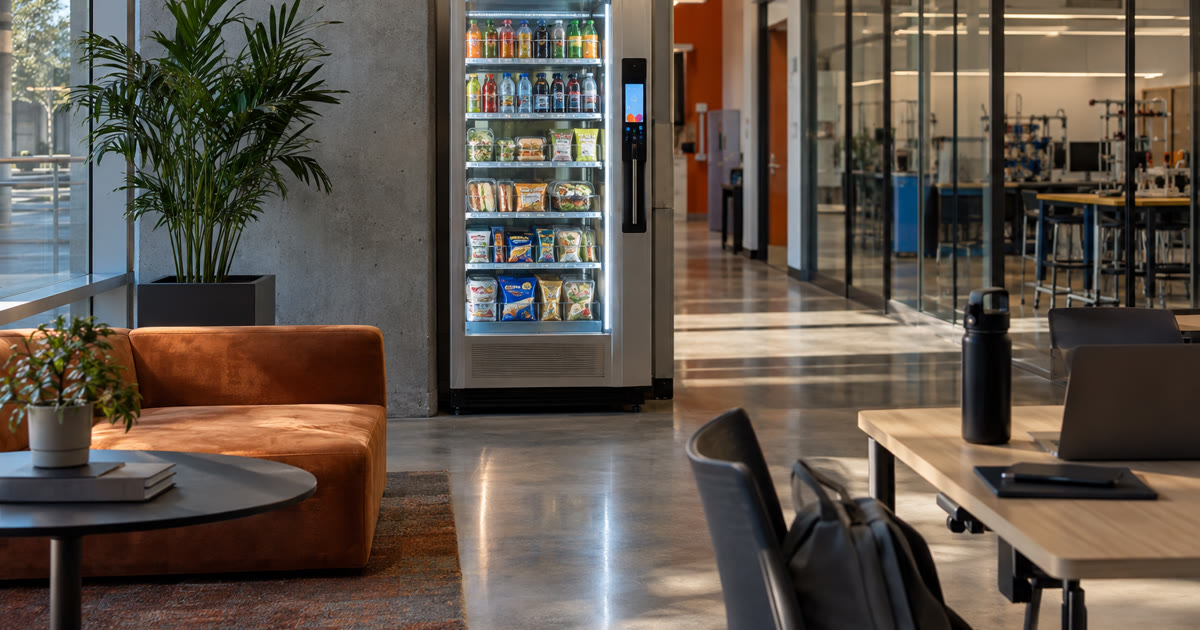
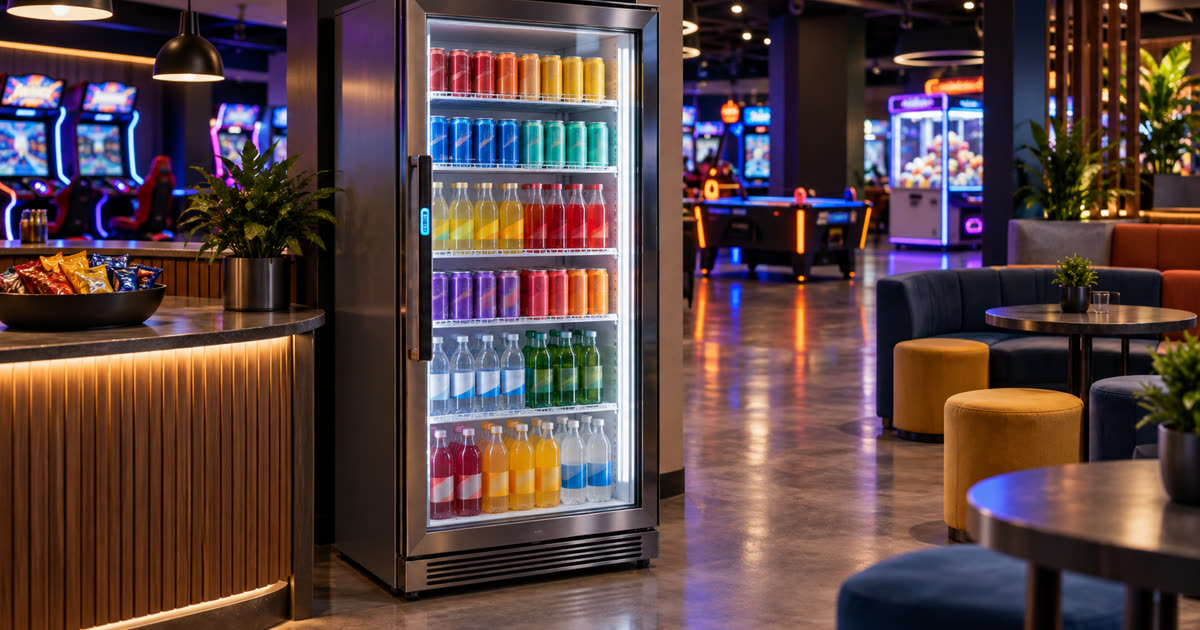
A 24/7 vending machine sounds simple: put food and drinks where people can reach them, then let the machine do the work after everyone else goes home.
That is the nice version. The useful version is more specific.
Around-the-clock access only works when the site, equipment, payment flow, restocking rhythm, and service expectations all match how people actually use the space. A machine in the wrong corner can be open all night and still be ignored. A machine with the wrong product mix can look stocked while failing the people who need it most. A machine with unclear support can become one more small problem dumped on the front desk, facilities team, or night manager.
For Revvolto, the better conversation is not “can this be available 24/7?” It is “what has to be true for 24/7 access to feel useful instead of accidental?”
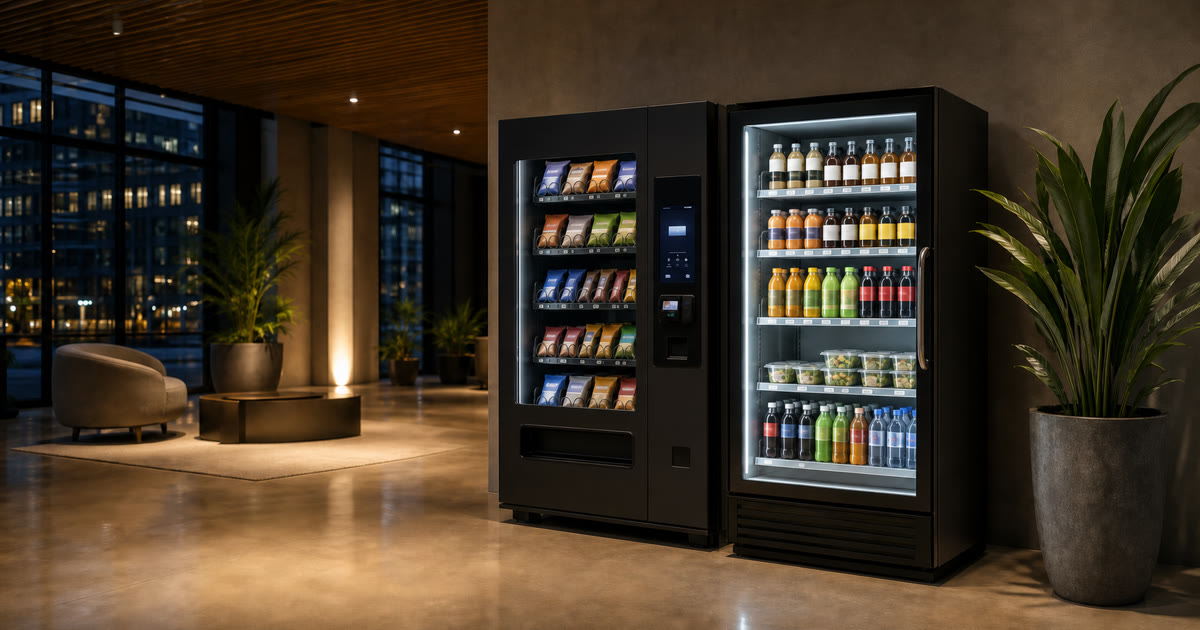
24/7 vending machines need the right use case
A 24/7 vending machine is not automatically better than a normal breakroom setup. It earns its keep when people are already on site outside normal food-service hours.
Think about hotels with late arrivals, apartment communities where residents come home after restaurants close, gyms with early and late workouts, warehouses with shift changes, clinics with staff breaks that do not line up with lunch, or office buildings where people stay past the usual coffee run. Those are real use cases. “We want something modern in the lobby” is weaker.
The first buyer question is traffic. Not just total headcount, but the shape of the day. Who passes the machine? When? Are they allowed to access that area at night? Would they actually buy a drink, snack, or refrigerated item there, or is the machine tucked into a hallway people only visit when the printer misbehaves?
A useful provider should ask those questions before talking about equipment. The answer may be a smart vending machine, a smart fridge, or a compact market-style setup. It may also be a smaller footprint than the buyer imagined. Bigger is not always better. Bigger in the wrong spot is just expensive furniture with candy in it.
Revvolto’s role is to help match the format to the site. That means looking at audience, traffic, access, stocking needs, and service expectations before pretending one machine solves every after-hours problem.
Around-the-clock access still needs service behind it
The phrase “24/7” can make vending sound self-running. It is not.
The machine may operate around the clock, but the service model behind it still matters. Someone has to stock it on a regular cadence. Someone has to notice when best sellers move faster than expected. Someone has to respond when a payment issue, product issue, jam, temperature concern, or out-of-stock pattern shows up.
This is where buyers should separate access from support.
A location might want 24/7 access because staff, residents, guests, or members use the space outside staffed hours. That does not mean the host wants to become the vending operator. If the front desk, office manager, property team, or facilities lead becomes the unofficial support line, the amenity stops feeling easy.
A better setup makes the operating responsibilities clear before launch. Who monitors inventory? Who restocks? Who handles refunds or product complaints? Who cleans around the machine? Who decides when the product mix changes? Who removes the unit if the site is a poor fit?
None of that is glamorous. It is also the difference between a vending amenity and a snack-shaped chore.
Revvolto’s model is built around reducing that host-side workload. The site still needs to be a fit, and placement still matters, but the routine vending work should not quietly become someone else’s second job.
Payment, access, and placement have to be boring on purpose
The best 24/7 vending experience is uneventful. People see the machine, find something useful, pay without friction, and leave. Nobody needs a tutorial. Nobody has to ask whether it is working.
That means payment matters. Cashless vending can be a strong fit for after-hours environments because people may not carry cash and staff may not be present to help. But payment support should be discussed plainly. The PCI Security Standards Council publishes payment account data security standards; that does not prove any specific vending machine, payment device, processor, or provider is compliant. It simply underlines that payment handling deserves real attention, not a vague “it takes cards” answer.
Placement matters too. The machine should sit where people naturally pass it, with enough lighting, visibility, and room to open doors, retrieve products, and move around the unit. For public-facing or shared spaces, buyers should also think about accessible routes and clear floor space. The ADA.gov Title III primer is a general public-facing resource on accessibility obligations for many businesses; it is not a site-specific vending placement approval. A real site still needs its own review.
Then there is refrigeration. If the 24/7 setup includes a smart fridge or refrigerated vending, the buyer should ask about product rotation, temperature-aware handling, and whether the expected demand supports fresh items. The ENERGY STAR commercial refrigerators and freezers page is useful background on commercial refrigeration efficiency, but it does not certify any specific Revvolto deployment or product mix.
The point is not to bury the buyer in compliance talk. The point is to avoid hand-waving the boring parts. Boring is good when money, access, and food are involved.
The best product mix follows the hour
A machine that works at noon may not work at midnight.
Daytime users might want sparkling water, coffee drinks, protein snacks, or a quick lunch backup. Late-night users may want bottled drinks, filling snacks, simple grab-and-go food, or familiar options they can buy fast. Gym members may care about cold drinks near the exit. Hotel guests may want something easy after travel. Shift workers may care less about trendy packaging and more about speed, reliability, and enough variety to avoid the same sad row every week.
This is why purchase and inventory behavior matter. A smart vending setup can help show what moves and what sits. That does not mean the machine “knows” what people want. It means the operator can use sales and inventory signals to refine the assortment over time.
The first product mix will never be perfect. It should be sensible enough to start, then adjustable enough to improve. A good provider should be willing to change the mix when the data and site feedback point in the same direction.
That is also where 24/7 vending can beat a static snack shelf or ad hoc office pantry. The host is not guessing every week. The operator is watching what people buy, restocking on a cadence, and using the site pattern to make smarter choices.
What to ask before adding 24/7 vending
Before adding a 24/7 vending machine, ask practical questions.
Who uses the space after normal hours? Where do they already walk? What do they need at that hour? Is the area lit, accessible, and easy to monitor? Is there enough demand to justify the format? Who owns restocking and service? How are payment issues handled? What happens if the product mix misses the mark?
Those questions are not obstacles. They are how a buyer keeps the amenity from becoming decoration.
For qualified locations, Revvolto can help evaluate whether a smart vending machine, smart fridge, or compact market-style setup makes sense, then handle stocking, restocking, payment tech, and ongoing service. The goal is not to add a machine because 24/7 sounds good. The goal is to give people a useful option when staffed food service, nearby stores, or normal business hours are not helping.
If your site has people moving through it early, late, or all night, talk to Revvolto about whether 24/7 vending access fits the traffic, space, and service model.