Hotel vending machines are not there to replace the lobby bar, restaurant, or front desk. The better job is simpler: give guests a useful food and drink option when the normal hotel rhythm breaks.
That moment happens a lot. A guest checks in late after a delayed flight. A family gets back from an event after nearby shops are closed. A night auditor needs a drink without leaving the desk area. A service team wants something quick between turns. If the only answer is a staff interruption or an off-site trip, the hotel has a convenience gap.
Modern vending, smart coolers, and smart fridge formats can help close that gap without asking hotel staff to become snack managers. The right setup depends on traffic, placement, product mix, and service expectations. The wrong setup becomes lobby clutter with lights.
Why hotels look at vending differently now
Hotel guests do not move through a property on one clean schedule. Breakfast has a window. Restaurants have hours. Sundry shops, if the property has one, still need staff attention. Vending fills a different lane: quick access when guests want bottled drinks, snacks, light meals, or travel basics without waiting in line. It is the hotel version of around-the-clock vending access, but the guest path and service model have to fit the property.
That matters most in properties with late arrivals, limited food service, spread-out buildings, or a lobby team already pulled in five directions. A good vending amenity can reduce small interruptions at the desk because guests have an obvious self-serve option nearby.
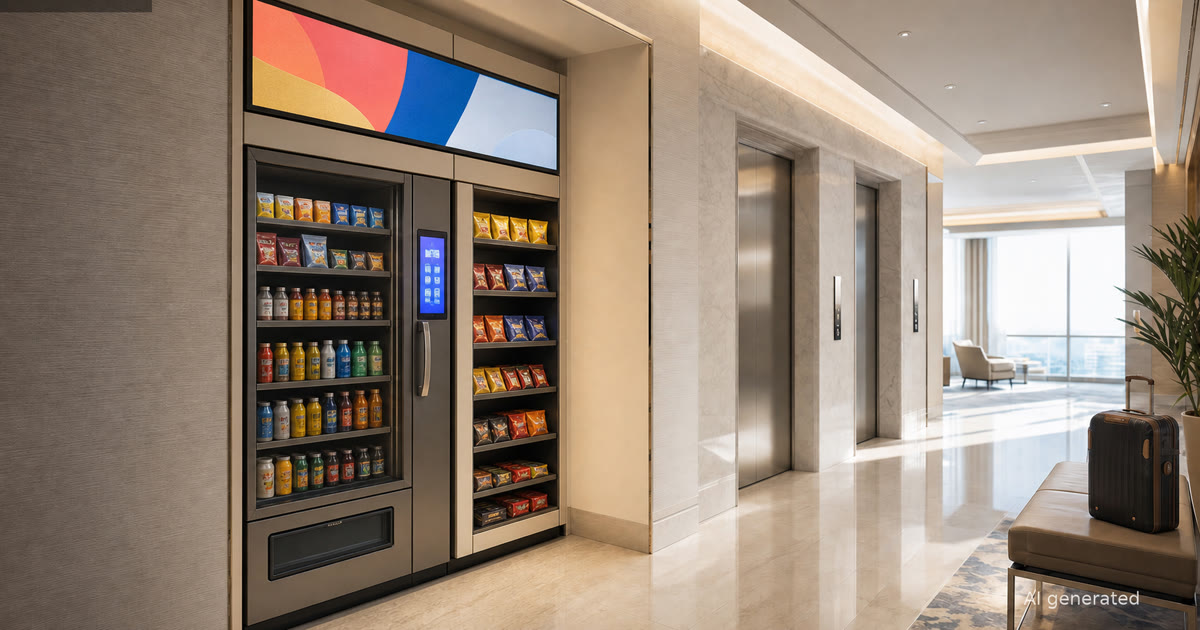
The format also looks different from the old hallway machine many people still picture. A smart vending machine, smart fridge, or compact market can feel more like a small hospitality amenity than a forgotten metal box. If a property is weighing cold-food access against a traditional snack-and-drink setup, Revvolto’s smart fridge versus vending machine guide is a useful companion read. Cashless payment helps, but the bigger improvement is operational: the provider should handle stocking, restocking, service, and payment tech so the hotel is not managing another mini business.
That is the line worth protecting. Hotel vending should make the property easier to run, not add another checklist item.
Where hotel vending usually fits best
The best placement is rarely random empty wall space. It is where guest demand, staff visibility, and service access overlap.
Good candidate areas include lobby market alcoves, elevator-bank corridors, guest laundry areas, meeting-space corridors, fitness-center exits, and back-of-house staff break areas. Each one serves a different use case. A lobby setup helps late arrivals and walk-through traffic. A guest laundry setup helps people stuck waiting. A meeting corridor can support event attendees between scheduled breaks. A staff area supports employees without mixing every staff need into the guest lobby.
Placement also has to respect movement through the property. The U.S. Department of Justice notes in its ADA small business primer that accessible routes to goods and services should not be blocked by items such as vending or ice machines. That does not turn this blog into legal advice, but it is a useful planning reminder: vending should sit where people can use it without creating a hallway problem. Source: ADA.gov small business primer.
A site review should look at power, lighting, camera visibility, restocking access, door swing, guest flow, and whether the unit will create noise or congestion. If staff have to move furniture every time the machine gets serviced, the placement is already telling you no.
What product mix should match in a hotel
Hotel vending works best when the product mix follows the guest moment. A service-lounge mix does not automatically fit a boutique hotel lobby. A gym mix does not automatically fit a conference hallway.
For hotels, the strongest starting categories are usually cold drinks, sparkling water, coffee or energy drinks where appropriate, simple snacks, protein bars, packaged sweets, and a small set of more filling grab-and-go items if the equipment supports it. Properties with fitness traffic may want hydration and post-workout snacks near the gym. Extended-stay properties may need more practical meal-adjacent items. Meeting-heavy properties may need cleaner, less messy options that people can carry into a session.
The important part is not having the longest menu. It is avoiding a stale one. Purchase and inventory reporting can help a provider see what sells and what sits, then adjust the assortment over time. That is the practical side of smart vending: not magic, just better feedback loops.
Hotels also need payment expectations to be boring in the best way. Guests expect tap-to-pay and card support, but payment data is not a place for loose claims. The PCI Security Standards Council provides merchant resources around protecting payment data; hotels should ask any provider clear questions about payment processing responsibilities and support before launch. Source: PCI Security Standards Council merchant resources.
What the host should expect from service
The host should not have to guess who handles the messy parts.
Before adding hotel vending machines, ask who stocks the unit, who handles product changes, who responds when a machine is down, who manages refunds or guest issues, and how often the assortment is reviewed. The answers matter more than the brochure photo.
A provider should be able to explain the normal service cadence, how issues are reported, what happens when a popular item sells through, and how the property team should route guest feedback. The hotel should also understand what the provider needs from the site: access windows, parking or loading rules, point of contact, placement approvals, and any building requirements.
Revvolto’s role is designed around that host-side relief. For qualified locations, Revvolto typically places and maintains modern vending, smart vending, or smart fridge options at no cost to the host. Revvolto handles stocking, restocking, payment tech, and service. The hotel keeps the amenity without turning the front desk into a vending department.
That is the real buyer question: will this make the property easier for guests and staff, or will it quietly create more work?
How to decide if your hotel is a fit
A hotel does not need to be huge to consider vending, but it does need a believable use case. Look for repeat guest traffic, a clear convenience gap, and a place where the machine can sit without making the property feel cheaper.
Ask these questions before saying yes:
- Where do guests currently go for snacks, drinks, or quick food after hours?
- How often does the front desk field small convenience requests?
- Which area has steady traffic without blocking the guest path?
- Would guests use a self-serve option there, or would it feel hidden?
- Can a provider service the machine without disrupting the lobby or staff flow?
- Does the product mix match the property type, not a generic snack wall?
If those answers are clear, vending can be a practical hospitality amenity. If the answers are fuzzy, start with a site review before picking equipment.
Revvolto helps businesses evaluate whether vending, smart vending, or a smart fridge setup fits the location, traffic, and service needs. If your hotel needs better grab-and-go access without adding staff work, talk with Revvolto about a site-fit review.