Austin keeps adding places where people do more than show up, work out, and leave. The newer fitness and racquet-club model is part workout, part social stop, part third place. That changes the food-access math.
Community Impact reported on Aug. 14 that Austin Padel Center opened its remaining six indoor courts on Aug. 7 after opening its first three courts earlier this year. The same update described the facility as offering a recovery area, pro shop, and bar with food and beverages.
That is the local hook. The bigger lesson for Austin fitness and racquet spaces is simple: when people finish court time, the next decision happens fast. They either grab something on-site, walk out, or make another stop somewhere else.
Revvolto is not connected to Austin Padel Center. The story is useful because it shows the kind of facility Austin is getting more of: places with scheduled bursts of traffic, short dwell windows, and members who are already moving through predictable paths.
The food moment happens after the activity
Most facility planning focuses on the workout space first. That makes sense. Courts, locker rooms, and scheduling carry the business.
Food access usually gets treated as an extra. That is where operators miss the practical moment.
After court time, people are thirsty and on a clock. They may be heading back to work or waiting for the next match. If the only option is a staffed counter, the facility has to pay someone to run it. If the only option is a distant restaurant, the sale leaves the building.
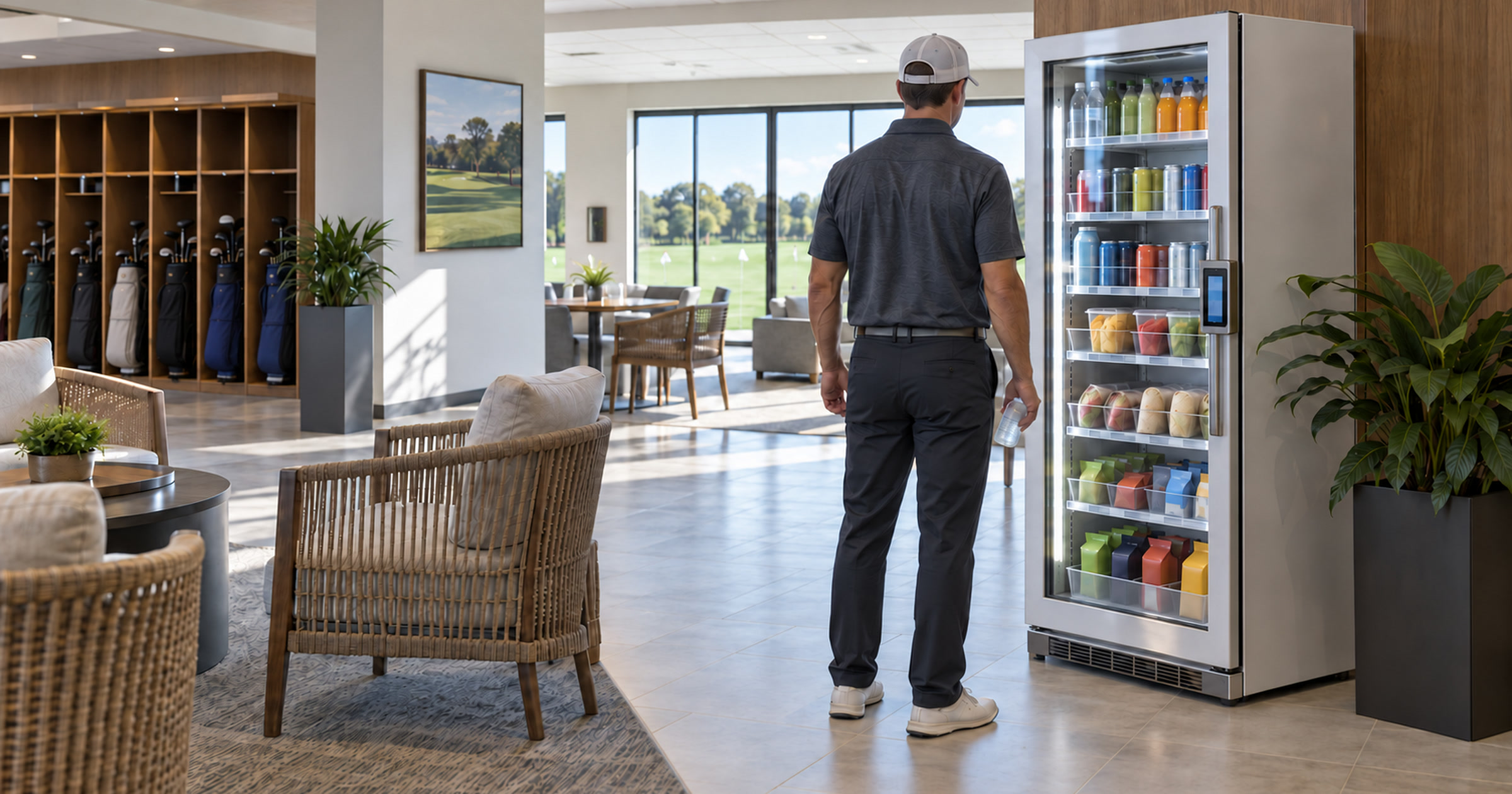
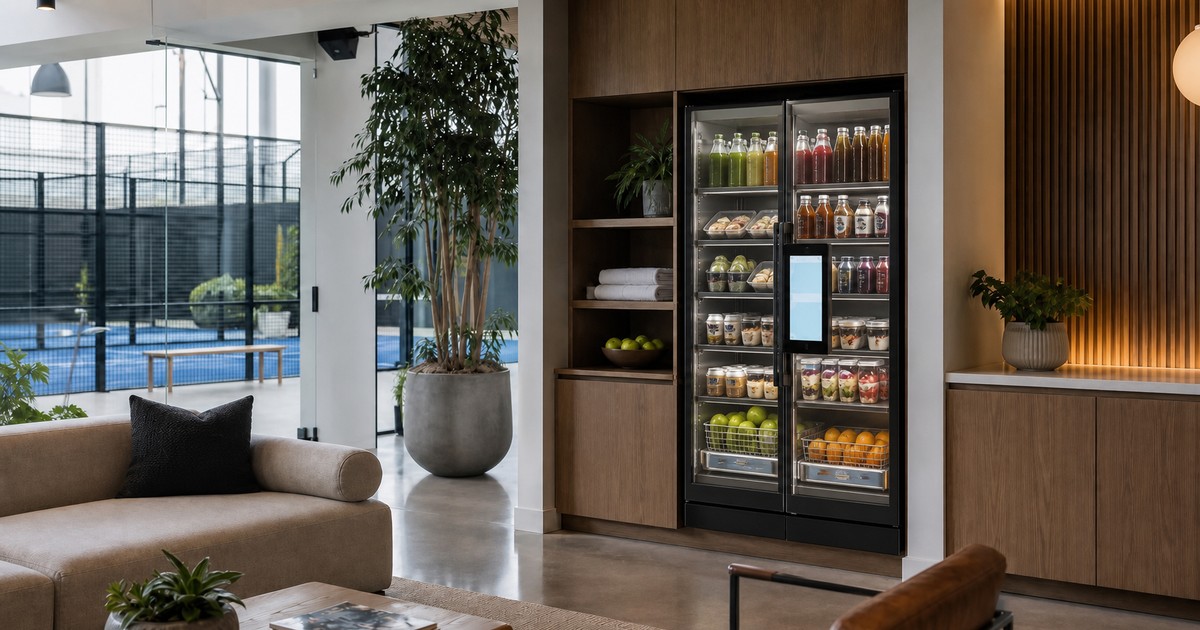
A smart vending machine or smart fridge sits in the middle. It does not need to become the main amenity. It needs to be placed where the member already pauses: near the locker-room path, club lounge, or exit corridor.
This is where old vending habits break down. A bulky machine by the front door can feel like an afterthought. A modern smart cooler in the right path feels more like part of the club. That difference matters in a facility where the brand experience is built around lighting, flow, and comfort.
The stocked mix matters too. A racquet club does not need the same assortment as an office pantry. Cold drinks, simple snacks, and quick grab-and-go items make more sense than treating every building like the same breakroom. The machine has to fit the moment, not just the square footage.
The best placement is not always the front desk
The front desk is visible, but visibility is not the same as use.
For racquet and fitness spaces, the better question is where people slow down naturally. That might be outside the court entrance. It might be near towel return. It might be between seating and lockers. A machine hidden behind check-in can look tidy and still get ignored.
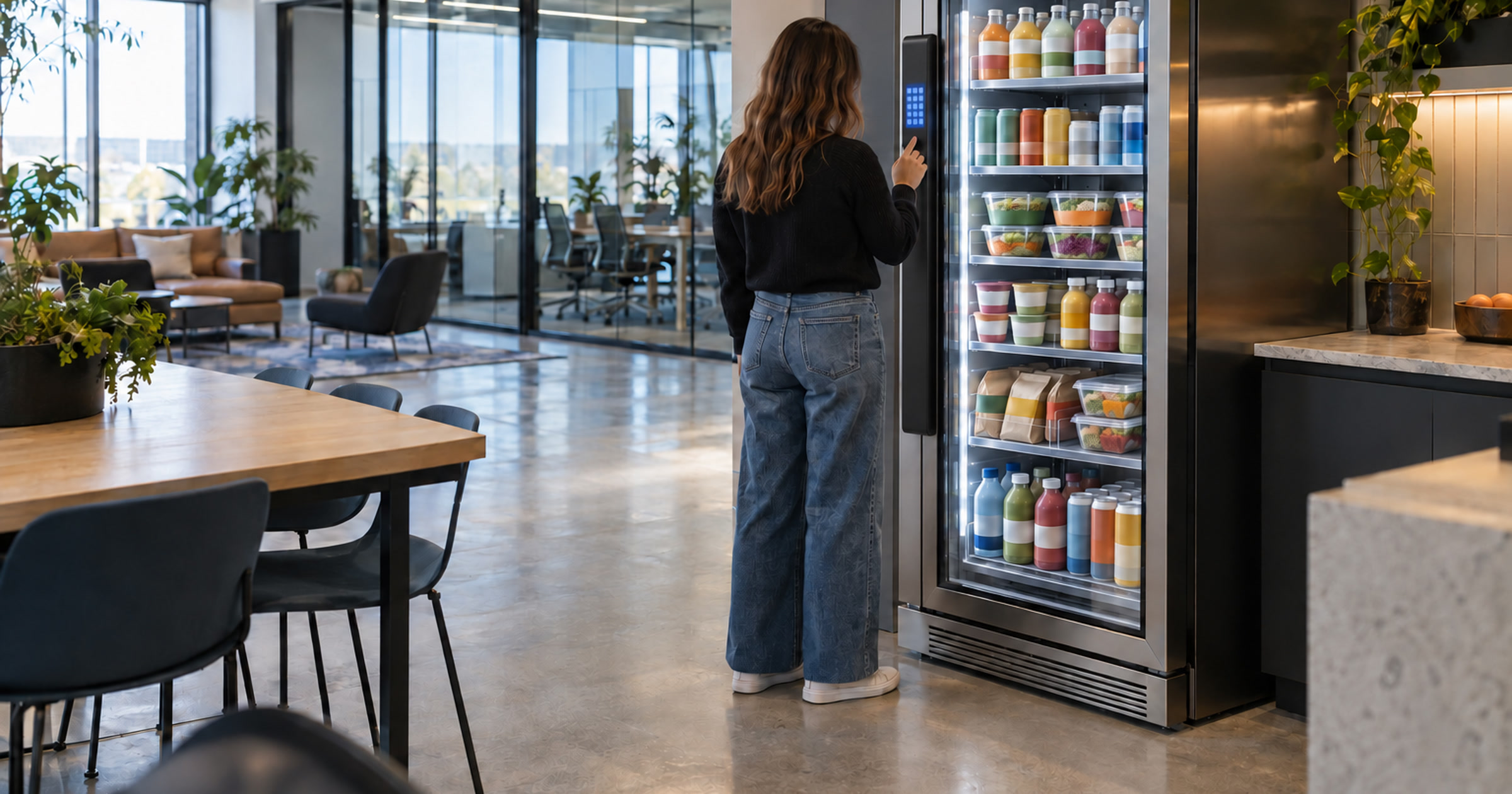
Good placement reduces friction for the member and the team. A modern glass smart cooler can carry cold drinks, lighter snacks, and grab-and-go items without turning the desk into a mini convenience store. Cashless checkout also keeps the staff from handling small purchases while they are trying to manage reservations, walk-ins, and member questions.
That staff point is bigger than it sounds. If the front desk becomes the default place for snack questions and payment issues, the amenity starts creating work. The better version lets the team keep running the club while members serve themselves in the right spot.
This is not about replacing a cafe or bar when a facility already has one. It is about covering the smaller gaps around early arrivals, late departures, and quick post-match needs.
Austin clubs should plan the path before picking the machine
The machine comes second. The movement pattern comes first.
Before adding vending or a smart fridge, an Austin facility should map the after-activity path first. Then it should ask whether members wait there and whether staff already get interrupted there.
If those three points line up, the site may be a good fit for unattended food and drink access. If they do not, the placement needs work before anyone talks equipment.
The same logic applies to new clubs and existing spaces. If a facility is still in planning, food access should be part of the traffic-path conversation before millwork and power get locked. If the club is already open, a simple walk-through can show whether the current pause points support a smart vending machine or smart fridge.
Revvolto looks at those details because the product is only part of the job. We install the unit, keep it stocked, and handle service for qualified locations. The goal is not to add another chore to the building. The goal is to make the obvious pause point useful.
A racquet club is a traffic-path business
A padel club is not a normal retail storefront. Demand arrives in waves. Courts turn over. People cluster before and after booked times. Some members stay. Some leave in five minutes.
That pattern is exactly why after-court food access deserves planning. The right setup can catch real demand without asking staff to become snack managers.
For Austin fitness and racquet spaces, the practical question is not “Should we add more amenities?” It is sharper than that: where do people already pause, and what would make that pause easier?
If your facility has the traffic but not the food-access plan, Revvolto can help you evaluate whether smart vending or a smart fridge fits the space. Tell us about the location at revvolto.com/contact-us.