Data center vending works when it respects the building. That sounds obvious until someone treats a smart cooler like a normal breakroom appliance and drops it wherever there is an empty wall.
A data center or secure operations site has a different rhythm. People move through controlled paths. Breaks may happen away from public retail. Service access matters because the stocked unit still has to be maintained. Payment support matters because cash is a bad fit for a modern controlled workplace.
The vending decision should start with the path your team already uses, then the food access format that fits it.
Start with the staff path, not the machine
Most vending conversations start too late. Someone picks the unit first, then the building team tries to make the room work around it. That is backwards for data center vending.
Start with the staff movement pattern. Where do technicians, facilities teams, and operations staff naturally pause during the workday? Which room is already appropriate for food and drink? Which route can support restocking without creating friction for your team?
This is why the Uptime Institute’s operational sustainability material is useful context. Data centers are managed around operating discipline, not just equipment. A stocked food amenity sits inside that operating model. It may be small compared with the critical systems in the room, but it still affects how people use the building.
The right location is usually boring in a good way. A staff breakroom, operations lounge, or controlled kitchenette will often beat a dramatic front-of-house placement. You want a spot people can reach naturally and a spot service can reach cleanly.
That does not mean hiding the unit in a forgotten corner. It means putting it where food access belongs.
Choose the format around access and dwell time
A data center does not always need the same setup as an office pantry or apartment lounge. The better question is what kind of pause the location supports.
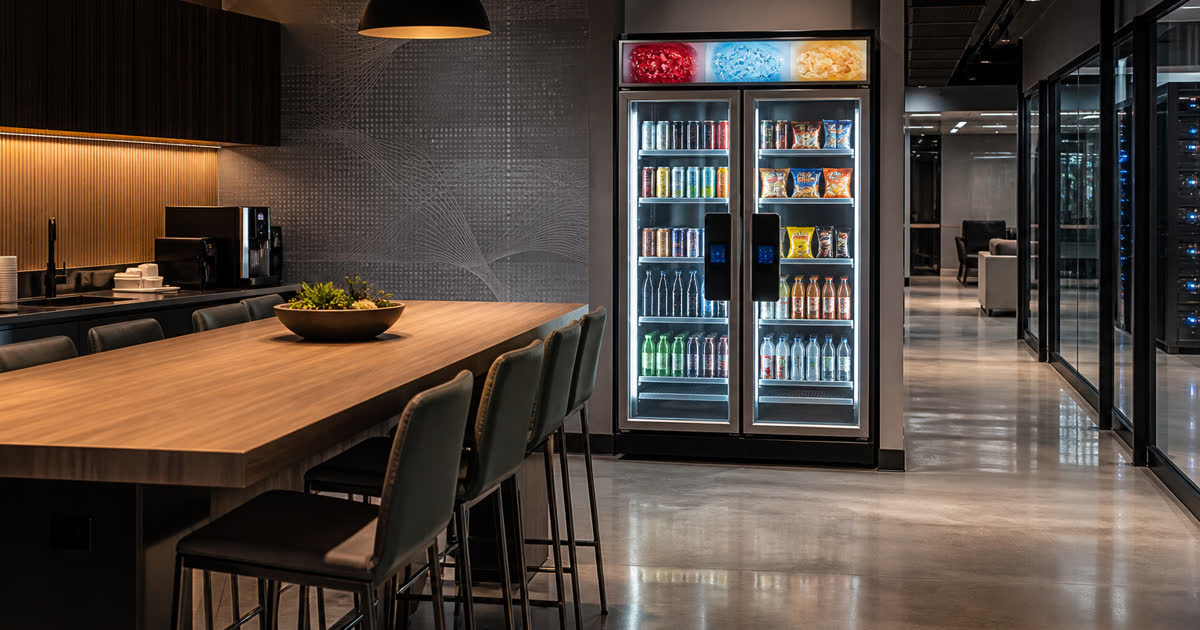
If the break area already has seating and a regular pause pattern, a smart fridge or smart cooler can make sense. People can grab a drink, a sandwich, or a snack without leaving the building. If the path is tighter, a slimmer smart vending machine may fit better. If the room has more space and enough usage, a compact market setup may give the product mix more room to breathe.
Format matters because it changes the service job. A cooler needs room for the door swing and stocking access. A market setup needs a clean traffic edge. A vending machine needs visibility without blocking the route.
The mistake is treating visibility as the whole strategy. Visibility helps, but access decides whether people actually use the amenity and whether the building team can live with it after week one.
Keep security claims out of the vending decision
A food amenity should not pretend to solve security. It should fit the rules the facility already has.
That means the vendor conversation should stay practical. Where can the unit sit? Who can access the area? How does restocking happen? Who handles payment questions? What should the product mix support during normal work patterns?
Those are useful questions. They do not require fake sophistication or dramatic claims.
For access planning, the ADA Standards are a good reminder that equipment placement is never only about the object itself. Clear floor space and routes matter. Revvolto does not certify a site’s compliance, and this article is not legal advice. The practical point is simpler: do not put stocked food access in a place that makes movement worse.
Payment support deserves the same plain treatment. The PCI Security Standards Council provides merchant resources for payment security context. For a buyer, the takeaway is not to become a payment expert overnight. It is to confirm who owns cashless payment support before the unit is live.
Plan restocking like part of the building operation
Stocked vending is not a one-time installation. The better version stays useful because someone owns the ongoing service work.
That is the Revvolto fit. We install modern smart vending machines and smart fridges for qualified locations. Then we handle stocking and service so your team is not turning into a snack department.
In a data center environment, that service model has to respect the site. Restocking should have a predictable route. The machine should have enough room around it for normal service. The product mix should fit the people using the area, not a generic convenience-store fantasy.
The strongest setup is rarely the flashiest setup. It is the one that keeps people closer to the workplace, supports the break path, and does not hand facilities another recurring chore.
If you are comparing options, ask for the service story before you fall in love with the hardware. A good-looking machine with an awkward service path becomes a problem fast.
What to check before adding data center vending
Before you add data center vending, walk the actual path. Not the floor plan. The path.
Watch where people already pause. Look for the real pause point. Then check whether the room supports service without blocking the route. After that, decide which smart vending format fits the space.
A practical site review should answer a few plain questions:
- Can staff reach the unit without leaving the useful work area?
- Can the unit be stocked without disrupting the path?
- Is payment and service support clearly owned?
If the answer is yes, the amenity can feel natural instead of bolted on. If the answer is no, fix the location before picking the machine.
Revvolto works best with businesses that want the amenity without managing the snack operation themselves. For qualified Austin-area locations, that can often mean modern cashless vending or smart fridge service with Revvolto handling the ongoing work.
If you are planning food access for a data center or secure facility, start with the room and the route. Then match the machine to the job.
Tell us about the location at revvolto.com/contact-us.