
Austin is putting real attention behind infrastructure workforce training. Workforce Solutions Capital Area describes the Austin Infrastructure Academy as a local coalition connecting people to infrastructure and skilled-trades careers. Its page also points to major regional projects and ongoing career information sessions as part of that work.
That is not a vending story on its own. The useful question for facility teams is simpler: when a training site is built around long sessions and hands-on labs, where do food and drinks actually fit?
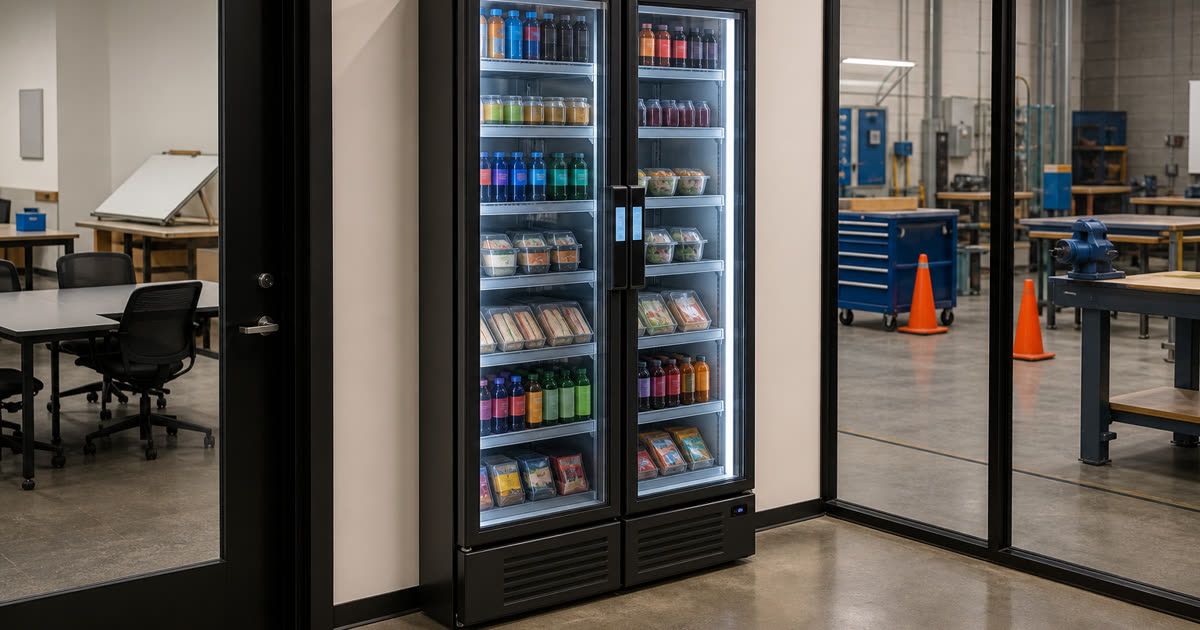
Austin smart vending belongs in that planning conversation because training spaces operate differently from a normal office. People are not always near a café. Breaks may be short. Classes can run across morning and afternoon blocks. A stocked smart fridge or smart cooler gives the site a practical food-access point without turning the front desk, instructors, or program staff into snack managers.
Revvolto is not affiliated with the organizations named in the local source. This is a local planning hook, not a relationship claim.
Training sites have awkward break paths
A workforce training center has movement patterns that look nothing like a small office kitchen. People arrive for orientation. Then they move through classrooms and lab space before short pauses. Some are there for a single info session. Others may be there repeatedly for longer training blocks.
That creates a basic operations problem. If the only food option is outside the building, a ten-minute pause gets swallowed by the errand. If the only option is a loose snack table, somebody has to manage it. That job usually lands on the nearest person who already has a full plate.
Smart vending gives the building a defined pause point. It can sit near a classroom corridor, training lounge, or staff-accessible common area where people already pass. The goal is not to make the amenity fancy. The goal is to make the break path obvious enough that people can grab something and get back to the program.
For infrastructure and skilled-trades spaces, placement matters more than decoration. A machine tucked behind the wrong door is easy to ignore. A unit blocking a service path becomes a headache. The right location balances visibility with a workable service path.
The amenity should not create another staff job
Training programs already have enough moving parts. Instructors are managing materials. Coordinators are handling schedules. Facilities teams are watching rooms, equipment, and cleanup. A food amenity should reduce friction, not add another mini-operation to the site.
That is where Revvolto’s model fits cleanly. For qualified locations, Revvolto can place modern cashless smart vending or smart fridge equipment that we stock and maintain. The site gets a cleaner food-access option. The internal team avoids the usual side quest of buying snacks, chasing payments, and wondering who is supposed to wipe down the station.
This is especially useful in spaces where the audience changes by the hour. A training site may serve job seekers in the morning, employer partners in the afternoon, and staff throughout the day. A stocked smart cooler can support those different use patterns without forcing the building to run a café.
The buyer question is not “Can we add vending?” That question is too small. The better question is: where does the building already create a natural pause, and can that pause support food access without adding work?
If the answer is yes, the next step is a placement review. Look at traffic flow first. Then confirm power access and restock access. That keeps the amenity practical instead of becoming shiny hallway clutter.
Local workforce growth makes building operations more important
The Austin Infrastructure Academy page frames the program around the region’s infrastructure growth, including transportation and skilled-trades work. That matters for building operators because workforce growth is not abstract once people show up in rooms.
More training activity means more arrivals, more room changes, and more short breaks. Food access becomes part of whether the space works smoothly. Not because snacks are the main point. Because unmanaged breaks create little operational leaks: people leave the site, sessions restart unevenly, and staff get pulled into questions that a better building setup could have answered.
A smart vending or smart fridge placement will not solve workforce development. That would be a ridiculous claim, and we are not making it. It can solve a smaller, real facilities problem: giving people a clear place to grab food or drinks during the day while letting the site team focus on the actual program.
The same lesson applies beyond workforce training. Campus buildings, community training rooms, and staff facilities all have pause paths. Some are obvious. Some are hidden until the first busy day exposes them.
Good vending planning starts before the building is crowded. Once people have already built habits around leaving the site or asking staff where to find food, the fix gets clumsier.
What to check before adding smart vending
Start with the path people already take. The best location is usually near a natural stop, not in the place that looks prettiest on a floor plan.
Then check the operational basics. The machine should have reliable power, enough clearance, and a restock route that does not interrupt training or building traffic. It should also be visible enough that people know it exists without adding signs everywhere.
Product mix comes after placement. A training center may call for cold drinks, light meals, and snack options that work for short breaks. The exact mix should be adjusted over time based on what people actually buy. Purchase data can help refine assortment, but a real operator still has to own the service and keep the experience clean.
That ownership is the point. Smart vending is not just a machine. It is a small operating system inside a building. If the site team has to babysit it, the setup missed the mark.
Revvolto helps qualified Austin-area locations think through fit, placement, and ongoing service. If your building has training rooms or long pause paths, tell us about the location at revvolto.com/contact-us.



