
Austin employers got a practical reminder this week: a commute change is not just a transportation issue. It changes entry routes and break timing. It also affects whether people can realistically leave again for food.
The City of Austin’s August 31 mobility update points employers to GoGrant support for commute impacts tied to construction. That is a transportation story on the surface. For workplace teams and tenant buildings, it is also a break-path story. When arrival patterns shift, the food plan inside the building starts to matter more.
Austin smart vending is not a magic fix for traffic. Good. Magic fixes usually come with a bad invoice. The useful question is simpler: when people are already changing routes or parking habits, does the building give them an easy way to grab food without adding another trip?
Commute disruption changes the break math
A normal day has invisible routines. People know where they park. They know which entrance they use. They know whether they have time to leave for coffee or lunch. Construction can scramble that routine fast.
A team member who arrives later than usual may skip the outside stop they normally make. A visitor may enter through a different lobby. A shift team may stagger start times to avoid a congested route. None of that automatically means a building has a food-access problem, but it does expose weak spots.
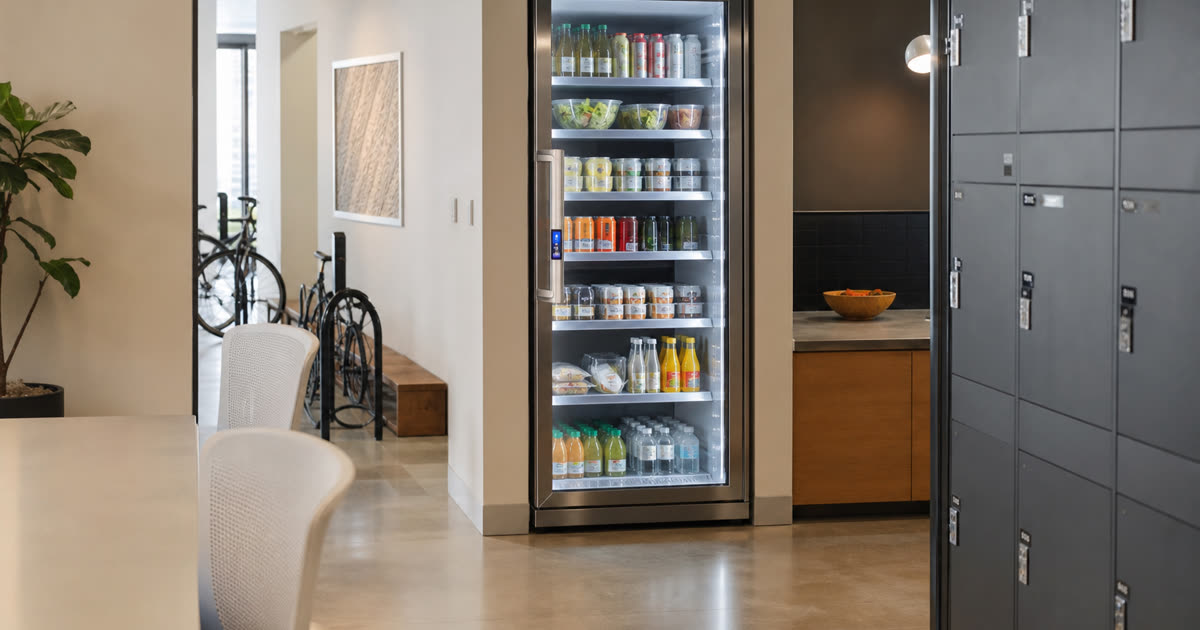
This is where smart vending earns attention. A well-placed smart fridge or cashless vending unit can sit near the route people already use, not in a forgotten corner that only facilities knows about. The point is not to turn every hallway into a snack aisle. The point is to make one good pause point work harder.
For Austin employers watching construction windows or parking changes, the practical audit is simple. Where do people now enter? Where do they wait? Where do they naturally pause before the next task? If those answers moved, the food-access plan may have moved too.
The best placement follows the new path
The mistake is treating vending placement as a room decision. It is really a path decision.
A machine tucked deep inside a breakroom can work when everyone passes that way. During commute disruption, the better spot might be closer to the lobby corridor or commuter locker zone. The winning location depends on visibility and service access. It should also feel obvious to the person using it for the first time. If restocking is awkward, the plan will annoy the very team it is supposed to help.
Modern smart vending also changes the support model. Cashless payment reduces the cash-handling headache. Inventory visibility can help service teams understand what is moving. A stocked smart fridge can cover cold drinks, snacks, and grab-and-go meals in a smaller footprint than a staffed counter.
That does not mean every building qualifies for the same setup. A tenant lounge may fit a single glass-door smart fridge. A staff-heavy campus may call for a larger smart cooler. A compact employer space may only have room for a narrow vending point near the daily traffic line. The useful move is matching the unit to the path, not forcing the path to serve the unit.
Food access should reduce work, not create a new chore
Commute disruption already gives operations teams enough moving parts. Vending should not become another clipboard, another key ring, or another person refilling a sad snack basket at 4 p.m.
That is why service ownership matters. If a workplace adds food access during a construction period, someone has to own stocking and product rotation. Payment support and maintenance have to be covered too. When those jobs fall on the front desk or office manager, the amenity starts looking less like convenience and more like a vending-shaped chore.
Revvolto’s role is different. We bring modern cashless smart fridges, smart vending, and micro market options to qualified business locations. We stock them, maintain them, and keep the setup tied to actual use. For the building team, the value is not just the machine. It is having one less recurring task to babysit.
That matters most when employee routines are already unstable. If people are adjusting commute timing, a reliable in-building option can help the day feel less brittle. Nobody should have to gamble on whether they have time to leave the property just to get a drink or something quick to eat.
A local mobility hook with a building-operations lesson
The Austin mobility update is not about vending. Revvolto has no stated affiliation with the City of Austin or GoGrant. We are using the public update as a timely planning cue for local employers.
The cue is worth taking seriously because commute disruption rarely stays outside the building. It shows up in break timing and visitor flow. It also shows up in the small daily pauses where convenience either helps or disappears.
For property teams and employers, the smart vending question is not, “Should we add a machine because construction exists?” That is too blunt. The better question is, “Has the path people use inside the building changed enough that food access should change with it?”
If the answer is yes, Revvolto can help review the location and match the format. We also keep the service burden off your team. Tell us about the building at revvolto.com/contact-us.



