
Community Impact reported today that The Code on South Lamar is adding new ground-floor businesses to its mixed-use property. That is a useful Austin signal even if your building has nothing to do with that project.
When a property puts more daily uses on the ground floor, food access stops being a back-office detail. People move through the same repeat pause points near entries, elevators, and staffed services. If those spots only work when a staffed counter is open, the building has a gap.
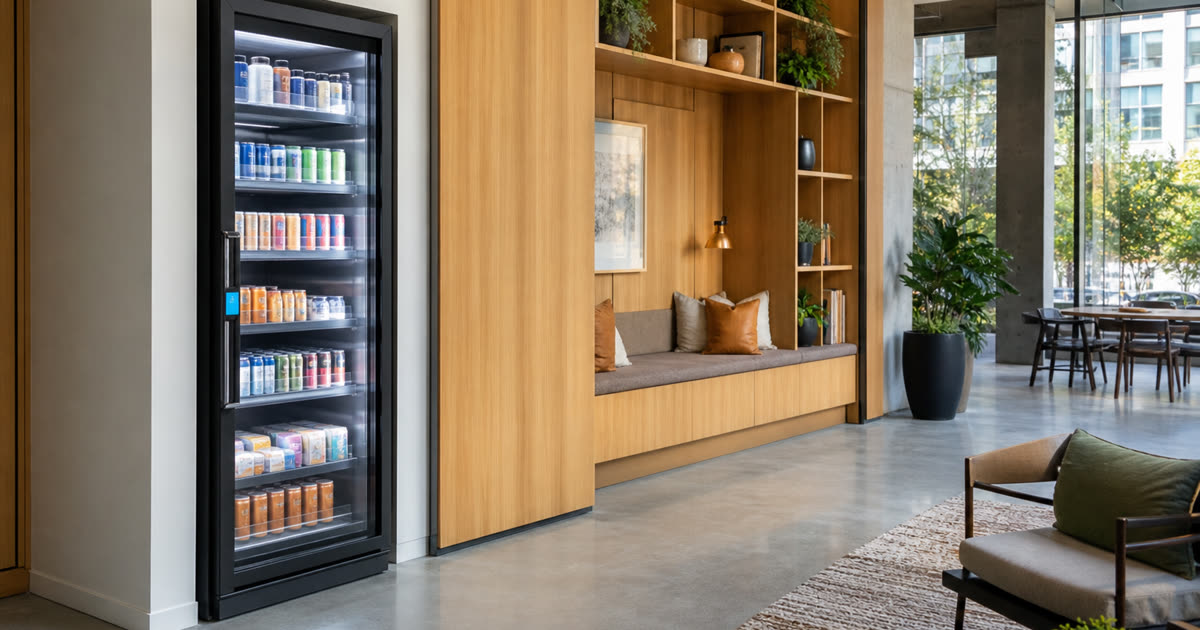
That is where smart vending Austin teams should think less like snack buyers and more like building planners. A modern smart fridge or smart vending cooler is not there to compete with nearby food service. It works best as the reliable fallback when someone needs a quick cold drink or meal without leaving the property.
Mixed-use buildings create more small pause points
Mixed-use properties are built around overlap. Different audiences may use the same ground-floor routes at different times. That movement can make a building feel alive. It can also make food access oddly fragile.
A coffee shop can cover part of the day. A restaurant can cover another. A retail business might add foot traffic but not solve the simple question of where someone gets a cold drink in two minutes. The operational question is not whether the property has food somewhere nearby. It is whether the right option sits close to the path people already use.
The Community Impact piece matters because it shows how ground-floor programming keeps getting more layered. The article says the property is adding retail, fitness, and wellness offerings after its all-day café opened in the lobby. That kind of activity changes the rhythm of a building. More services can mean more arrivals, more short waits, and more in-between moments.
Smart vending fits that rhythm when it is placed with intent. The unit should not block a corridor or look like an afterthought. It should sit near a natural pause point with enough room for use and service. If the machine feels tucked into the wrong corner, people treat it like storage. If it sits where movement already slows down, it becomes part of the building experience.
The café is not the whole food-access plan
Here is the part property teams should not miss: adding a café does not automatically solve food access.
A café is great when someone wants a prepared drink, a staffed interaction, or a place to sit. It is less useful when the moment is faster, quieter, or outside the café’s best operating window. A smart fridge can carry drinks, fresh grab-and-go items, and packaged snacks without asking the front desk or café staff to become the snack help line.
That distinction matters in mixed-use buildings because the audience changes by hour. Morning traffic may lean toward coffee. Midday may be more lunch-driven. Evening may be residents or service users moving through the lobby after normal staffing patterns shift. One staffed concept rarely covers every small food-access moment cleanly.
Revvolto’s role is the operational layer, not the drama. We provide modern cashless vending and smart fridge options for qualified locations. We stock and maintain the setup, then use sales and inventory data to support a product mix that fits the site over time. That means the property team is not stuck managing inventory or payment support from behind a counter.
The goal is not to turn every amenity area into a store. The goal is to give the building one low-friction food option that supports the way people already move.
Placement should follow the building’s real path
The best smart vending placement usually starts with one walk-through question: where do people already slow down without being forced to stop?
For a mixed-use property, that answer might be near the lobby edge or a resident lounge. It should be visible enough to feel convenient and calm enough that nobody feels like they are shopping in a doorway. The service path matters too. A beautiful placement that cannot be restocked cleanly will annoy the team maintaining it and the people trying to use it.
This is why food access should be part of the layout conversation early. Waiting until the building is already operating makes every decision harder. Furniture is placed. Traffic habits form. Power access may be awkward. A cooler lands wherever there is a spare wall, then everyone wonders why it feels bolted onto the experience instead of built into it.
The smarter version is boring in the best way. Check sightlines. Check outlet access. Check restock movement. Check how the unit looks from the main path. Then choose a product mix that matches the building instead of copying a generic breakroom shelf.
For retail and wellness-heavy spaces, that might mean more cold drinks and light meals than candy. For residential-heavy routes, it might mean dependable late-day grab-and-go. The point is not the category list. The point is matching the machine to the moment.
Smart vending can support the spaces between tenants
A strong mixed-use building does not depend on one amenity to do every job. The café can be the social anchor. Retail can make the ground floor feel active. Fitness and service businesses can create repeat visits. Smart vending can support the spaces between all of that.
That is a cleaner buyer lesson than “add snacks.” The real decision is service ownership. Who keeps the option stocked? Who handles payment issues? Who notices when certain items move and others sit? Who makes the unit feel maintained instead of forgotten?
Revvolto is built for that handoff. In qualified placements, we typically provide the equipment at no cost to the location and handle the operating work behind it. Site fit still depends on traffic and placement. No serious operator should pretend otherwise.
The Austin takeaway from today’s mixed-use retail news is simple: as buildings add more reasons for people to pass through the ground floor, food access deserves the same planning discipline as the rest of the amenity plan.
If your building has a daily pause point that could support smarter grab-and-go access, tell us about the location.



