
Smart vending in student housing works best when the machine is planned like part of the building, not dropped into whatever corner still has an outlet.
That matters in off campus housing because the audience moves differently from an office or hotel. Residents come through study lounges at night, pass package rooms on the way upstairs, and use common areas when staff may not be nearby. A vending machine or smart fridge can support that rhythm, but only if the plan answers the boring questions early.
Boring questions are where good amenity projects win. Where will people queue? Who handles restocking? What happens when payment support comes up? Can the machine sit near the path residents already use without making the space harder to navigate?
This guide is not legal advice. It is a practical preinstall checklist for student housing teams considering smart vending, cashless vending, or a smart fridge amenity.
Start with the resident route
A student housing vending plan should begin with movement, not equipment specs.
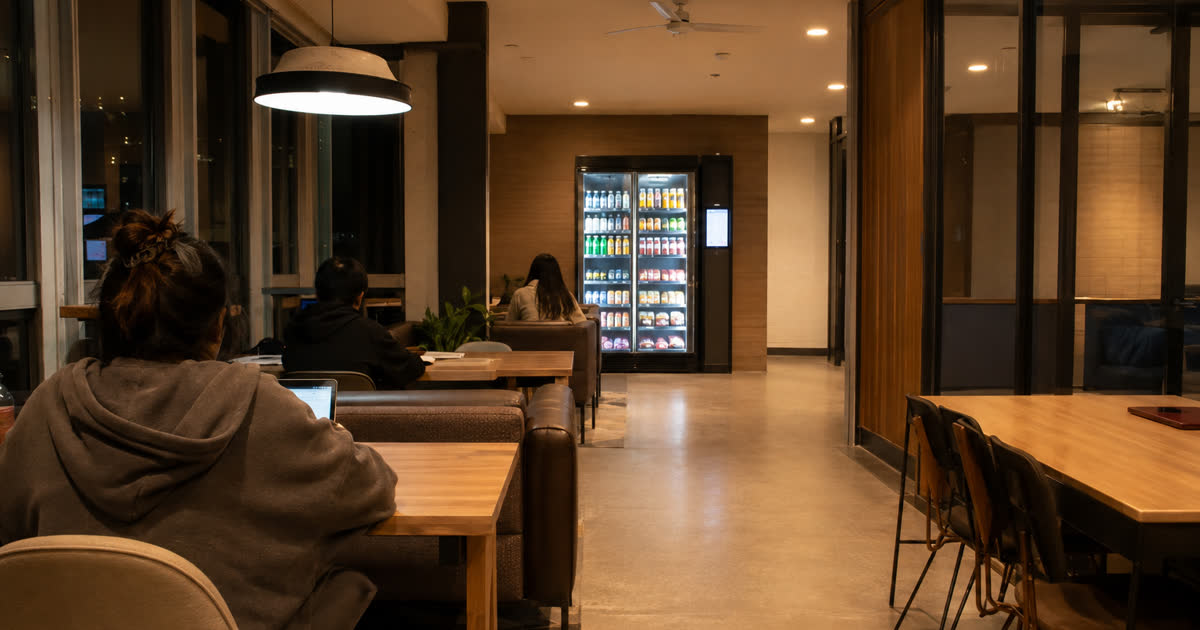
The best location is usually close to a natural pause point. Think study lounge, package room path, or lobby route. If residents already pass the spot on the way to something else, the machine feels useful. If it sits in a tucked away leftover room, it becomes one more amenity people forget exists.
Route planning also keeps the project honest. A smart vending machine has to give someone room to browse, pay, and step away without blocking the path. Service access matters too. If restocking requires dragging carts through the tightest part of the building, the placement will annoy the team long after the first week.
Accessibility belongs in this first conversation. The U.S. Access Board guidance on accessible routes is not a vending site approval stamp, but it is a useful planning reminder that circulation paths are part of the built environment. A student housing team should confirm the actual site conditions with its property and compliance professionals before installation.
The practical test is simple: can residents use the machine without creating a traffic knot, and can the operator service it without turning the common area into a storage maze?
Keep payment support off the property team
Cashless vending sounds simple until the front desk becomes the help desk.
Student housing properties already handle packages, tours, and resident requests. Move in chaos is its own sport. The vending plan should not add payment troubleshooting to that pile. Before install, ask who handles refund requests and machine alerts.
That is where operator responsibility matters. Revvolto installs and maintains modern vending machines, AI powered vending machines, and smart fridges for qualified locations. We also handle stocking cadence and payment support, so the building team is not expected to become a snack program manager.
Payment planning also has a data security angle. The PCI Security Standards Council publishes the PCI Data Security Standard, which sets security requirements for payment environments. A student housing blog post should not pretend a vending location is PCI certified because a card reader exists. The safer buyer question is whether the vending provider owns the payment stack and support process clearly enough that your team is not guessing.
If the answer is fuzzy, fix that before the machine shows up.
Match the format to the room
Student housing does not have one vending layout.
A study lounge may work better with a full glass smart cooler that feels like part of the room. A package room route may call for a compact machine that does not crowd lockers. A larger amenity area may support a small market style setup if the path and service plan make sense.
The format should follow the room. Check door swing, electrical access, and service approach first. Then look at how residents use the area at different times of day. Avoid a machine that looks premium in a rendering but feels awkward in the actual building.
Product mix belongs in the same discussion. Late night residents may want cold drinks and quick snacks. Study areas may call for a different mix than a fitness room route or lobby lounge. The point is not to guess the perfect menu on day one. It is to place a modern vending system where purchase data and restock feedback can improve the assortment over time.
A good student housing vending plan gives the operator enough room to do that work. A bad one turns every refill into a workaround.
Protect the brand of the property
Student housing amenities are part of the leasing experience, but vending can go sideways when it feels bolted on.
The machine should look clean, modern, and intentional. The products should be stocked on a regular cadence. The payment experience should feel normal for residents who expect cashless options. The surrounding area should stay tidy enough that the amenity supports the property instead of making it feel like a convenience store afterthought.
This is also where claim discipline matters. Do not sell vending to residents as a health program, safety feature, or guaranteed retention tool. Those claims create risk and distract from the real value. The stronger promise is more practical: convenient food and drink access in the common areas residents already use, with the operator responsible for the work behind it.
For off campus student housing, that is enough. The building can skip the complicated food service program and still give residents a better grab and go option. Start with the right equipment, the right placement, and a provider who will keep showing up after install.
The preinstall checklist
Before you add smart vending to a student housing property, answer these questions with the operator and your internal team:
- Which resident path already creates the best pause point?
- Does the location preserve circulation and service access?
- Who owns payment support, restocking, and maintenance?
- Which machine format fits the room without crowding it?
- How will the product mix be reviewed after launch?
- What claims will the property avoid in resident-facing promotion?
The last question matters more than people think. Smart vending is strongest when it stays concrete. It gives residents convenient access to food and drinks. It can operate around the clock. It can reduce the property team’s snack and payment support burden when the operator owns the program.
That is the clean pitch.
If you are planning food and drink access for a qualified student housing property, tell us about the building at revvolto.com/contact-us. We will help you pressure test the room, the route, and the service plan before anyone starts moving equipment.



