
Opportunity Austin reported this summer that Otsuka ICU Medical plans to expand its North Austin manufacturing site with a new 500,000-square-foot facility, and MassDevice later reported that the project has broken ground. That is not a vending story. It is a reminder that Austin’s next wave of advanced manufacturing will not be built only around production rooms. It will also be built around the daily paths people use between focused work, training, and breaks.
Revvolto has no affiliation with Otsuka ICU Medical or the cited project. We also have no affiliation with Opportunity Austin or MassDevice. We are using the public news as a local planning cue: when a site adds manufacturing space, food access should be planned before the building is busy.
For operations and facilities teams, a smart vending machine or smart fridge is not just a snack box in the corner. It is a way to place food and drinks where people already pause, without turning the break area into a second job for the team managing the building.
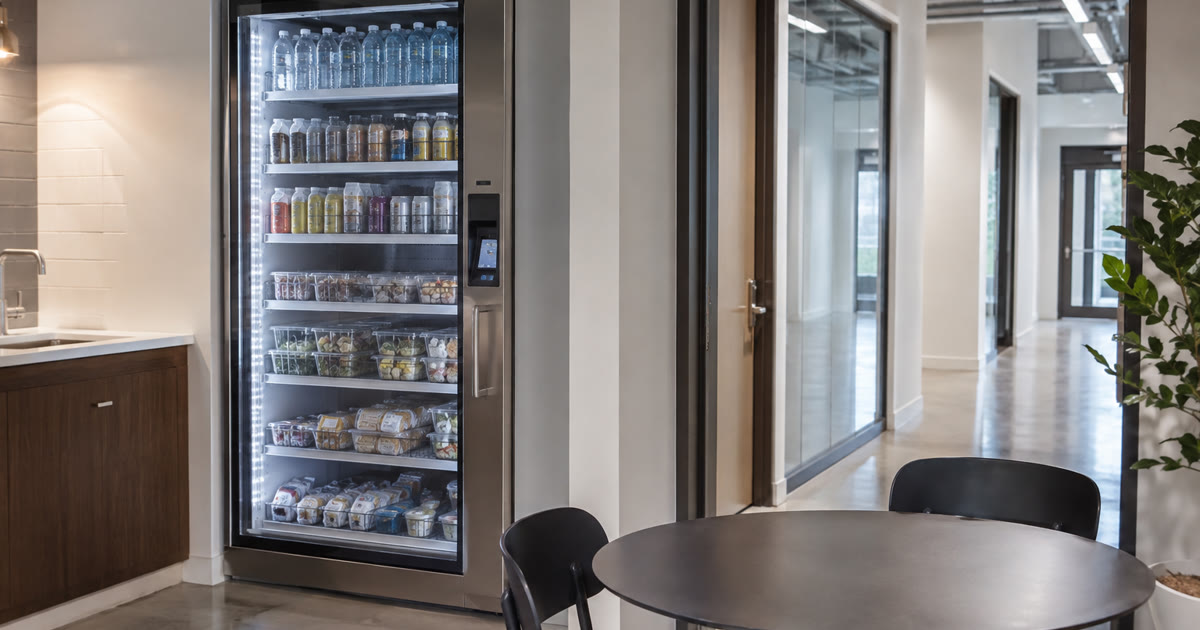
Manufacturing growth changes staff break planning
Large manufacturing buildings are different from ordinary offices. People may work around production schedules and controlled corridors. They may also move between training rooms and support spaces. Even when the public conversation is about investment or square footage, the daily experience inside the building comes down to much smaller questions.
Where do people step away for five minutes? Which room stays useful after the cafe closes? How far does someone have to walk to grab a cold drink between tasks?
Those questions sound minor until the building opens. Then they become traffic flow and service problems. Restocking and cleaning get dragged into it too. A break area that looked fine on a plan can feel inconvenient if it sits too far from daily staff movement. A pantry can look generous until someone has to keep it stocked. A traditional machine can check the box but still feel dated if payment and product mix are clunky.
A modern smart vending setup fits best when the placement follows the real pause point. In a manufacturing campus, that may be near a staff breakroom or a training area. It may also sit near a production-support corridor if the service path works. The right answer is not the flashiest corner. It is the spot people can use without creating a bottleneck.
Smart vending works when service ownership is clear
Manufacturing teams already have enough moving parts. Food access should not add another loose process.
That is where smart vending and smart fridges become more useful than a casual snack shelf. The hardware matters, but the service model matters more. Someone has to stock the unit and maintain the equipment. Someone also has to adjust the mix and handle payment support. Otherwise the area becomes a messy afterthought.
For qualified locations, Revvolto can bring in a modern cashless smart fridge or smart cooler. A vending machine or micro market style setup may fit when the room supports it. Revvolto handles the ongoing stocking and maintenance. That matters in buildings where the facilities team is already thinking about access and vendor visits. Breakroom upkeep and equipment reliability are already enough to manage.
The goal is not to make the breakroom fancy for its own sake. The goal is to reduce friction. People should be able to get a drink, snack, or simple meal option without leaving the site or leaning on a front desk. The building team should not have to run a miniature convenience store because the amenity seemed easy on paper.
Done well, the setup feels boring in the best way. It is stocked. It takes cashless payment. It fits the room. It has a clear owner. Nobody has to turn snack duty into an internal sport.
Food access should match the facility, not fight it
The Opportunity Austin article points to a large North Austin manufacturing expansion. MassDevice reported the project had broken ground, and the original company announcement described a major Austin facility expansion. For Revvolto’s purposes, the useful lesson is simple: growing facilities should treat break access as part of the building plan, not a scramble after move-in.
That is especially true for manufacturing and life-sciences environments, where the wrong placement can make an amenity harder to use. A smart cooler near the wrong doorway may interrupt movement. A setup too far from the real pause area may sit underused. A unit without a service path can create more work during restock visits.
The better question is practical: where can the unit serve people without getting in the way?
A good placement plan thinks about walking paths and room visibility. It also accounts for service access and the kind of products people are likely to buy during a short break. It avoids pretending every building wants the same setup. Some sites fit a compact smart fridge. Others fit a larger smart vending cooler. A few may need a small micro market style footprint if the room and traffic support it.
That choice should follow the building. The building should not have to bend around the machine.
Austin facilities can plan food access earlier
The mistake is waiting until the week before opening to ask where food and drinks go. By then, the best wall space may be claimed. The service route may be awkward. The breakroom may already have furniture that blocks the useful path.
Austin keeps adding facilities that mix production work with technical teams. Training and support functions often share the same campus rhythm. Those environments do not need generic amenity language. They need practical food access that respects how the building actually operates.
That is where Revvolto can help. We look at the location and the audience before recommending a smart vending or smart fridge format. The available space and daily movement matter just as much. For qualified Austin-area locations, Revvolto typically handles the unit and stocking. Restocking, payment technology, and maintenance stay with Revvolto too.
The public expansion news is the hook. The real buyer lesson is quieter: if your building is adding people or new shifts, plan the staff pause point early. New rooms and controlled work areas make that planning even more important. Do it before the vending decision becomes a hallway compromise.
If you are planning food access for an Austin-area manufacturing or warehouse facility, tell us about the location at revvolto.com/contact-us. Office, campus, and staff-facility teams can use the same conversation.



