
Emergency veterinary teams work in a strange rhythm. The building may look quiet from the lobby, but the back of house can move fast for hours. When the only food option sits off site, every break becomes a small staffing decision.
That is where smart fridge planning earns its keep. Not because a stocked cooler fixes the hard parts of veterinary work. It does not. The point is simpler: give the team a practical grab-and-go stop inside the staff route, then make sure someone else owns the stocking and service work.
For emergency vet clinics, the question is not whether snacks are nice. The question is whether the break area supports the way the team actually moves.
Why emergency vet clinics should treat food access as a facilities decision
Emergency and urgent-care veterinary buildings are not normal retail spaces. Front-of-house work is separate from clinical movement and staff-only support space. Food access belongs in that planning conversation because it affects where staff pause, how long they leave the work area, and who gets stuck managing the little stuff.
The American Veterinary Medical Association has written about the pace inside emergency veterinary clinics, including busy phones and walk-in demand. That article is not about vending. It is useful because it shows why back-of-house support matters when the day gets compressed.
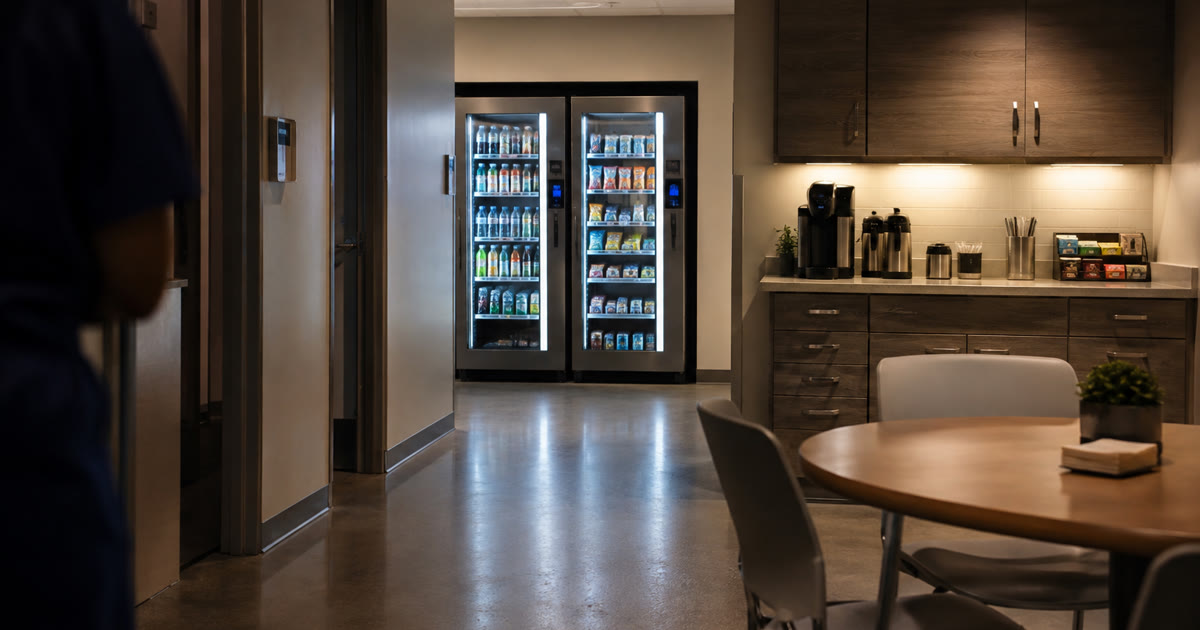
A smart fridge or smart cooler gives clinic managers a controlled staff-area option. The unit can sit near a break room, staff corridor, or administrative pause point instead of pulling people toward a public counter. The better placement is usually boring on purpose: visible enough to be used, out of the clinical workflow, and easy enough for service access.
That matters for overnight and weekend teams too. If a location runs beyond normal food-service hours, a stocked staff-area cooler can remove one more errand from an already tight shift. No drama. Just fewer tiny interruptions.
What a smart fridge should solve for the clinic manager
A clinic manager does not need another project disguised as an amenity. If the team has to chase product requests or call around for repairs, the vending idea has already become too heavy.
The practical test is whether the provider owns the work. Revvolto installs the modern cashless smart fridge or smart vending setup. We also keep it stocked and handle service support. For qualified locations, the setup is typically structured without upfront equipment cost to the site.
That is the useful version of the offer. The clinic gets convenient food and drink access. Revvolto handles the operating layer. The staff does not inherit a snack closet with better lighting.
The buyer question should stay concrete:
- Who uses the break area during long or late shifts?
- Where can the unit sit without crowding the work path?
- Who owns restocking and service when something goes wrong?
If those answers are vague, the placement is not ready.
Keep the placement staff-only and out of the clinical path
Veterinary settings come with obvious boundaries. A smart fridge should not sit where it looks like part of patient care. It should not compete with check-in space. It should not create congestion near exam-room movement, treatment access, or sensitive staff work.
A better location is a staff-only break room, an administrative corridor, or a back-of-house pause point. The U.S. Access Board’s ADA route guidance is a good reminder that circulation paths matter. Revvolto should not claim a site-specific accessibility result from a blog post, but buyers should plan placement with clear movement and service access in mind.
Payment is another practical detail. Cashless vending can be convenient, but card and account-data handling should stay with appropriate payment systems and responsible providers. PCI Security Standards Council materials explain that payment-data protection depends on standards, environments, and responsible parties. In plain English: do not bolt a cheap payment workaround onto a serious workplace.
For a vet clinic, the winning layout is usually quiet and specific. Put the unit where the team already pauses. Keep it away from clinical work. Make service access easy enough that restocking does not become a hallway obstacle.
Product mix should match staff use, not a lobby impulse buy
Emergency vet clinic food access is not the same as a public lobby snack rack. The buyer is planning for staff who may need something quick during a short break. That points toward practical grab-and-go variety rather than novelty.
A smart fridge can support cold drinks, simple meals, and snack options in one controlled footprint. A smart vending unit can work when shelf-stable items fit the room better. A compact micro market may make sense only when the space and usage pattern support it. The format should follow the room, not the other way around.
This is where provider responsibility matters again. Product mix should be adjusted from real purchase patterns over time, not guessed once and left to fade. Revvolto can use purchase data and restock feedback to refine the assortment, while the clinic avoids becoming the unofficial snack buyer.
There is also a claim boundary here. This is not a health or retention promise. The safe claim is operational: staff get a closer food and drink option, and the clinic reduces the work of managing it internally.
The buying question: will this make the site easier to run?
Smart fridge planning for emergency vet clinics should come down to one blunt question: does this make the building easier to run for the people already responsible for it?
If the answer is yes, the reasons are usually practical. The unit fits the staff route. It supports late or irregular schedules. The payment experience is cashless. Restocking and service are handled by the provider. The clinic team does not have to turn a breakroom idea into a side job.
If the answer is no, wait. A bad placement can make a polished smart cooler feel like clutter. A weak service plan can make a good amenity feel like one more thing to chase.
Revvolto is built for the better version: modern smart fridges and smart vending for qualified business locations, stocked and maintained by Revvolto, with a setup that is typically low-friction for the site team.
If your veterinary clinic is looking at staff-area food access, start with the route people already use. Then tell us about the location. We will help figure out whether a smart fridge, smart vending unit, or compact market setup actually fits.



