
A laundromat vending machine is not just a snack box in the corner. In a self-service laundry, people wait through a real cycle. They wash and dry. Then they fold laundry and kill time near machines that already have their attention.
That waiting pattern changes the format decision. A small old-school machine may handle a few candy bars. A smart vending unit or smart fridge can support cold drinks, grab-and-go food, and cashless payment in a way that feels more useful for the room.
The right question is simple: what format fits the customer path without creating more work for your team?
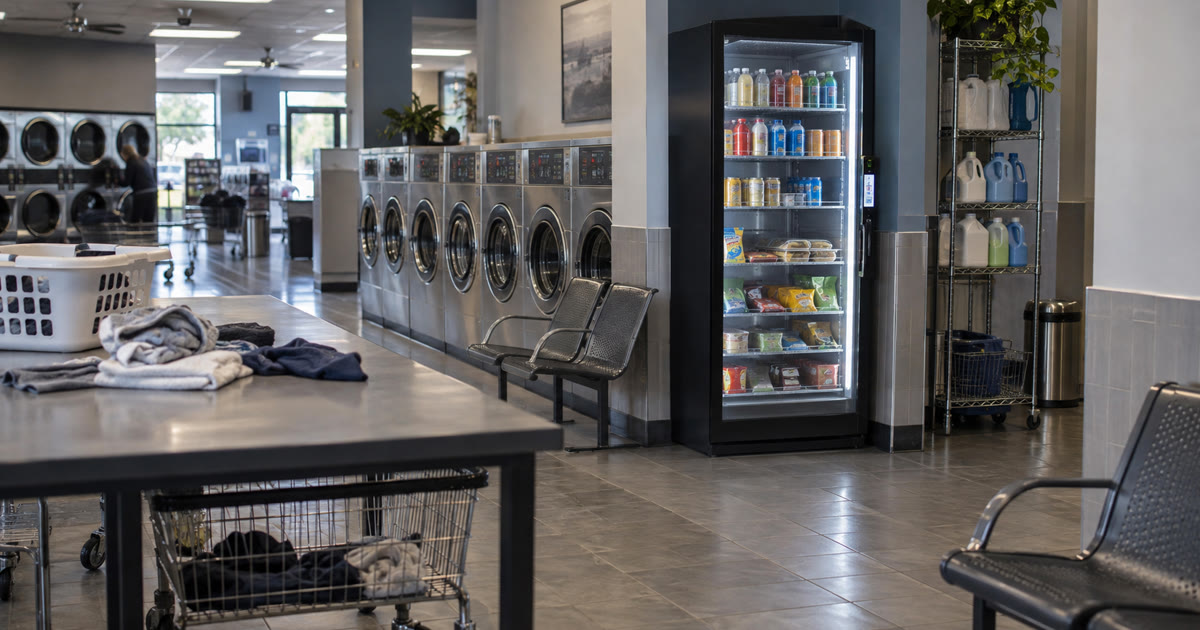
Start with the wait, not the equipment
Laundromats have a built-in pause. One public laundromat guide estimates a standard visit at roughly one hour to one hour and fifteen minutes, with wash cycles around 25 to 35 minutes and dry cycles around 30 to 45 minutes. That is not a claim about every store, but it is a useful planning reality: people are in the building long enough to want a drink or snack.
That does not mean every laundromat should add the biggest food setup possible. It means the food-access format should match how people already move.
If customers sit near the front windows, a smart vending unit near the waiting area may make sense. If the folding tables are the natural pause point, the unit should not fight that path. If carts need a clear route between washers and dryers, the machine should not steal that space because the wall looked available.
For laundromats, vending placement has to respect dwell time and cart movement. Service access has to be planned too. Miss that and the amenity starts feeling like furniture in the wrong room.
When smart vending makes the most sense
Smart vending works well when you want a compact, controlled setup with a familiar buying experience. It is a strong fit for laundromats that want drinks and packaged snacks available without asking the counter or attendant to manage inventory, payments, or small customer requests.
The upside is control. A smart vending machine can sit in a defined footprint, keep products organized behind glass, and support cashless payments. That matters in stores where people may already use cards or mobile payment for laundry equipment.
The placement still has to be honest. Put it where customers naturally pause, not where it blocks carts or sits behind someone folding sheets. Leave enough room for restocking. Keep the front visible enough that people know it is available, but not so exposed that it becomes an obstacle.
A good laundromat vending setup feels obvious once it is installed. People do not have to hunt for it. Staff do not have to explain it all day. Service teams can reach it without dragging cases through the tightest part of the store.
When a smart fridge is the better fit
A smart fridge can feel more natural when the offer leans toward cold drinks, refrigerated snacks, or small grab-and-go items. That can work in laundromats with longer visits, evening traffic, or customers who use the space like a short waiting room.
The fridge format changes the feel. Instead of a traditional vending purchase, customers open the unit and choose from a stocked mix. Payment happens through the system. That can make the amenity feel more modern, especially in a clean, upgraded laundry space.
The tradeoff is planning. Refrigerated products make service ownership more important. The location needs power and room for door swing. People need enough space to browse, and the restock path should not interrupt the busiest washer row.
Use a smart fridge when you want the food and drink selection to feel more premium than a basic vending setup, and when the room can support the service path. If the only available spot is cramped or awkward to restock, the better move may be a narrower smart vending unit.
Where a micro market usually does not fit
A micro market can be useful in larger workplaces and controlled-access buildings. Most laundromats are different. They are public-facing and space-sensitive. The room already has to handle machine turnover, carts, and folding surfaces.
That does not make a micro market impossible. It just raises the bar. A small open display only works if the space can support browsing and payment. Restocking and product security need their own plan without cluttering the customer path.
For many laundromats, the better comparison is smart vending versus smart fridge. Those formats usually fit the room with less floor-plan drama. A compact refrigerated case or glass-door unit can give customers useful options without turning the laundromat into a convenience store.
Be careful with the phrase “amenity.” In a laundromat, an amenity earns its spot only if it supports the visit. If it blocks cart movement or gives the attendant another job, it is not an amenity. It is a chore with a plug.
Payment support and access matter more than flash
Cashless payment is not just a nice feature. It affects support. If a customer has a payment issue, who handles it? If the reader is confusing, who gets asked? If the unit is tucked behind folding traffic, who has to move people out of the way when it needs service?
The PCI Security Standards Council publishes standards and guidance around payment data protection for contactless and mobile payment systems. For a laundromat operator, the practical takeaway is not to become a payments expert. It is to choose a setup where payment support is owned, documented, and not dumped on the wrong person.
Access matters too. The U.S. Access Board’s guidance on operable parts includes clear floor space and reach-range planning for fixed controls. A vending unit is not automatically an accessibility project by itself, but placement still deserves real attention. If someone cannot approach the machine comfortably, the format choice is already weaker.
This is where Revvolto’s role is simple. We help qualified locations choose the right smart vending or smart fridge setup. We install it and keep it stocked. We maintain the unit and handle payment tech. Your team should not have to become the vending department.
The laundromat format test
Before you pick the equipment, walk the room during a busy period.
Where do people wait after starting a load? Where do carts pinch the aisle? Where could a service person restock the unit without becoming part of the traffic jam?
If customers mostly pause near the folding area, a compact smart vending machine near that path may win. If the waiting area has room and the store wants a more premium cold-food feel, a smart fridge may be the sharper choice. If the space is large and controlled enough for open browsing, then a small market-style setup can be discussed.
The format should follow the room. That is the whole game.
If you are evaluating vending for a laundromat or another self-service space, tell us about the location. We can help you think through the path and product mix before equipment shows up.



