
Museums and local attractions are not built like office breakrooms. People arrive in waves. They move through exhibits at different speeds. They wait for programs, then drift toward a shop or seating area before they leave. That creates a simple question for operators: where can someone get a quick drink or snack without sending the whole visit through a cafe line?
A smart vending machine or smart cooler can help when it is treated as part of the visitor path, not as a random appliance near an outlet. The best placement supports one natural pause point at a time. The lobby may be right. The shop overflow may be better. Staff paths may call for a separate answer.
This is not about replacing a cafe. It is about giving the building another low-friction food access option when the cafe is closed, crowded, or not the right fit for a fast stop.
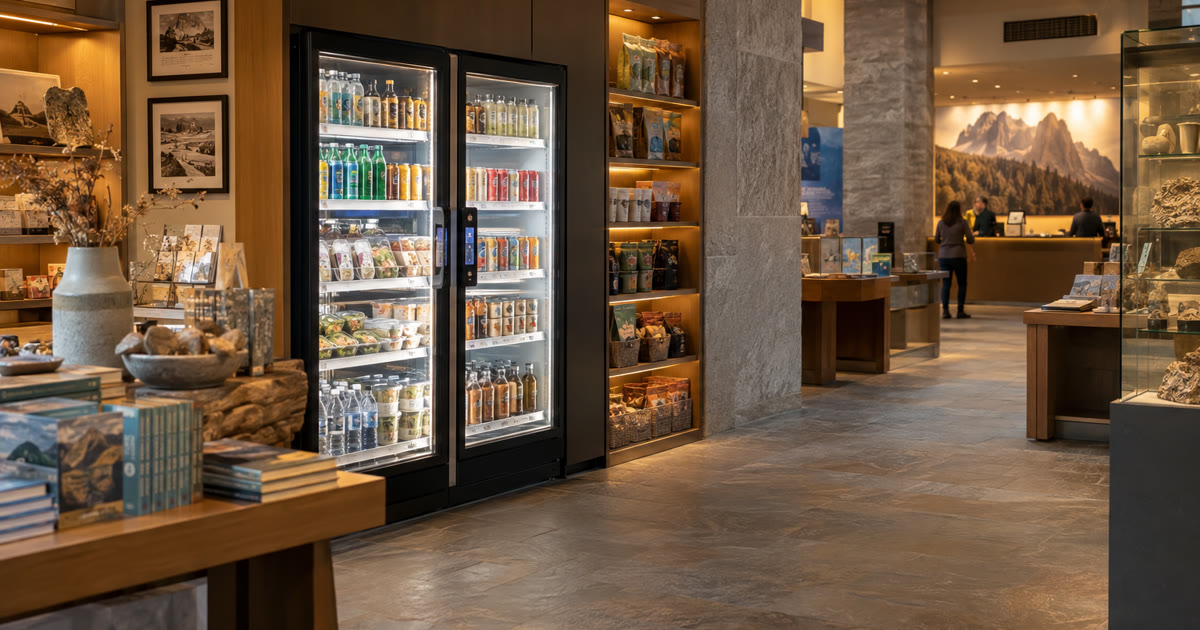
Start with the pause path, not the machine
The first mistake is asking, “Where can we fit vending?” The better question is, “Where do people already pause?”
Museums and attractions have predictable pause points. Visitors slow down near entrances. They stop at exhibit transitions. They also gather around shops and program rooms. Staff and volunteers may have a separate rhythm around prep rooms and closing shifts. A smart cooler works best when it sits near one of those moments without making the space feel like a convenience store was dropped into the gallery.
The U.S. Department of Justice museum accessibility guidance is a useful reminder here: temporary furniture and exhibit changes can create route problems when they are not managed. Vending placement should follow the same logic. A unit should not squeeze a walkway, crowd a counter, or create a service route that fights the visitor route.
For a museum or attraction, the buyer question is less “Can a machine fit?” and more “Can the machine fit without creating a new operational headache?” That means checking door swing and service access first. Power and visibility matter too, but they should not win at the expense of movement.
A better placement feels almost boring. Visitors see it when they want it. Staff can explain it in one sentence. Service teams can reach it without weaving through a crowded exhibit. Boring is underrated when the alternative is moving a 500-pound problem twice.
Use smart vending for cafe overflow and after-hours gaps
A cafe can be great, but it is not always open when the building is active. Museums have member previews and school group arrivals. Many also run evening rentals or staff training. Local attractions can see weekend spikes followed by slower weekdays. A staffed food counter may not make sense across all of that.
Smart vending gives the venue a smaller, more flexible layer of service. It can support cold drinks, simple snacks, and refrigerated items in a footprint that does not require a cashier. Cashless payment keeps the experience modern without asking staff to make change.
The point is not to promise more revenue or better visitor satisfaction. Those claims require proof. The practical value is simpler: visitors and staff get one more convenient option. The property team avoids taking on inventory runs, payment-device issues, and restock chasing.
That is where Revvolto fits. In qualified locations, we bring in the smart vending or smart cooler setup. We keep it stocked on a regular cadence, support the payment technology, and handle service. The museum or attraction still has to choose the right location and confirm site fit. It does not have to become a snack operator.
For visitor-facing venues, that ownership line matters. The best amenity is the one people use without the operations team inheriting a second job.
Keep payment and access questions practical
Cashless payment is helpful in visitor venues because not every guest carries cash, and staff should not have to make change for a machine. But payment support should be treated as an operations question, not a buzzword.
PCI Security Standards Council merchant resources make the basic point that payment security applies to entities involved in card payment processing. For a museum buyer, the practical takeaway is direct: ask who owns the payment setup. Then ask who supports device issues and transaction questions. The wrong answer is “the front desk can figure it out.”
The same practical thinking applies to accessibility. A vending unit should not create a tight turn or block a lowered counter. It also should not sit where queue ropes already make movement hard. ADA guidance for public accommodations and museum spaces is not a vending checklist, but it is a useful planning lens.
There is also a staffing reality. If the machine sits where every minor issue becomes a visitor-services interruption, the amenity starts costing attention. The better setup gives staff a simple answer: Revvolto supports the unit, and the visible contact or service process is clear.
That is the difference between an amenity and a distraction.
Match the product mix to the visit
Museums and attractions do not all need the same product mix. A children’s museum may look different from a gallery. A science center may look different from a historic site. The assortment should follow the moment.
For a short-visit venue, drinks and simple snacks may carry most of the job. For longer dwell times, refrigerated items can make more sense. For staff-only areas, the mix may lean toward shift-friendly options rather than visitor impulse items. None of this requires a venue to guess perfectly on day one.
Smart vending works better when purchase data and restock patterns help refine the assortment over time. That does not mean the machine magically “knows” what people want. It means the operator can see what sells, what sits, and what should change. That is a useful feedback loop for places where traffic varies by exhibit schedule and season.
The product mix should also respect the venue’s brand. A premium museum lobby does not need a chaotic wall of loud packaging. A cleaner smart cooler with well-kept shelves and cashless access can feel more aligned with the space than old vending equipment.
This is where the physical presentation matters. Modern smart vending should look maintained, stocked, and intentional. If it looks forgotten, visitors will treat it that way.
What to ask before saying yes
Before adding smart vending to a museum or local attraction, ask four grounded questions.
First, where is the real pause path? Pick the spot where people naturally stop, not just the spot with spare power.
Second, who owns stocking and service? If the answer drifts toward visitor services or gift shop staff, the model is wrong. Facilities should not inherit snack duty either.
Third, what payment support is included? Cashless convenience only helps if the support process is clear.
Fourth, does the unit respect the room? The machine should support the visitor experience without blocking movement, looking out of place, or creating an awkward service route.
Revvolto is built for that kind of decision. We help qualified businesses add modern smart vending and smart coolers. We handle stocking, payment tech, and service. The result is not a generic vending machine shoved into a corner. It is a food access point designed around how the building actually works.
If you manage a museum or local attraction and want a smarter food access option, tell us about the location at revvolto.com/contact-us.



