
Austin talks a lot about talent pipelines. The room where that conversation happens matters more than people think.
The Austin Chamber’s State of Talent & Education event on October 6 brought business and education leaders together around workforce development and the bridge between employers and academia. That is a useful local reminder for buildings that run certification sessions and employer programs: grab-and-go planning is part of the day, even when nobody puts it on the agenda.
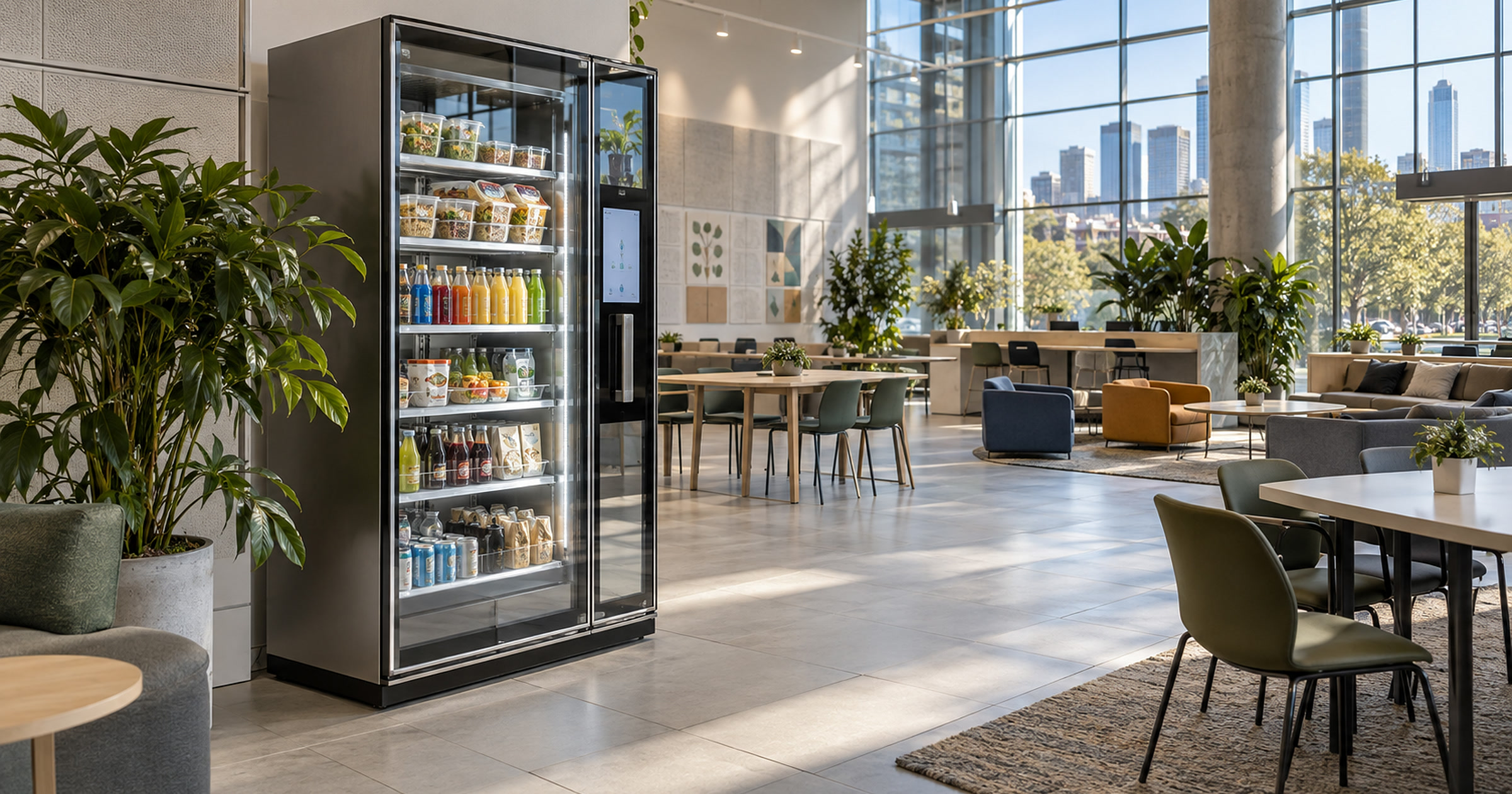
A modern vending machine, cooler, or fridge will not fix a workforce gap. That would be nonsense. It can solve a smaller operational problem that shows up during long sessions: people need a convenient way to grab drinks and simple food without leaving the building flow or turning staff into the snack table.
Training rooms create a different problem
A normal breakroom has a rhythm. People know where it is. They drift in before work, after lunch, or between tasks.
A learning room behaves differently. People arrive in groups. Breaks are short. The room may sit near a lobby or shared campus area rather than a stocked kitchen. If the closest option is outside the building, the break gets eaten by walking time. If someone brings in a pile of snacks, cleanup usually lands on the same staff trying to run the session.
That is why the placement question should start before the calendar fills up.
Watch where attendees naturally pass between the room and the nearest common route. Look at the door swing. Look at the seating spillover. Look at whether a service visit could happen without interrupting the program.
Those are small design choices, but they decide whether the amenity feels useful or awkward.
For Austin teams planning workforce programs, the best setup is not the flashiest appliance. It is the one people can use in a five-minute break without asking anyone for help.
The right unit depends on the room
A cashless vending setup can make sense when the location needs packaged snacks and drinks in one organized unit. A cooler or fridge can work better when the room leans toward cold beverages, fresh grab-and-go items, or a quieter lounge feel.
The decision is not about chasing gadget features. It is about the room.
A space with steady foot traffic may need a visible unit near the main break line. A shared campus building may need something compact for a common area. A professional education center may care more about clean appearance and quiet operation than a huge product lineup.
This is where Revvolto’s model helps. We look at the location and recommend the format. Then we stock the unit and handle payment technology. For qualified locations, placement is typically at no cost to the business.
The point is simple: your team should not have to become a tiny convenience-store operator just because people spend a full day in class.
Local workforce activity is a facilities signal
The Chamber event is not a Revvolto event, and we are not implying any relationship with the Chamber or venue. The useful signal is broader.
Austin keeps putting attention into workforce development and employer readiness. That means more rooms built around learning. Those rooms deserve the same operational thinking as offices, clinics, and industrial sites.
If people are expected to stay on site and pay attention, the building should not make a drink or snack harder than it has to be.
A well-placed unit also protects the people running the space. No one has to collect cash. No one has to remember who bought what. No one has to make a last-minute store run because attendance changed.
Good grab-and-go planning is not decoration. It is a building operations choice.
A full-day program also changes behavior around timing. People who would normally leave for lunch may stay close so they do not miss the next block. Guests may not know the building well enough to find nearby options quickly. A simple, visible refreshment point reduces that friction without asking the event team to solve every break manually.
What to check before adding a machine
Start with movement.
Walk the actual route people take during a break. Do not guess from the floor plan. Check the corridor, the doorway, and the spot where people naturally stop.
Then check service access. A unit that looks good in the corner can still fail if restocking blocks the main route or forces staff to work around a session in progress.
Finally, match the product mix to the day. Learning spaces usually call for cold drinks, simple snacks, and light meal options. The exact mix should come from real usage over time, not a fantasy list made in a meeting.
That is the value of a modern cashless amenity. The appliance is only part of the answer. The operating plan is the difference between something people use and another thing someone has to manage.
The buyer question
If your Austin building runs workshops or employer sessions, ask one question before the next busy calendar block: where will people get something to eat or drink without leaving the flow of the day?
If the honest answer is “someone on staff figures it out,” the setup is already creating work.
Revvolto helps qualified businesses add smart vending machines, smart fridges, and compact market options that fit the room and service plan. We stock it, maintain it, and keep the payment experience cashless.
Tell us about the location at revvolto.com/contact-us.



