
Dance studios and similar class-based facilities have a strange food-access problem: the room gets busy in waves.
Parents arrive before class. Students switch rooms. Coaches move between sessions. Someone forgot water. Someone else has ten minutes before pickup. That is exactly where a stocked amenity can help, but only if the unit is placed like part of the studio flow instead of an appliance dropped wherever an outlet happens to be.
For studio operators, the useful question is not “Should we add snacks?” It is sharper than that: can stocked grab-and-go access serve families without turning the reception counter into snack management?
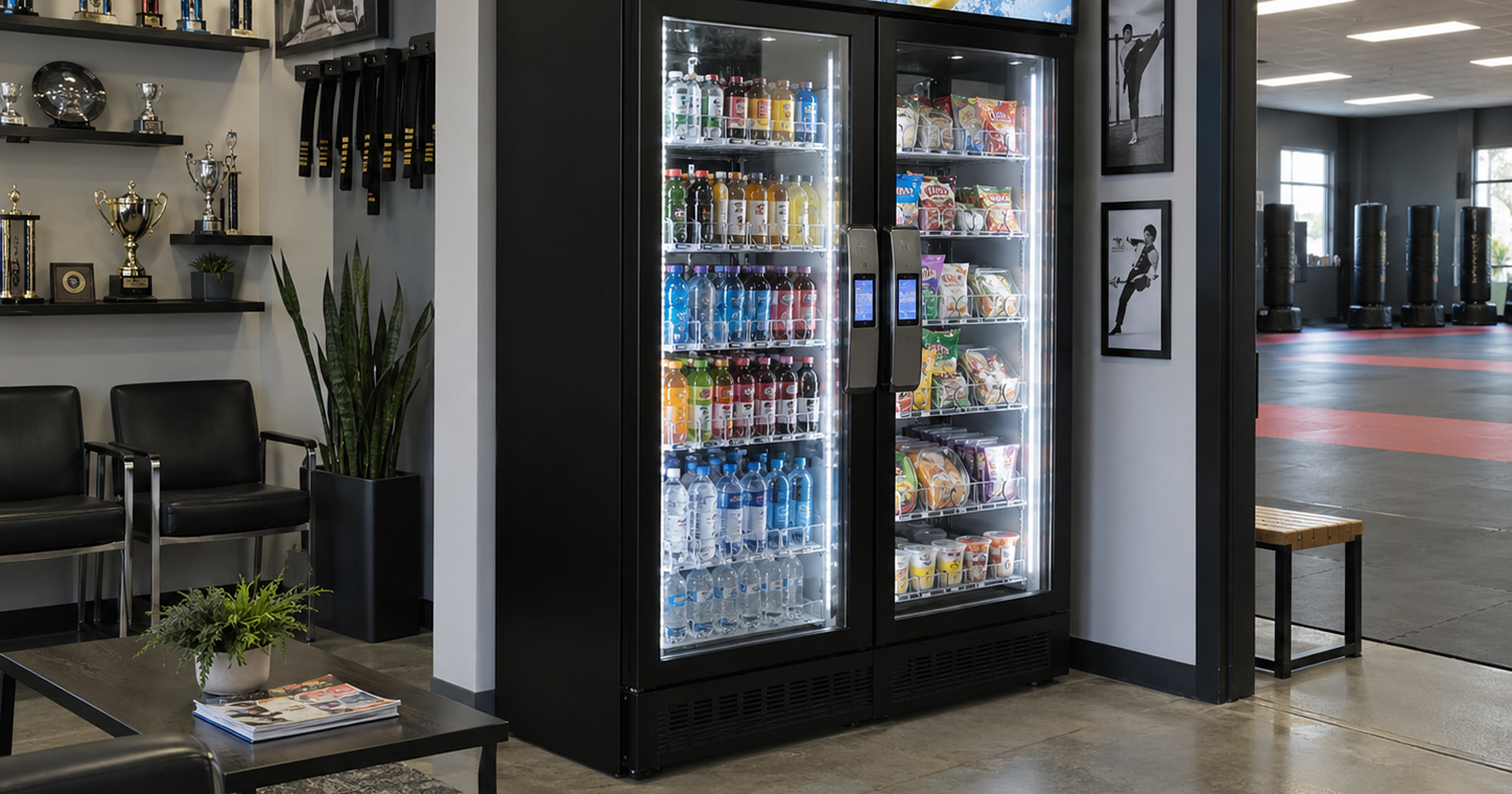
Class changes do not move like normal lobby traffic
The lobby does not behave like a typical office breakroom. Traffic comes in bursts, and the busiest moments often happen right when staff already have plenty to handle.
That matters for room layout. If the cooler sits too close to check-in, every purchase can feel like another staff interruption. If it sits too far from the class-exit route, people miss it or only notice it after they have already left. The best spot is usually visible from seating, easy to reach from the room exit, and out of the tightest doorway movements.
This is where the room work becomes more than “put food near people.” The unit should serve parents without blocking the natural movement between check-in, seating, and studio rooms. The customer should be able to buy and move on without asking staff where things are or whether the machine works.
That is the standard a studio should use before choosing a format. A stocked amenity is only premium if it reduces friction for the location. If it adds one more thing for staff to explain during every transition, the layout is wrong.
Reception should not become the food counter
Many studios already run lean. The same person may greet families, answer schedule questions, and keep an eye on the lobby. A food amenity that relies on staff attention defeats the point.
Modern vending works best when the service model is clear. Revvolto handles stocking, payment tech, and maintenance for qualified locations. The studio team should not be tracking snack inventory or handling machine issues between classes.
That service ownership is especially important in parent-heavy environments, even when the visual is staff-safe and family-friendly. The copy on the unit and the buying flow should be simple enough that a parent can use it without a desk conversation. Staff should know who to call for service, but they should not become the operating system.
There is also a payment-support angle. Card and cashless payment systems bring their own expectations. The PCI Security Standards Council describes PCI DSS as a baseline of technical and operational requirements for environments where payment account data is handled. A studio does not have to become a payments expert to add a better food option, but it should choose an operator that treats payments as an owned responsibility.
The room test before the unit lands
Before adding a cooler or vending unit, walk the studio during the real rush.
Start at the front door. Where do families slow down? Where do students drop bags? Where does the line form when one class ends and another starts? Those moments tell you more than a clean floor plan ever will.
Then check the service route. A stocked machine has to be refilled and maintained. If the only workable route cuts through a crowded mat edge or a narrow seating pinch point, the location will fight the amenity every week.
Accessibility belongs in that same planning pass. The Department of Justice’s 2010 ADA Standards describe accessible-route clear-width requirements, including a 36-inch minimum for walking surfaces in the general rule. That does not turn a blog post into a site-specific compliance review. It does give studio teams a useful reminder: a vending setup should respect movement, turns, and waiting-area circulation before anyone gets excited about the machine itself.
The practical check is simple. Can someone enter, buy, and leave without creating a knot in the room? Can service happen without interrupting classes? Can reception keep doing reception work? If the answer is yes, the amenity has a chance to feel natural.
What a good studio setup should feel like
A strong studio setup does not scream “retail corner.” It feels like a thoughtful part of the waiting area.
For a dance studio, that may mean a cooler near benches and cubbies, visible from the class-change route but away from the check-in bottleneck. For martial arts, it may sit near the parent seating zone, clear of the mat entrance. For gymnastics or cheer, it may work best where families already pause near viewing windows and pickup flow.
The product mix should fit the buying moment without making health or performance promises. Drinks, simple snacks, and convenient grab-and-go items are enough. The point is not to turn a studio into a cafe. The point is to give people a clean, modern option when the schedule leaves them waiting.
That is also where Revvolto fits. We bring modern smart vending and smart fridge options to qualified locations, typically at no cost to the site. We handle the stocking and service work so the studio can focus on classes, families, and the room experience.
If your lobby gets crowded in bursts, the question is not whether people might buy something. The better question is whether the room can offer it without adding desk work.
Tell us about the location at revvolto.com/contact-us.



