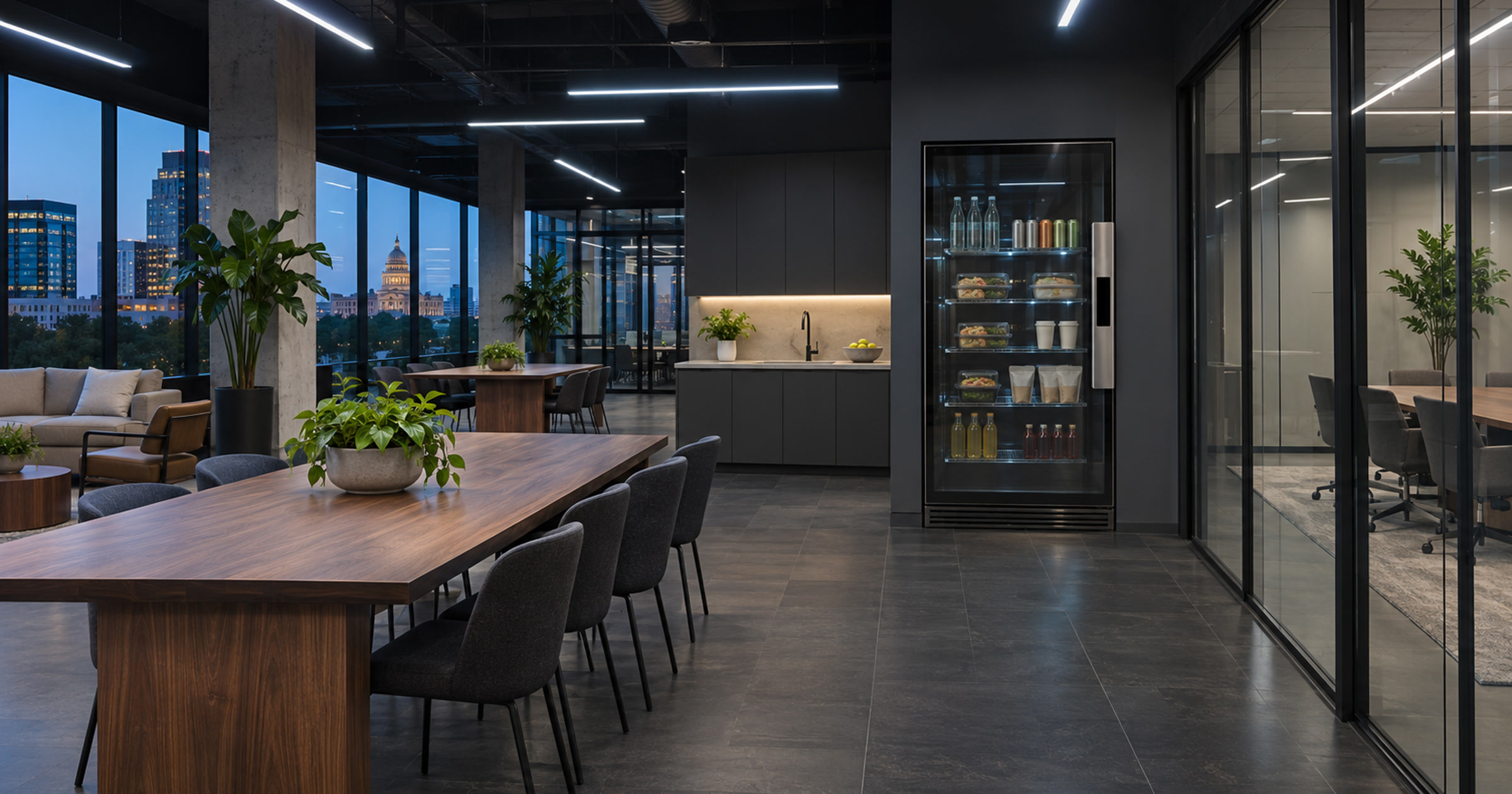
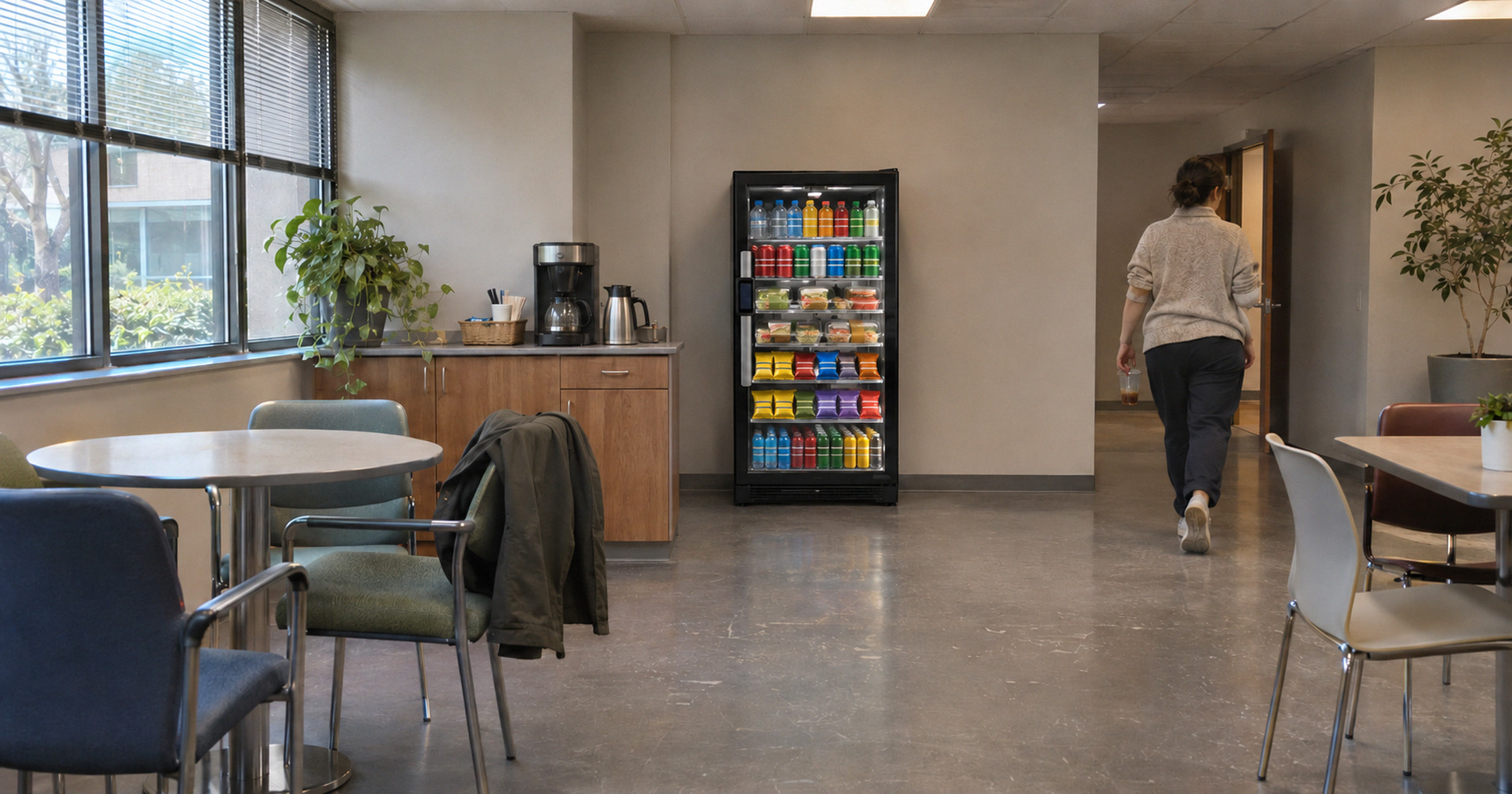
The City announced the grand reopening of Pathways at the historic property on November 14. The redevelopment combines rehabilitated buildings with new construction, adding 60 homes for a total of 184 affordable rental residences. The announcement also points to a visitor center and park space. Community areas are intended for education and resident engagement, with shared public use subject to final operating policies.
That last detail is the useful facilities lesson. A shared lounge can look like the obvious place for a stocked cooler, but the room label alone does not answer the real question. Property teams first have to decide who uses the space, when it is open and how routine replenishment reaches it.
The development is not presented as a Revvolto customer. Its reopening is a current Austin example of why an amenity decision belongs in operating rules, not in the last empty corner of a floor plan.
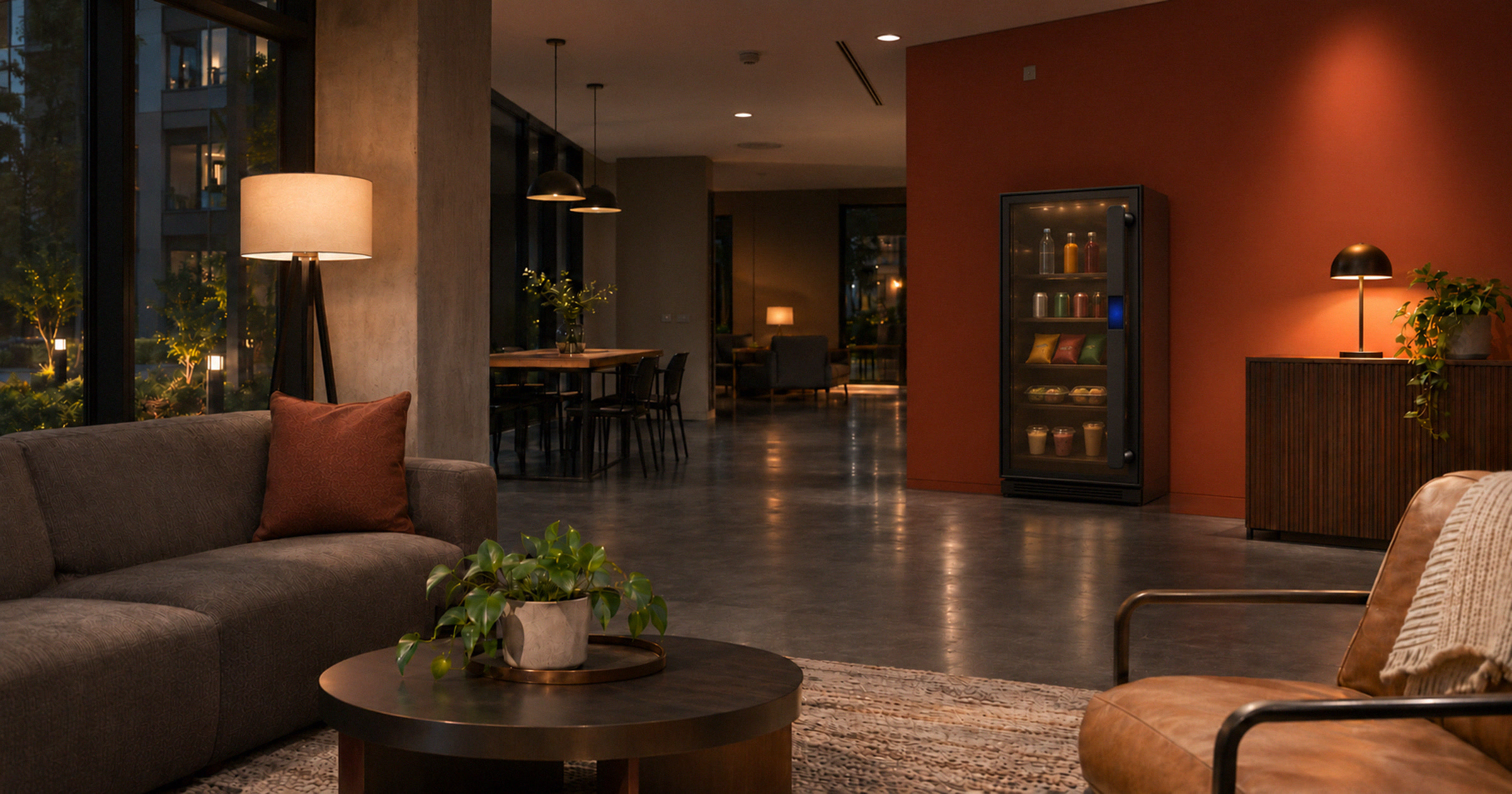
Start with room policy, not the equipment
A resident lounge, visitor center and public-use room can serve very different groups. One may be resident-only after business hours. Another may open for scheduled classes or neighborhood meetings. A third may depend on staff supervision.
Those differences change the vending decision. An unattended unit works best when eligible users can reach it during dependable hours and the property has a clear way to handle purchase questions. If access changes every week, the equipment may be easy to see but awkward to operate.
Write the usage rules before evaluating placement. Define the intended adult users. Record normal hours and scheduled closures. Name the property contact who can coordinate entry with the operator. That short record is more useful than a vague promise that the room will be busy.
The goal is not to turn community programming into a sales forecast. It is to determine whether the same interior area has stable, repeatable use that could support a stocked cashless option.
Separate daily use from public programming
Shared public use can be valuable, but it also creates a planning trap. A crowded event may make a permanent amenity look essential even when ordinary weekday use is modest. The reverse can happen too: a quiet walkthrough may miss evening resident demand.
Use two operating pictures.
First, map a typical weekday. Note when adults pass the room, how the door is controlled and whether the area stays available after the management office closes.
Second, map a programmed day. Check whether chairs, check-in tables or activity equipment would block the cooler. Confirm that event setup does not narrow the service approach or turn the unit into part of the program itself.
A permanent refrigerated setup should fit both pictures without competing with a planned food vendor or creating extra desk work. If the idea only works during an occasional event, temporary food service may be the cleaner answer.
Test the service route with the room in use
The path from the delivery entrance to the proposed location matters as much as resident convenience. A stocked unit needs enough clearance for its glass door, normal customer use and routine replenishment.
Walk the delivery approach while the space is occupied. Can a service cart reach the location without crossing a children’s activity area? Is there a dependable entrance that does not require a resident to admit the operator? Can the unit be opened and stocked without blocking the doorway?
Keep the test ordinary. There is no reason to invent traffic counts or claim a precise level of demand before the property has operating history. A practical walkthrough can answer the first question: can this location be serviced cleanly while the rest of the building keeps working?
If the answer is no, change the location or the service window. Do not push the coordination burden onto leasing staff or residents.
Give the amenity one owner on each side
Managed vending is simpler when responsibilities are explicit. The property controls room access, building rules and schedule changes. The operator owns equipment, stocking and routine service.
That division prevents a familiar mess. The front desk does not become the snack counter. The maintenance team does not inherit product decisions. Residents get a clear support route for purchase issues.
Revvolto provides modern cashless refrigerated vending and vending machines for qualified locations. We stock and maintain the equipment, typically at no cost to the property when the site qualifies. Qualification depends on the location and operating fit, so the answer is never automatic.
For a shared amenity area, the property should provide one current contact and notice when entry rules change. Revvolto can then plan replenishment around the building instead of asking on-site employees to improvise.
Run a 30-day community-room test
A short observation period can keep the decision grounded after reopening.
During the first week, record the room’s actual opening hours and adult-use pattern. In the second week, walk the proposed cart route at a typical operating time. In the third week, compare the location against a scheduled community activity. Use the fourth week to review friction: locked doors, blocked clearance or repeated questions landing at the wrong desk.
The result does not have to be a yes. A good test may show that another room works better, that service belongs in a different time window or that the property is not ready yet.
That is still useful. The equipment is valuable when it removes work and gives people dependable availability. It is a bad fit when usage rules are unsettled and every refill requires a new negotiation.
What Austin property teams can take from the reopening
The City’s announcement is about a historically important affordable housing community returning with more homes and renewed shared spaces. Revvolto’s takeaway is deliberately narrower.
When a redevelopment includes community areas, decide how those rooms will operate prior to installing unattended food equipment. Separate everyday use from special programming. Protect a workable delivery approach. Then assign responsibility so property staff do not become the vending department.
Those steps apply well beyond one local property. Any apartment community reopening a lounge, visitor center or shared-use room can use the same test.
Planning a managed cooler for an Austin apartment community? Tell Revvolto how the room actually operates. We will review the traffic pattern and operating fit before recommending equipment.
*Source: City of Austin. “Grand Re-opening for Historic Affordable Housing Pathways at Rosewood Courts.” Published November 14 2026. The named property and project partners are news references only and are not presented as Revvolto customers or partners.*