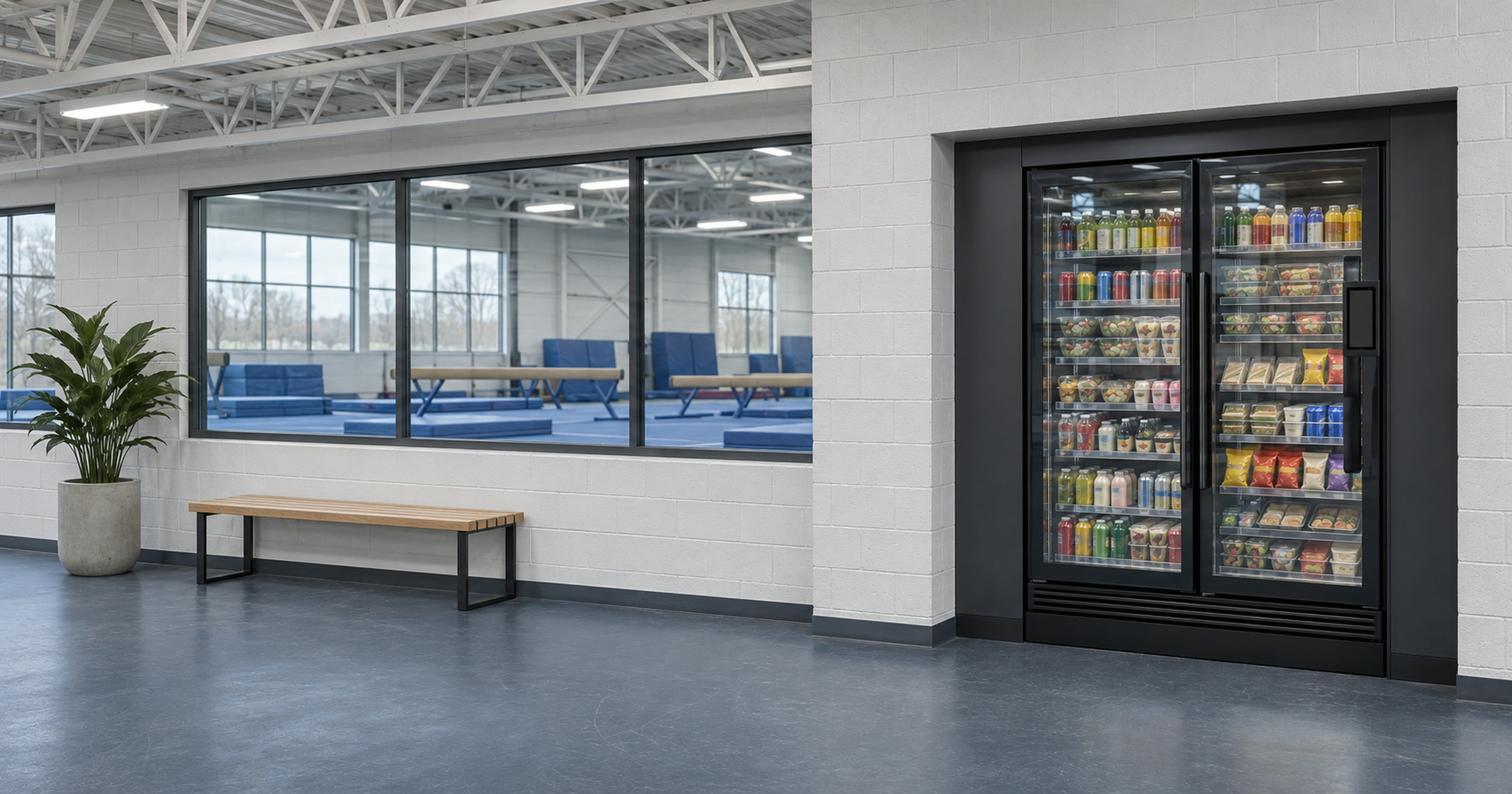
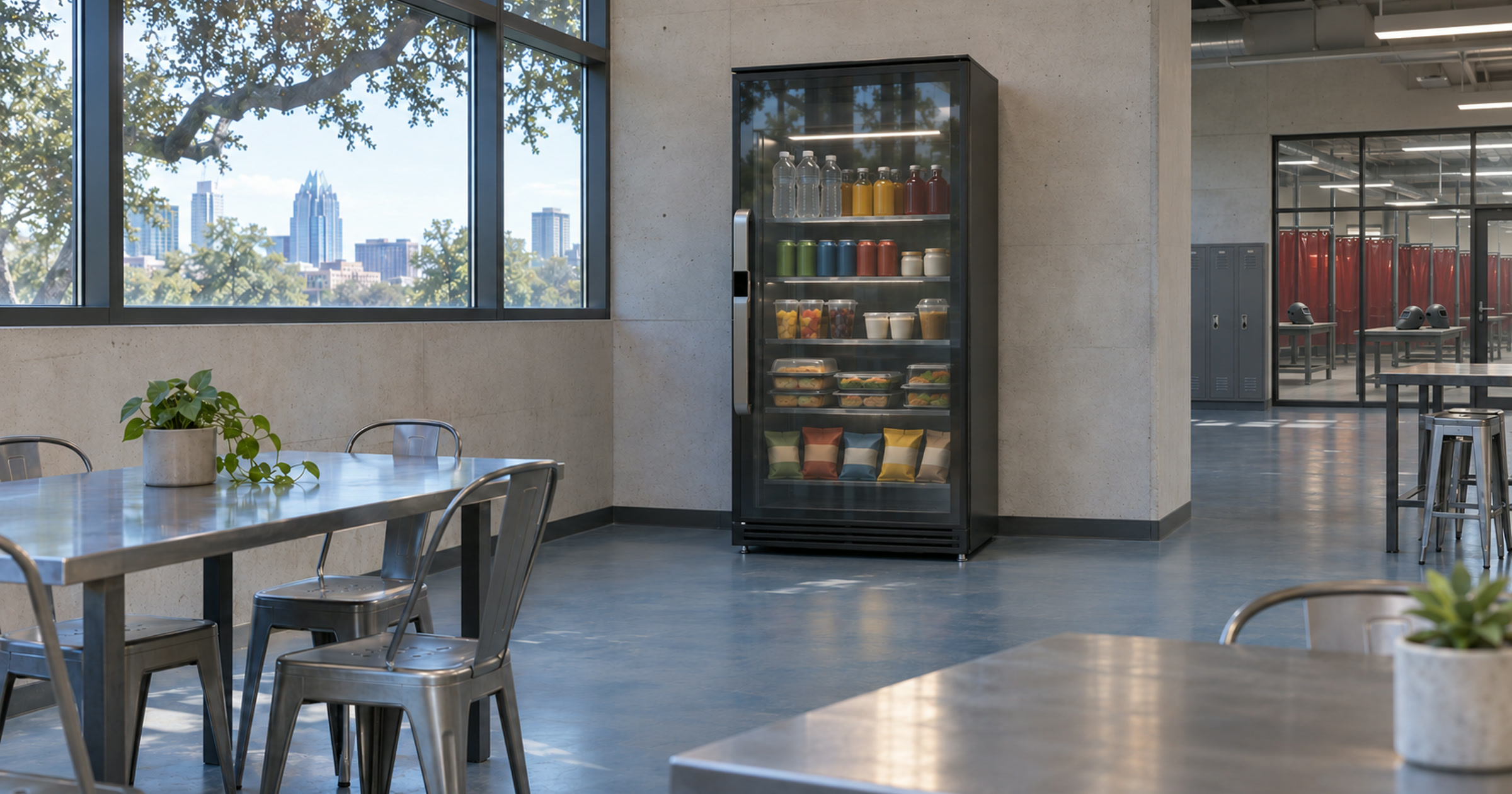
Austin City Council approved continued funding on November 19 for media-production training and public-access facility management. The agreement covers the City’s television assets, a community production facility and workforce training managed by Austin Film Society.
That is not a vending announcement. It is a useful operations reminder for any studio, training center or media facility where classes and production bookings share one building: food access has to fit the production calendar, not simply the floor plan.
Austin Film Society is not a Revvolto customer, and Revvolto has no stated role in the City contract. The public record does not identify a food-access problem. The lesson here is Revvolto analysis for facilities with similar traffic patterns.
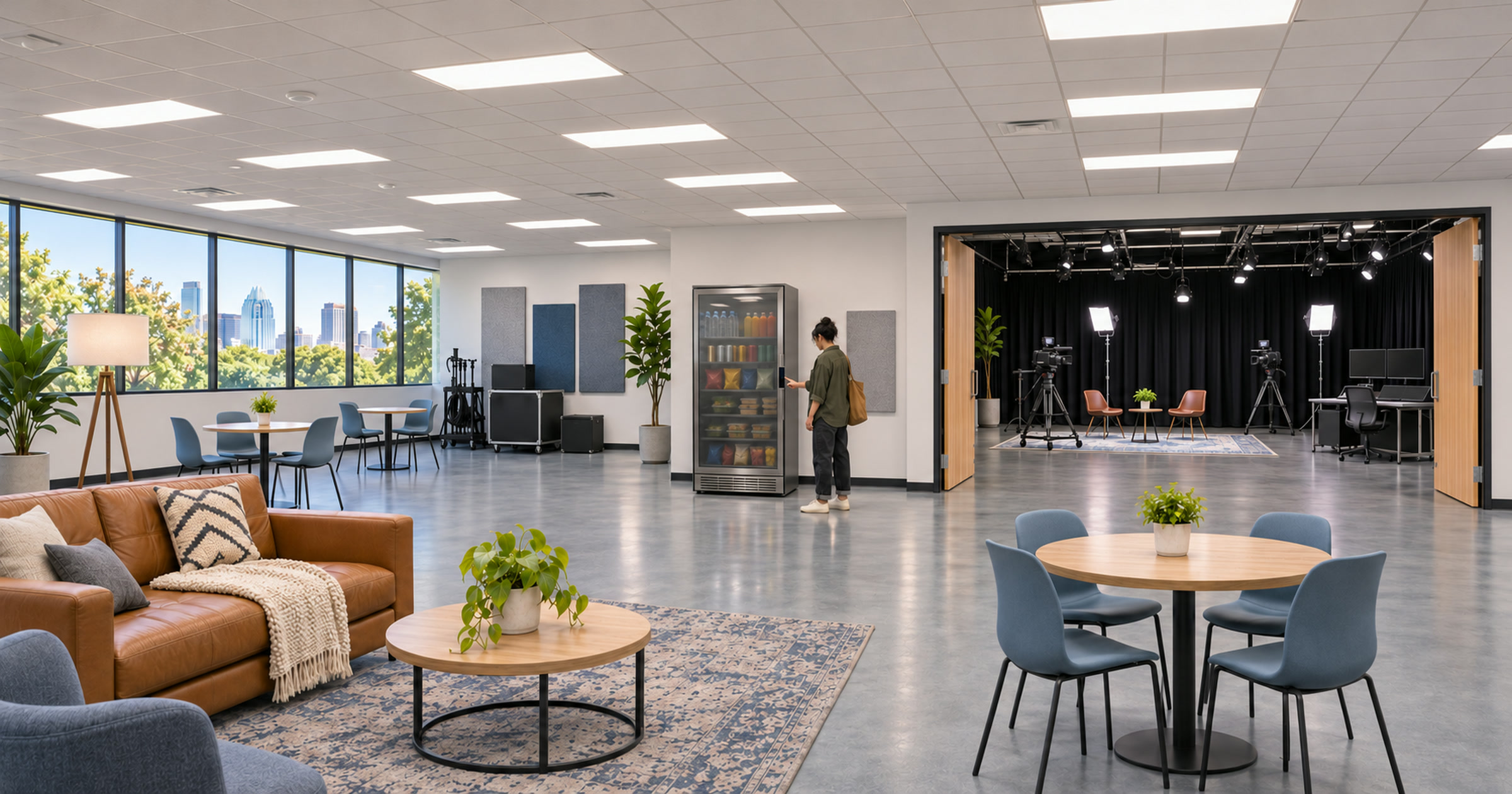
A production building has more than one audience
A community media facility can look like one workplace from the outside. Inside, the operating rhythms are different. Employees may follow ordinary workdays. Learners arrive for scheduled instruction. Producers and crews use studios or editing rooms. Public audiences may appear for selected productions.
Those groups do not create one dependable demand curve. A busy orientation night can be followed by a quiet editing day. A crew may work through a long booked block, while a visitor is in the building for a short sign-in and recording window.
This is why a public lobby is not automatically the right place for a managed cooler. The visible location may attract occasional traffic without serving the people who have the most repeatable gap. It can also pull food and drink toward equipment movement or audience check-in.
The buyer decision is narrower: identify which adult group has recurring on-site time that is not well served by nearby food, then choose one controlled zone for that group.
Read the booking calendar before choosing equipment
Headcount is weak evidence in a scheduled facility. The better evidence is the calendar.
Start with a representative month. Mark ordinary staff days and scheduled classes. Add studio bookings as a separate layer. Then note the periods when those groups overlap and when people cannot easily leave the building.
The goal is not to count every person who enters. It is to find a repeatable purchase window. A two-hour class with a clear break may create a different pattern from a production crew using a studio for most of the day. A live audience might create crowd volume, but it may not create enough dwell time for unattended retail.
Do not size a cooler from the busiest event. Use the ordinary recurring pattern. If the building cannot identify one, the right answer may be to wait.
Keep food away from technical workflow
A production facility has boundaries that a normal office does not. Cameras and audio gear move between storage, checkout and studios. Crews need clear approaches to doors. Recording spaces may have rules about food and drink. Public visitors may use a different entrance from trained producers.
A sensible cooler location respects those boundaries. It sits outside the studio and equipment route, but close enough to the intended users that a short break stays short. The floor around it should be easy to inspect and clean. The electrical connection cannot create a cable crossing.
Replenishment matters too. A stocked unit is only useful if the service person can reach it without interrupting instruction or rolling product through an active shoot. Facilities teams should walk the refill route from the exterior door to the proposed location. If the route depends on crossing a studio booking, choose another wall.
That simple walk catches problems that a plan drawing misses.
Separate public access from dependable demand
Public access is central to the City-supported media program. It does not follow that a managed cooler belongs in a public-facing area.
An unattended food point works best when the intended audience and access rules are clear. A producer commons or staff-adjacent corridor may provide a steadier pattern than a lobby. It can also make payment support and surrounding-area responsibilities easier to assign.
If the facility wants to serve both trained users and occasional audiences, test one group first. Mixing them from day one makes the result hard to read. A spike tied to one live production can hide thin use during the rest of the month.
Start with one location and one stated audience. Review sales timing against the booking calendar without collecting personal information. If purchases consistently align with long production or training blocks, the facility has evidence. If they do not, moving or removing the unit is smarter than adding another one.
Define the operating handoff
The City item is about continuing an operating agreement while a replacement procurement is completed. That transition point highlights a question every managed facility should answer: which responsibilities stay with the building team, and which belong to the vending provider?
With Revvolto, product replenishment and equipment maintenance are handled by our team. The facility still controls site access and building rules. It also identifies the right contact when a service visit has to work around a booked room.
Write that handoff down before installation. Name one facilities contact and one acceptable refill route. Set the hours when service can occur. Keep the arrangement separate from studio scheduling so instructors and producers do not become vending coordinators.
That is the value of managed service. The cooler can support a long session without turning the media team into a snack operation.
A practical test for Austin media facilities
The November 19 action confirms that Austin’s public media program combines facility management with production training and workforce development. Similar buildings can use that combination as a planning test.
First, determine whether recurring classes or production bookings create an adult food-access gap. Next, select a controlled location outside technical movement. Then prove that restocking can happen between booked sessions.
Only after those points are clear does format matter. A modern cashless smart cooler can provide drinks, snacks and fresh options in one compact footprint. Revvolto stocks and maintains the equipment, typically at no cost for qualified locations. Placement depends on site fit and reliable demand, so there is no automatic qualification.
If you manage an Austin-area production or training facility, contact Revvolto to review the operating pattern before selecting equipment.