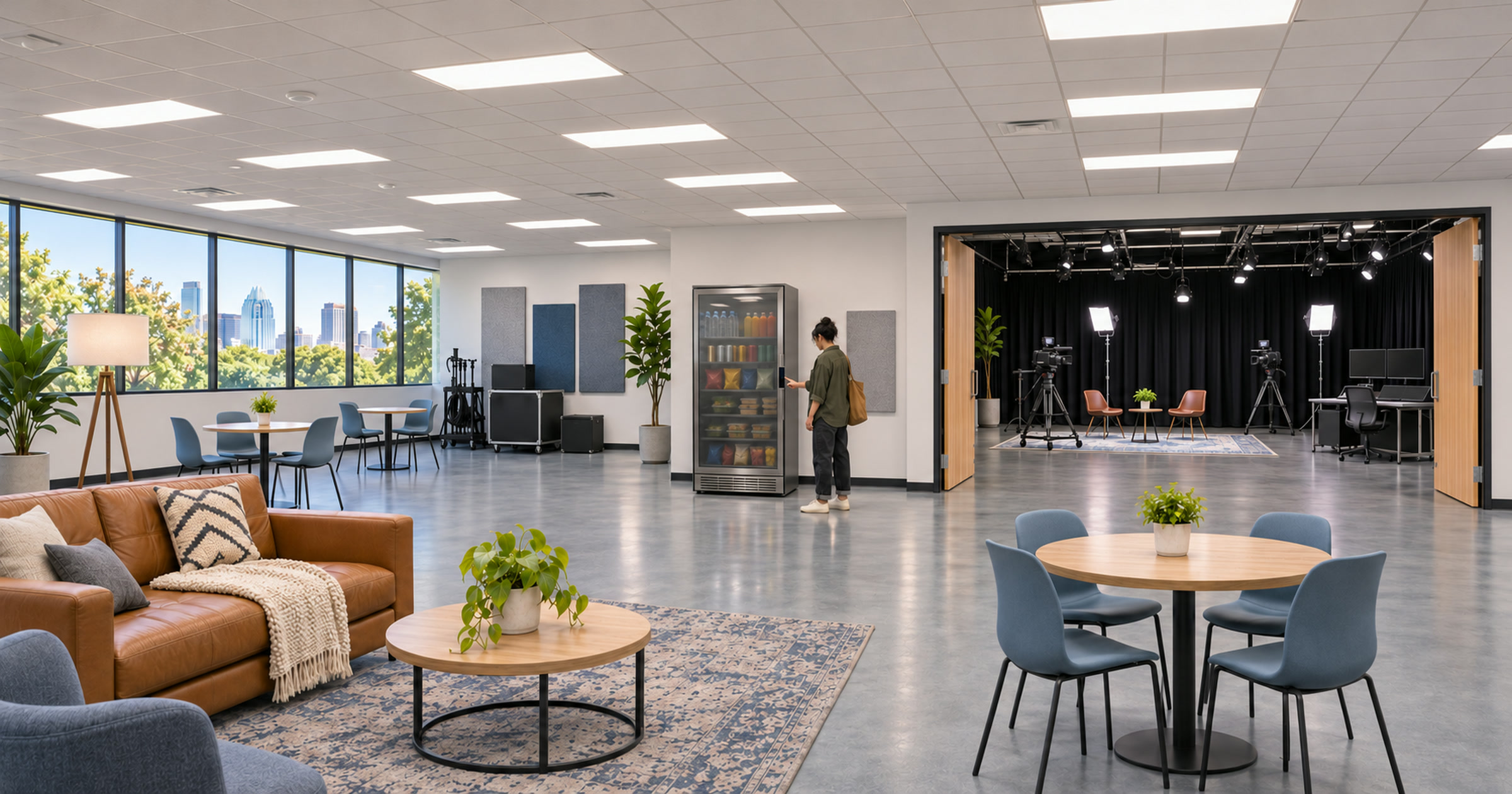
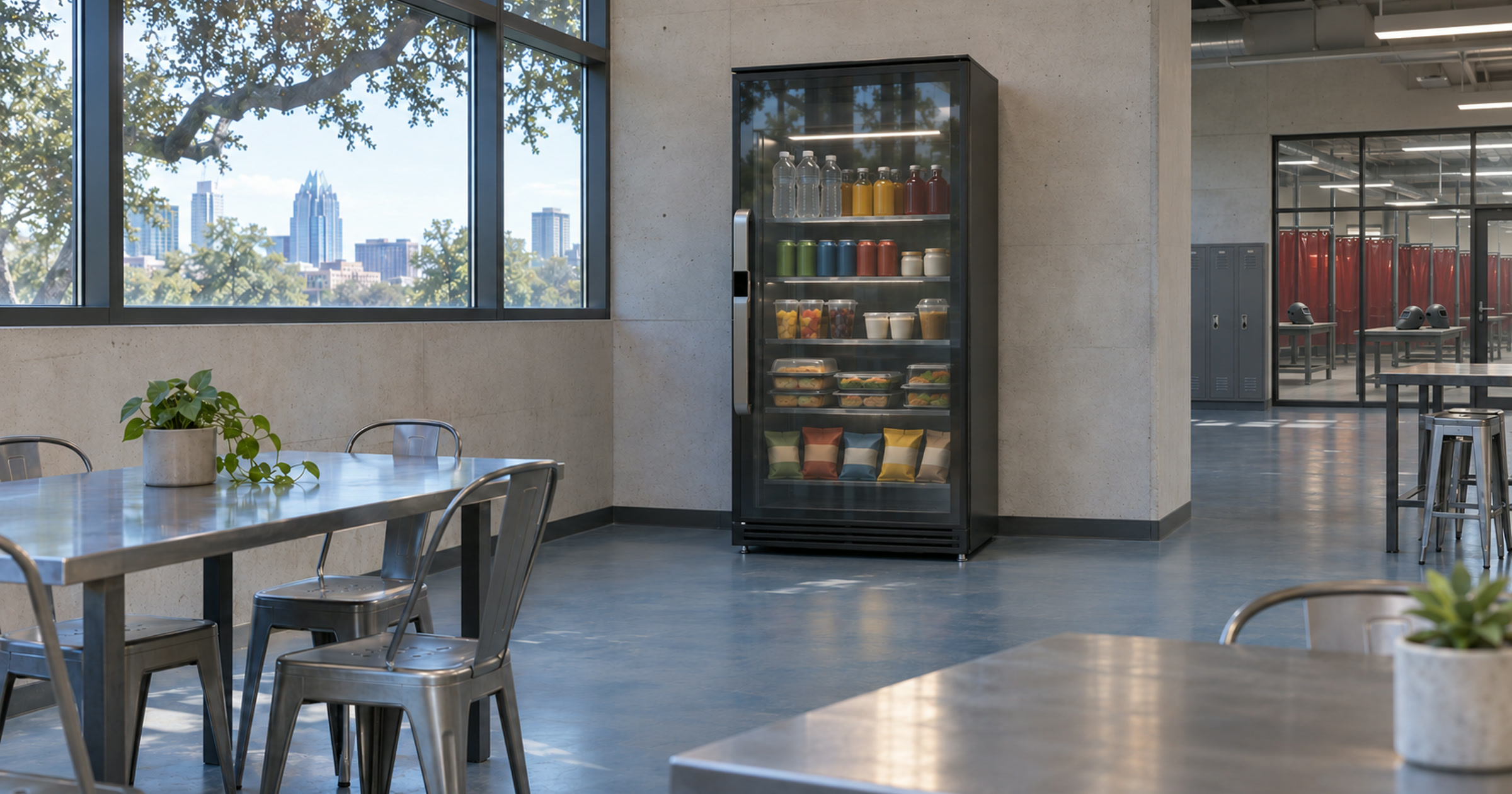
A modern refrigerated vending setup belongs where people can use it without turning the training floor into a snack aisle. That sounds obvious. In practice, a spectator lounge, coach room and corridor alcove can each look workable until you test the building during a busy transition.
Choose the zone before you choose the exact machine. The best spot is not the emptiest wall. It is the place that balances the intended users, the building route and the work required to keep the cooler stocked and operating.
Start with the people the cooler should serve
Write down the primary audience before walking the building. Is the cooler mainly for adult visitors in a viewing area, coaches and staff between sessions, or both groups from one shared location?
That answer changes the room you should test. A public waiting room may offer convenient visibility, but the buying space cannot become an obstacle when people arrive or leave. A staff room may be calmer and easier to service, but it will not solve a visitor refreshment gap. A shared hallway location can reach both audiences only when browsing stays outside the main route.
Do not solve three different needs with a vague instruction to put the machine near the entrance. Pick the primary audience, then decide whether a secondary audience can use the same zone without creating a bad compromise.
Use your actual schedule for this check. Walk the candidate room during a normal class transition and again during a quieter period. Note where adults wait, where staff move and which doors must stay clear. You are collecting building facts, not guessing from a floor plan.
Run a three-zone room test
Compare no more than three candidate zones. More options usually create a longer meeting, not a better decision.
The lobby is the first test. Stand where the cooler would go and imagine one person browsing while another passes. Check whether the open glass door would conflict with seating, an entry door or the line of sight to the gym.
The staff or coach area is the second test. Confirm that the room has an appropriate operating window and that a service visit will not interfere with normal staff use. If the public cannot enter that room, treat it as a staff amenity rather than pretending it serves the whole building.
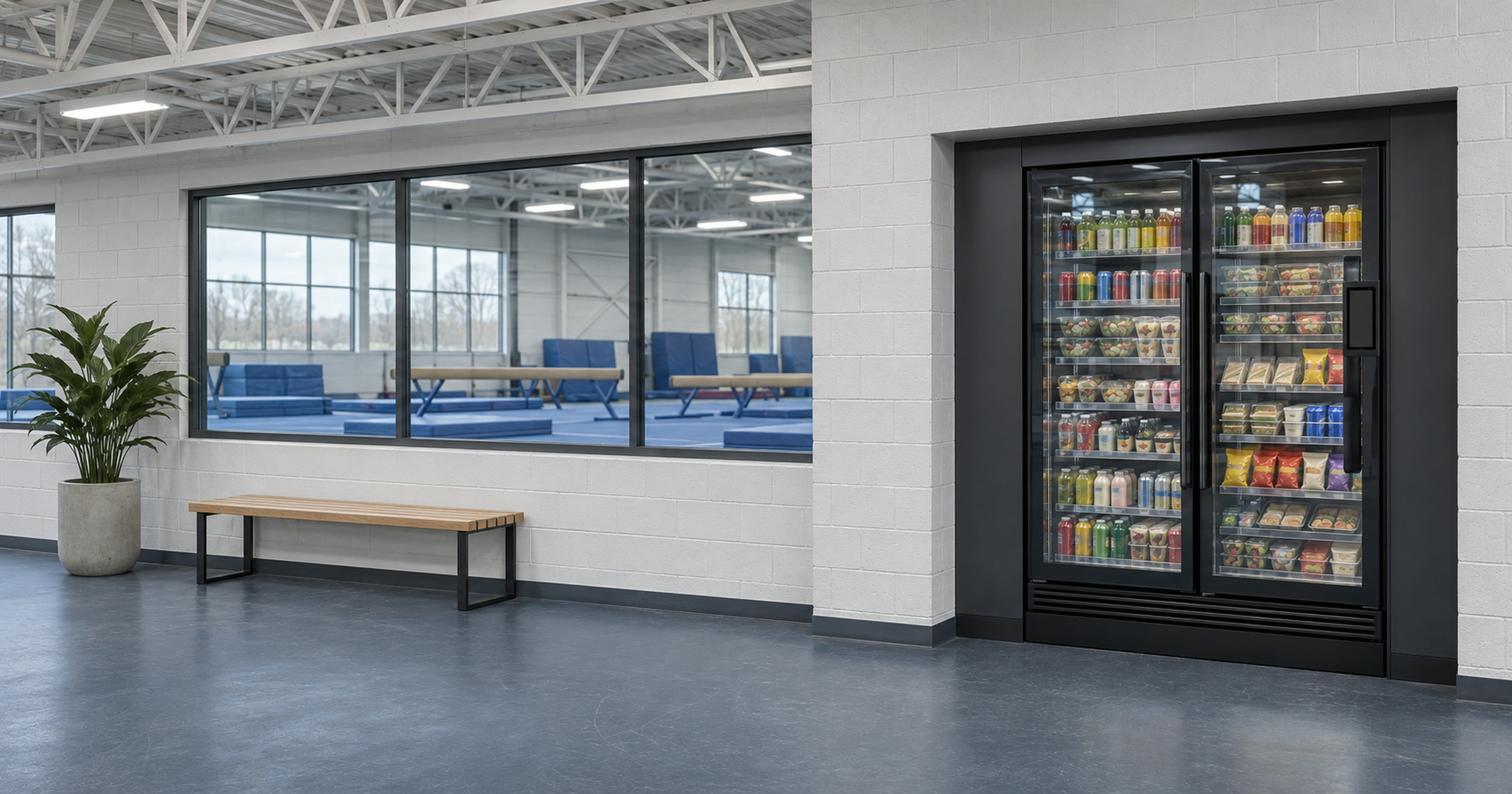
The hallway option is the third test. Look for a wall bay or alcove where the machine can sit outside the walking line. A cooler placed in the middle of a broad corridor still creates a buying zone in the corridor. The cabinet, open door and person using it all need space.
Score each zone on audience fit, route protection and service access. If one location only works when the building is quiet, it is not the right location.
Protect the route and the door swing
The U.S. Access Board’s guide to accessible routes says the continuous clear width is generally at least 36 inches, with specific exceptions and added clearance rules for turns and narrow obstructions. That guidance covers accessible routes broadly. It does not certify a particular vending layout, and this article is not a site-specific accessibility review.
Use the rule for what it is: a reason to protect the building route before equipment arrives. Ask the facility professional responsible for the site to review the final location, route and clear floor space.
Mark the cabinet footprint with tape. Then mark the open-door zone and the standing space in front of the handle. Walk the route from the entrance, viewing area and staff corridor. The test should include the full buying position, not just the closed cabinet.
The Access Board’s operable-parts guide also explains that clear floor space should support a forward or side approach at covered elements. A vending product itself is not covered by that guide, and equipment requirements depend on the installation. The useful planning lesson is simpler: a screen or handle is not accessible merely because someone can see it. The approach space matters too.
Keep service work away from sensitive moments
A good public location can still fail if every refill requires a cart to cross the busiest part of the facility. Trace the service route from the building entrance to the proposed cooler. Check door widths, turns and the place where cases can be handled without blocking normal movement.
Then assign a building contact. That person should provide access and report a problem. They should not become the inventory manager, payment technician or repair coordinator.
Payment support deserves the same clarity. The Payment Card Industry Security Standards Council’s small-merchant guide recommends knowing the providers connected to a payment system, keeping their contact details available and inspecting payment terminals for signs of tampering. The guide does not prove that a specific cooler or operator is compliant. It does support a practical buyer question: who owns the payment device, who checks it and whom does your team call?
One support route is better than a list of vendors. If a payment fails, your staff should not have to decide whether the machine, network or payment company is responsible.
What Revvolto should own after installation
For a qualified location, we install the equipment and handle the operating work around it. That includes stocking, payment technology and machine service. Equipment is typically provided without an upfront purchase, subject to site fit and qualification.
Your team still owns the building facts. You know the schedule, restricted rooms and circulation rules. We should turn those facts into a practical equipment and service plan rather than asking you to run the cooler.
The winner passes a simple test: people can buy without crowding the room, the route stays usable and service can happen without disrupting the facility. A blank wall is not enough.
If you are comparing a public room, team space or hallway alcove, tell us how your facility operates. We will review the room and recommend the smallest sensible setup. For a related waiting-area example, see our guide to cashless vending for dance studios.