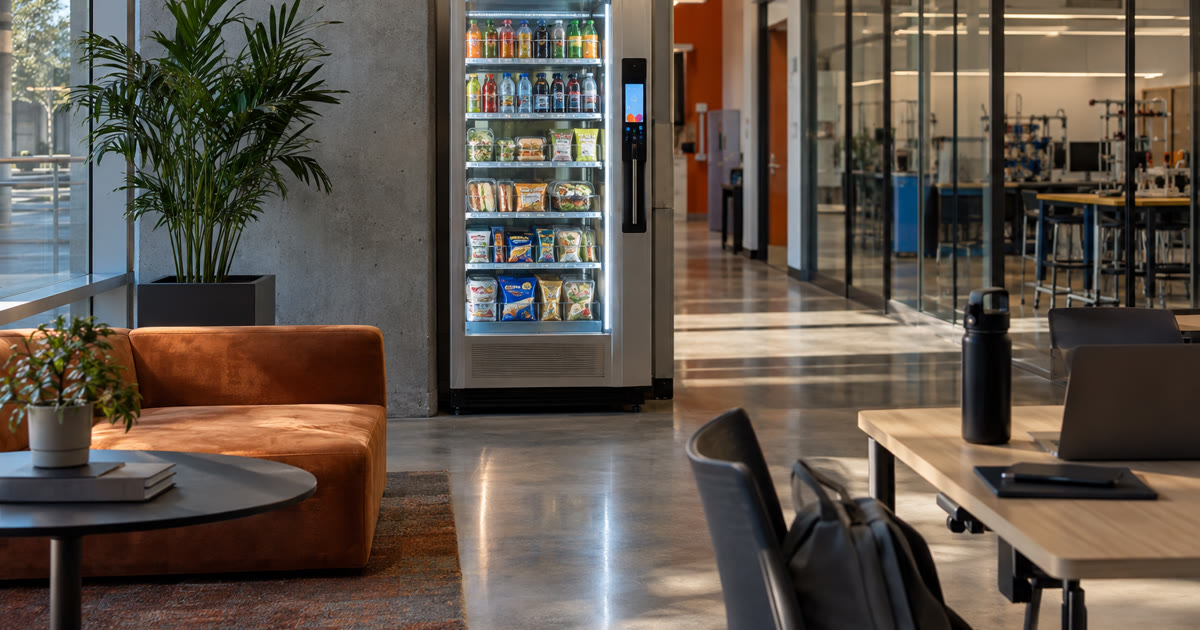
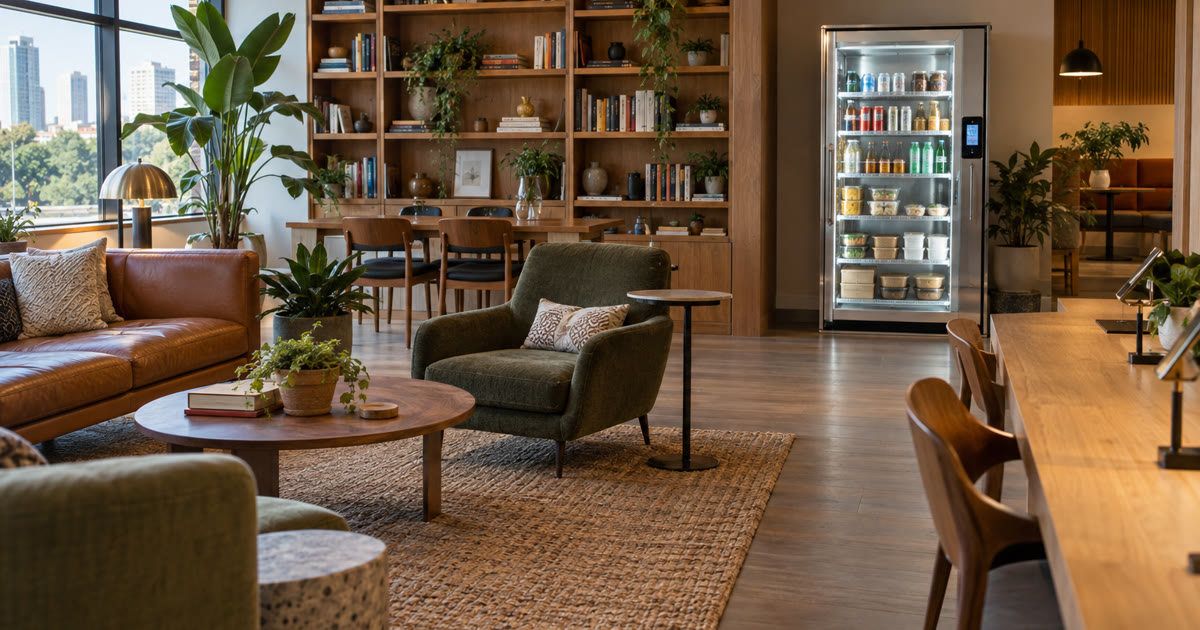
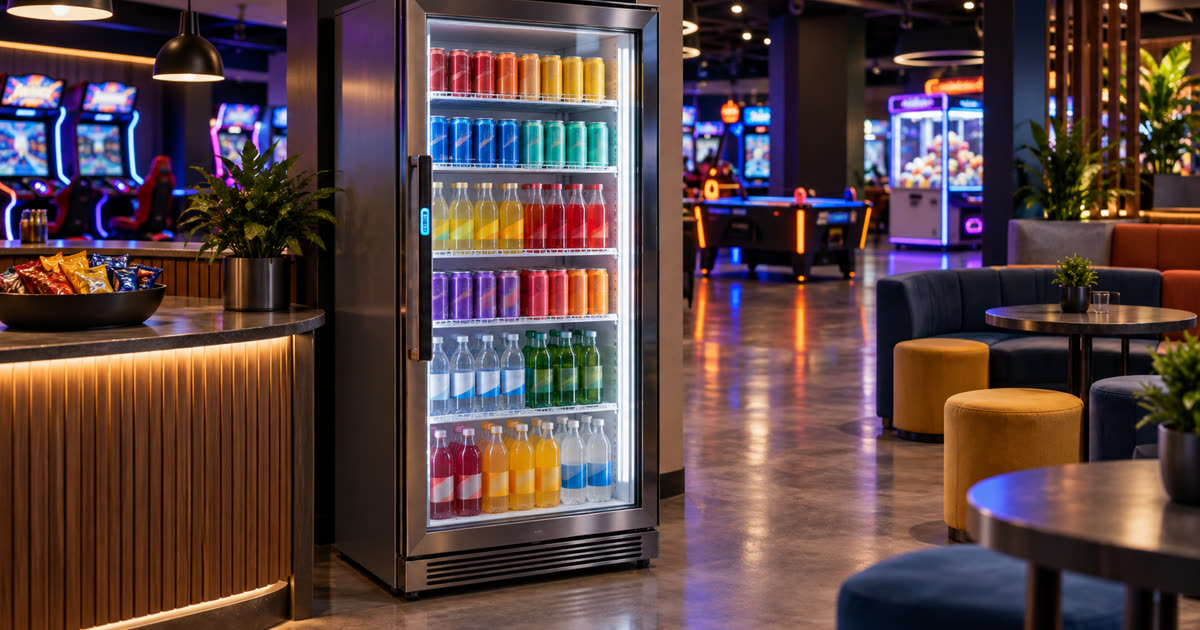
Apartment vending in Austin has a simple test: does it make resident life easier without handing the property team a new chore with a plug?
That sounds obvious until the first snack amenity gets treated like lobby decor. A vending machine, smart fridge, or compact apartment market setup is not there to look vaguely modern near the mailroom. It has to serve real building rhythm: residents coming home late, maintenance teams moving through shared areas, guests waiting downstairs, package-room traffic, pool weekends, and the person who discovers at 10:47 p.m. that dinner became a vibes-based rumor.
The useful question is not “Can we put a machine somewhere?” Almost every building has somewhere. The useful question is whether the setup fits the resident path, the restocking path, and the property team’s actual bandwidth.
That is where good amenity planning earns its rent.
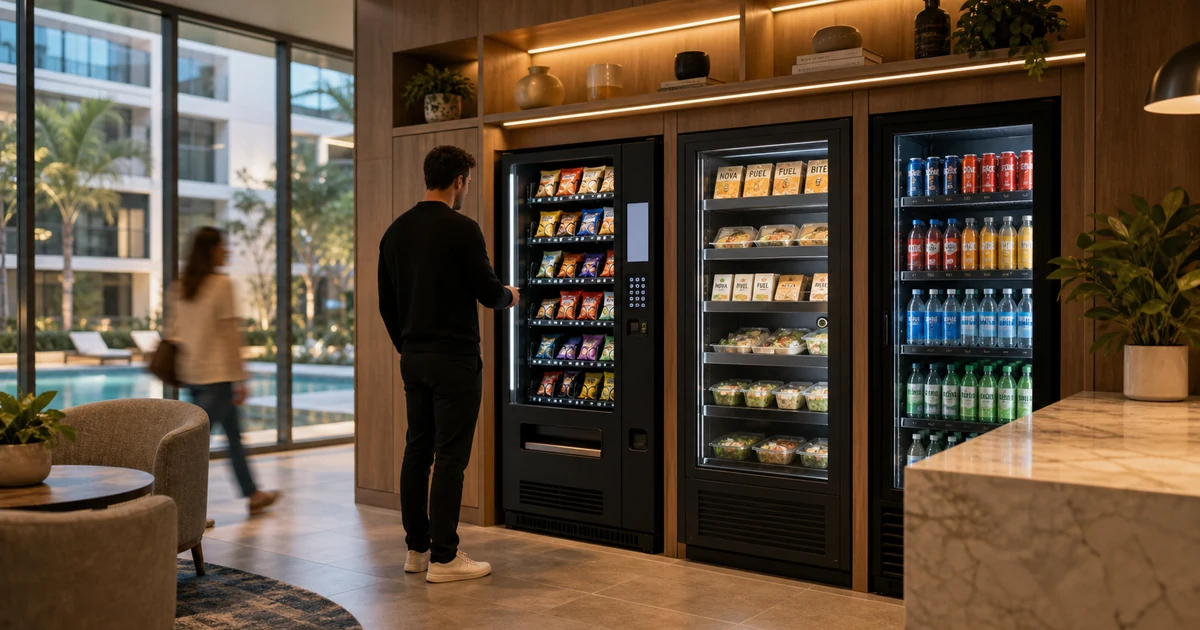
Resident convenience should follow the building rhythm
Apartment communities are not offices with mailboxes. Residents use the building in waves: morning exits, evening returns, weekend traffic, delivery pickups, gym visits, pool days, late-night snack emergencies, and the strange little migration pattern created by package lockers.
If the food-and-drink option lives where residents already pass, it feels useful. If it lives in a forgotten corner, it becomes a very confident rectangle auditioning for storage.
Property teams should think about moments, not machines:
- When do residents most often need a quick drink or snack?
- Which shared spaces already create natural pauses?
- Can residents browse without blocking mail, packages, doors, or the front desk?
- Can the operator restock without turning the lobby into a hallway traffic cone convention?
- Does the unit support daily use, or is it mostly wishful thinking with a payment screen?
This is especially important in Austin apartment communities where residents may work hybrid schedules, come and go at odd hours, or use shared amenities outside normal office hours. A resident amenity that only makes sense when staff are nearby is not really an after-hours amenity. It is staff-dependent convenience wearing a tiny disguise.
Placement is an operations decision, not an empty-wall contest
Bad placement usually starts with a sentence like, “There’s room over there.”
Maybe there is. That does not mean the wall has earned a vending machine.
A better placement conversation includes visibility, power access, resident flow, restocking access, camera coverage where appropriate, and whether the unit creates friction for people moving through the space. Good placement should feel almost boring. Residents notice the snacks, not the logistics underneath them. The logistics are the plumbing under the joke.
Accessibility also belongs in the conversation, but the claim has to stay narrow. The U.S. Access Board’s ADA guide covers accessible-route concepts; that supports a practical planning point about leaving room for movement, reach, passing, and access. It does not prove ADA compliance for any apartment community, lobby, route, doorway, vending machine, smart fridge, future installation, future site, Revvolto recommendation, or compact apartment market setup. Before that citation grabs a clipboard and starts acting like counsel, keep it in its lane: placement should be reviewed site by site, and final accessibility decisions need qualified review. Source: U.S. Access Board
That scope limit matters. “Convenient” should not become “someone has to squeeze around the amenity because the floor plan got optimistic.”
Product mix should not be lobby folklore
Apartment residents are not one audience. A single property can include early commuters, remote workers, night-shift residents, students, families, visitors, fitness-room regulars, and people who believe sparkling water is a personality framework.
That variety makes product mix tricky.
A machine stocked once and forgotten will eventually tell on itself. The popular drinks disappear. The weird items sit there developing backstories. Someone complains that everything is either gone or oddly specific. Suddenly the amenity is not an amenity; it is lobby folklore with refrigeration.
A better setup leaves room to learn. Purchase data can help show what sells, what sits, and what needs to change. That is useful information, not magic. The machine does not “know” residents. That wording gets sloppy fast. It reports behavior. The operator still needs judgment, restocking discipline, and enough humility to stop pretending last month’s product mix is sacred scripture.
For property teams, the buyer question is simple: who owns the learning loop?
If the answer is “our assistant manager will probably notice,” congratulations, you have invented another task for the person already handling move-ins, maintenance calls, tour follow-ups, resident questions, package issues, and whatever the printer is doing emotionally.
Payment support should not land at the leasing desk
Cashless vending and smart fridge checkout can make an apartment amenity feel current. Residents expect tap-to-pay convenience, and a modern unattended setup should not require coins, awkward instructions, or a leasing-office rescue mission.
But payment language is where marketing loves to put on a cape and fly directly into a wall.
The PCI Security Standards Council publishes PCI DSS as a global standard for protecting payment account data. That supports one narrow point: payment responsibilities, processor roles, and support ownership should be clear before an apartment community adds cashless unattended retail. It does not prove PCI compliance for any vending machine, smart fridge, payment terminal, processor, provider, apartment installation, future installation, future site, Revvolto setup, checkout flow, or resident transaction. It also does not guarantee payment security, eliminate fraud risk, certify a payment experience, or make “we take cards” a complete answer. Source: PCI Security Standards Council
The practical question is not glamorous: if a resident has a payment issue, who handles it?
If the answer sends the resident to the leasing desk, the system is already borrowing time from the wrong team. A property amenity should not create tiny support tickets in a polo shirt.
Revvolto keeps snack ops off the property team’s desk
Apartment teams already manage tours, renewals, move-ins, maintenance coordination, resident communication, vendor visits, packages, amenities, and the daily theater of “quick question” emails that are never quick.
They do not need to become the snack department.
Revvolto helps qualified Austin-area apartment and condo communities add smart vending or smart fridge options — and, where the site supports it, compact apartment market setups — without turning the host into the operator.
For qualified placements, Revvolto typically installs and operates the setup at no cost to the host. Site fit still matters. Resident traffic, placement, restocking access, equipment format, and building rhythm decide whether the amenity has a real job or becomes furniture with snacks and confidence.
A good setup should make ownership obvious:
- Revvolto recommends the right format for the site.
- Revvolto stocks and restocks the unit on a regular cadence.
- Revvolto manages payment technology and equipment support.
- The property team gets a resident amenity without becoming the backup snack desk.
Some apartment communities may fit a smart fridge. Some may fit a vending machine. Some may support a compact apartment market setup. Some may not be ready yet, and that is better to learn before equipment arrives and starts asking for attention.
The best amenity decision is not the flashiest one. It is the one residents actually use and the property team does not have to babysit.
Want to see whether smart vending, a smart fridge, or a compact apartment market setup fits your Austin property? Tell us about your space at https://revvolto.com/contact-us.
No-cost site assessment. No install pressure. No commitment.