Austin area industrial growth is not just a real estate story. It is a building operations story.
Community Impact reported that Williamson County commissioners approved an economic development agreement on Aug. 20 for a possible Blue Origin facility in Hutto. The report says the project could include about one million square feet of industrial research space and as many as 2,000 jobs over 10 years, if the company commits to the site and state approval comes through.
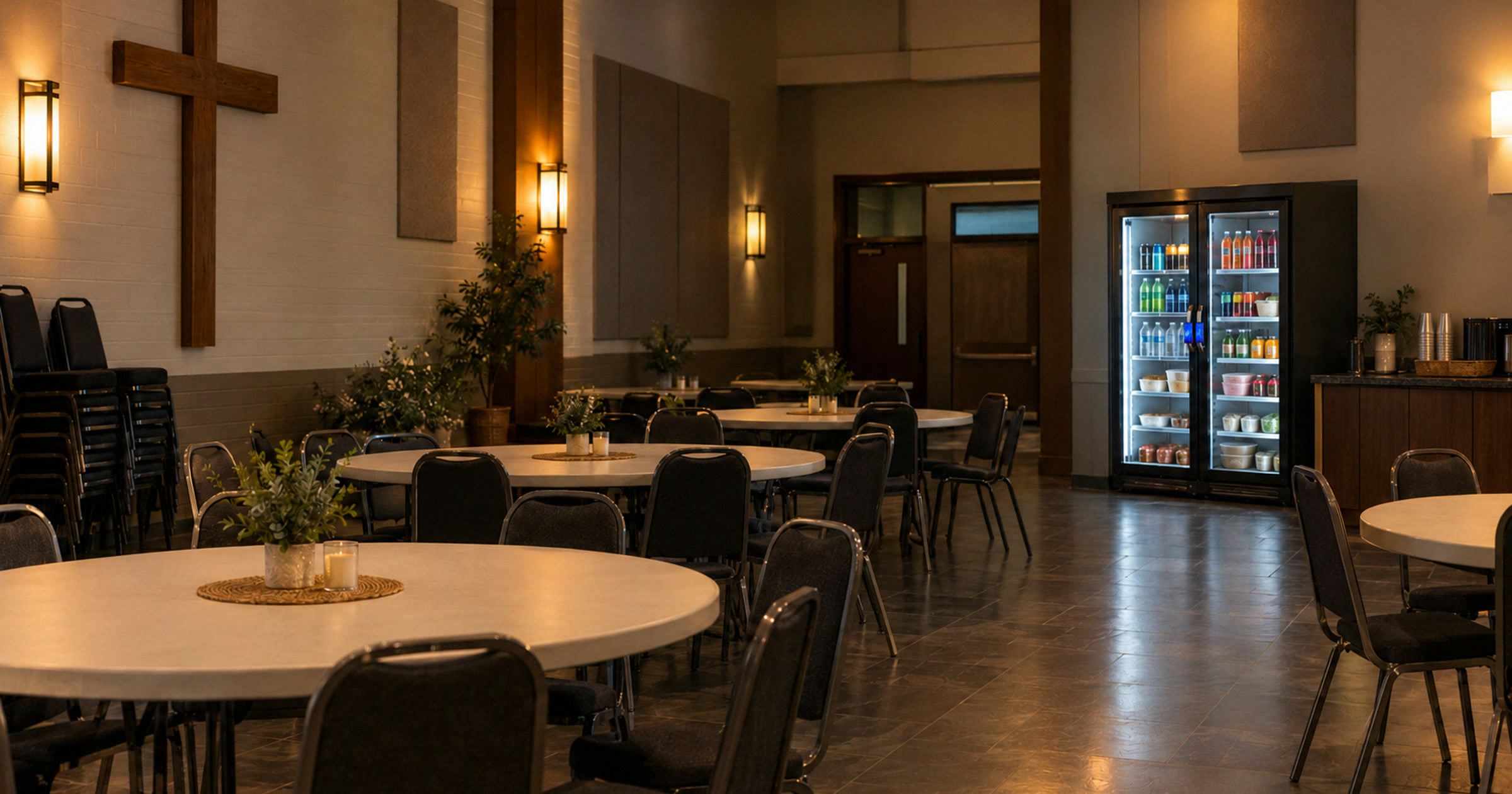
Revvolto is not connected to the company, the county, or the reported project. The useful lesson is broader than one company: when a large research or advanced manufacturing campus is being planned, food access belongs in the early building conversation.
Advanced manufacturing sites have the same practical problem. People work in big buildings with controlled paths, long walking distances, and break windows that do not always line up with nearby food options.
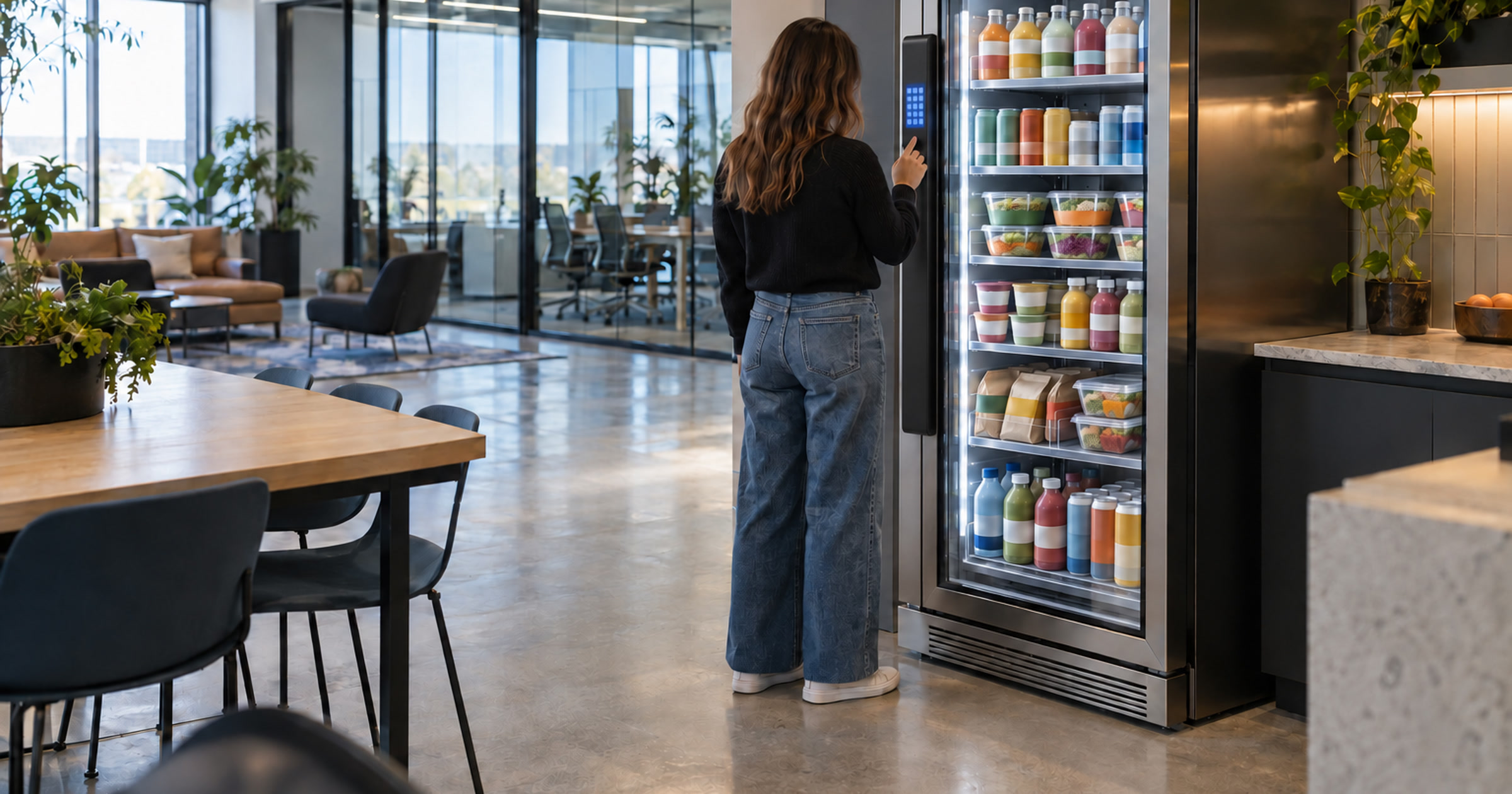
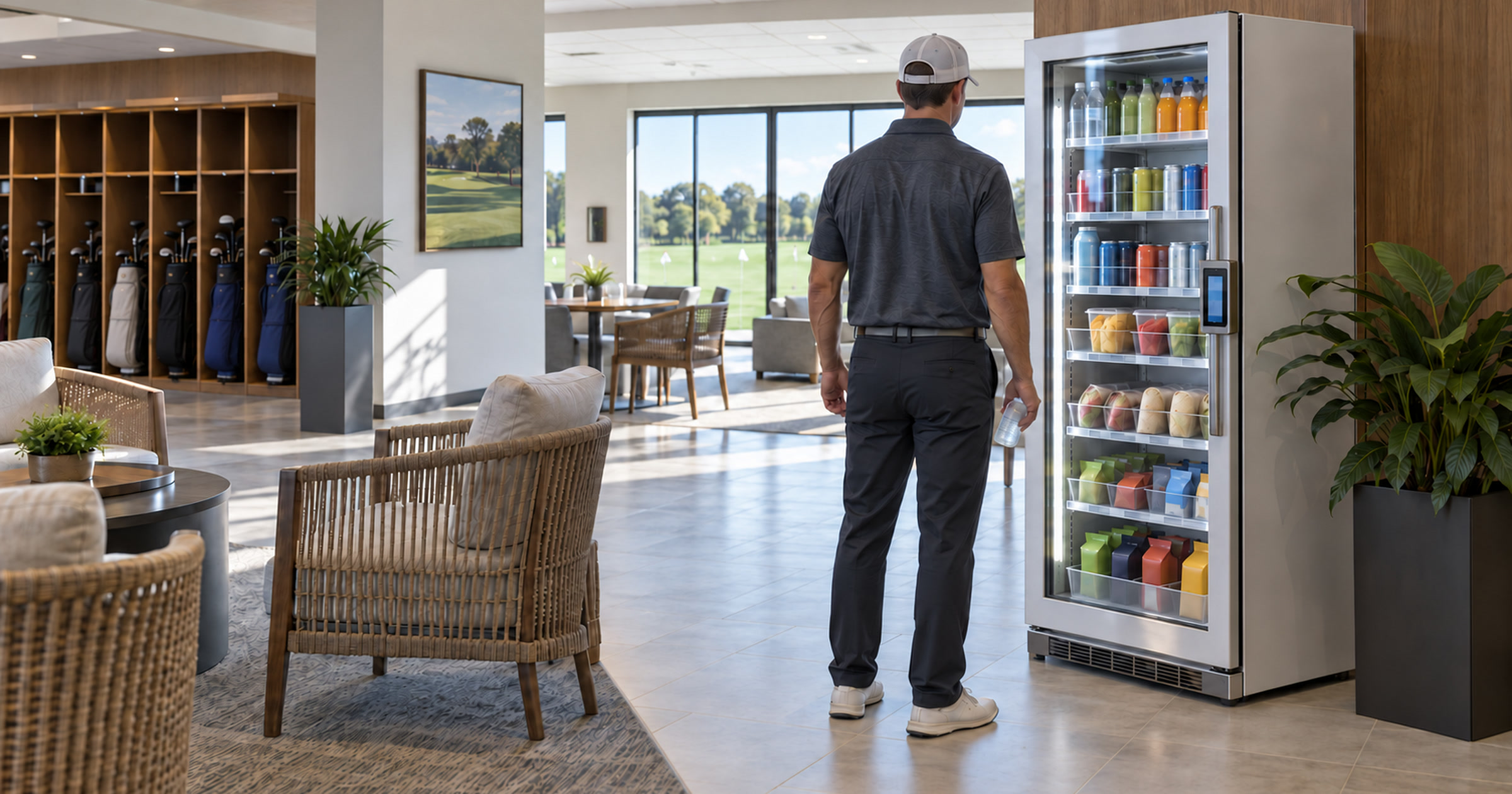
A smart vending machine, smart fridge, or compact micro market will not solve every workplace planning question. It can solve one annoying one: where people can get a drink, snack, or quick meal without turning a short break into a parking lot errand.
Big campuses create small daily friction
Large technical facilities look impressive on a site plan. The daily experience is more ordinary.
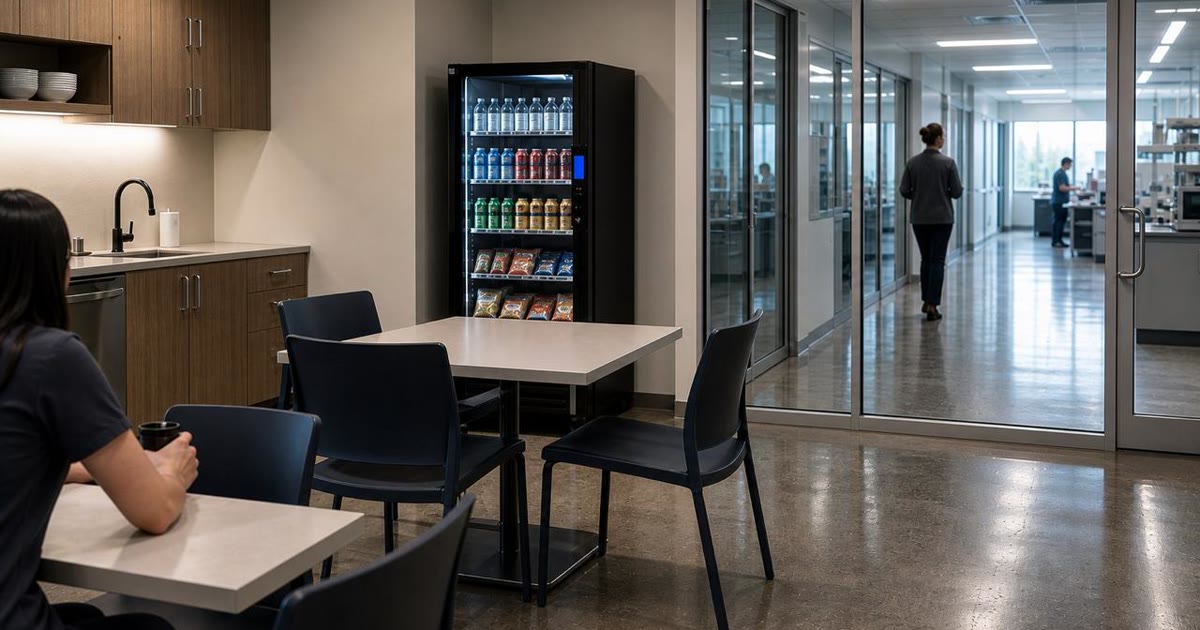
Someone finishes a training session and has 12 minutes before the next one starts. A technician walks out of a lab area after the nearest cafe has closed. A project team stays late because a test run is still going. A visitor waits near a lobby or security-adjacent area longer than expected.
Those are not dramatic moments. They are exactly why food access gets missed.
If the only option is leaving the building, people either skip the break or lose more time than they planned. If the only option is a loose snack shelf, someone inside the organization has to buy items and clean up the mess. They also get the complaints when the good drinks are gone.
That is pantry duty wearing a company badge.
Smart vending works best when it is placed where the pause already happens. Near the training room. Near the employee entrance. Near the interior path between production, lab, and office areas. The machine should support how the building moves, not sit in a forgotten corner because that was the easiest outlet.
Research sites need service access too
Food access is not only a product mix question. It is a service question.
A large industrial research site may have tighter access rules than a normal office. That can affect where a machine is allowed, where restocking teams can enter, and how often service can happen without disrupting the workday.
That is why placement should come before the final furniture plan.
You want enough visibility that people actually use the machine. You also want enough service access that restocking does not become a hallway negotiation every week. A smart fridge tucked behind three doors may look clean on a floor plan, but if the service path is a mess, the amenity becomes harder to maintain than it should be.
We look for the practical middle: visible to the people who need it, easy enough to service, and out of the way of core operations.
That matters more in technical buildings than most teams expect. The best location is rarely the prettiest rendering. It is the spot people already pass when they are heading to the break area, training room, or shift meeting.
The right setup depends on the workday
A one million square foot research campus does not need the same setup in every building. That is the point.
A training area may need cold drinks and quick snacks. A staff break space may need ready-to-eat meals and better restock cadence. A visitor-adjacent lounge may need a cleaner grab-and-go setup that does not feel like a backroom afterthought.
This is where modern vending and smart fridges beat the old one-size-fits-all machine. The question is not, “Can we fit a machine somewhere?” The better question is, “Which daily pause are we trying to support?”
If the answer is late work, the mix should not look like a candy rack. If the answer is short breaks between training blocks, speed and visibility matter. If the answer is a staff area that is far from public food options, service reliability matters more than novelty.
Revvolto can stock the machine, maintain it, and support payment tech for qualified locations. That keeps the internal team from becoming the snack buyer, the complaint desk, and the accidental vending operator.
Plan food access before the building is full
The worst time to think about vending is after everyone has moved in and the break path is already awkward.
By then the best wall may be taken. Power may be in the wrong place. Service access may require a badge path that nobody wants to deal with. The location may have enough people to support a better setup, but the building has already made the easy version hard.
For new industrial and research projects around Austin, the smarter move is simple: include food access in the same conversation as entries and service corridors.
That does not mean every building needs a huge market. It means every building should answer the question before the first week of occupancy: where do people go when they need something quick and cannot leave easily?
For some sites, the answer is a single smart fridge. For others, it is a smart vending machine near the training path. For larger buildings, it may be a compact micro market with a service plan behind it.
The hardware matters. The path matters more.
If you are planning an Austin area research facility or industrial campus and want food access that does not become another internal chore, tell us about the location at revvolto.com/contact-us.