Austin has another practical small-business signal on the calendar. The City of Austin lists an in-person BizAid Business Orientation for August 18 at Hampton Branch at Oak Hill. The session covers the basics that shape a physical location before opening day, including permitting and the commercial development process.
That is not a vending story on its face. Good. The useful lesson is quieter: when a business is planning a real location, food access should be part of the room plan before the opening scramble starts.
We are not affiliated with the City of Austin or BizAid. The event is simply a clean local reminder that brick-and-mortar planning gets easier when operators think about daily movement early.
Austin smart vending should follow how people move
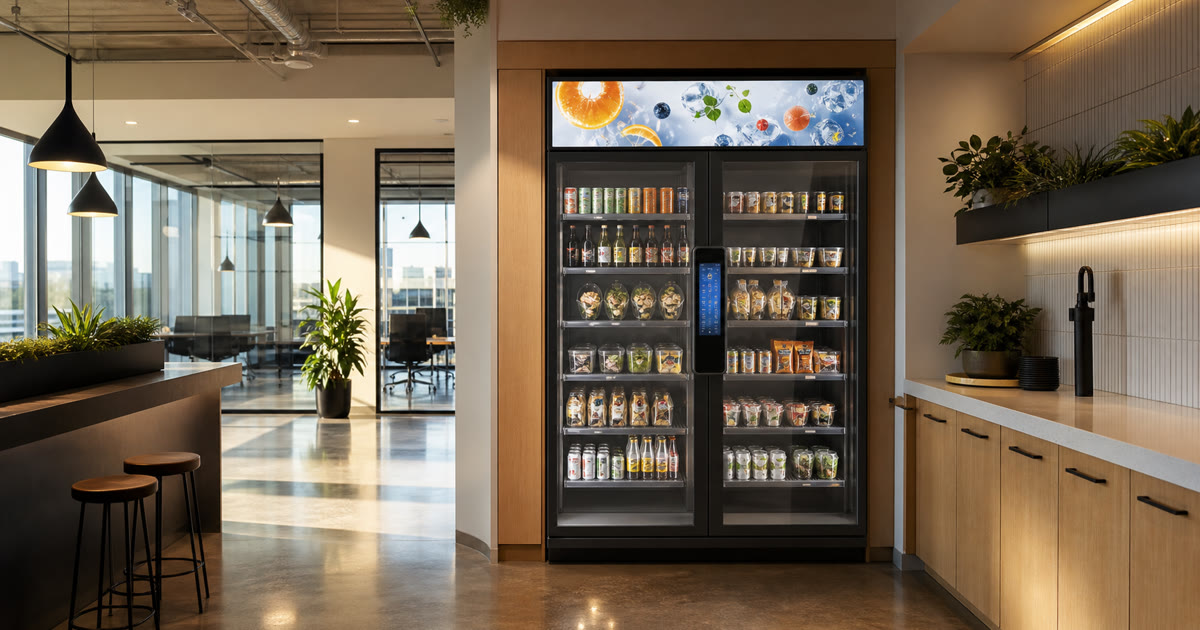
A smart vending machine or smart fridge is not a decoration for the prettiest empty wall. It works when it sits where people already pause.
That matters for small business spaces because the first layout pass usually focuses on customer flow and the work area. Those are the obvious pieces. The break path is easier to ignore until staff members start leaving for every drink, delivery bags collect near the entrance, or someone on site becomes the unofficial snack person.
The better question is simple: where does a person naturally stop for ninety seconds without blocking the building?
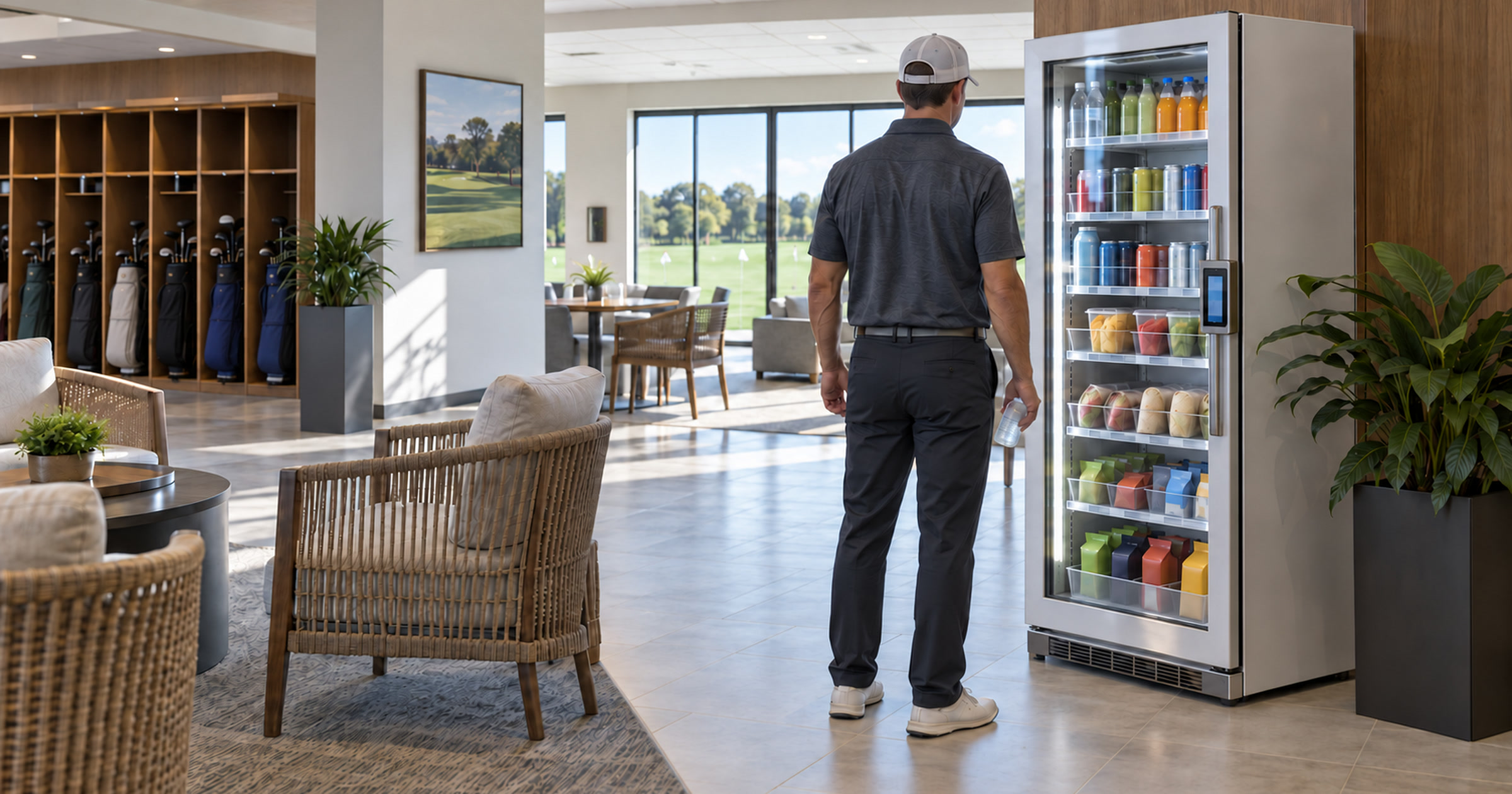
For one location, that might be near a staff room. For another, it might be beside a training room. In a mixed-use building, it might be the quiet stretch between the elevator bank and the shared lounge. The exact answer changes by site, but the principle does not. Put grab-and-go food where the building already gives people permission to pause.
That is why planning beats patching. If your food access decision happens after the furniture arrives, the machine usually gets pushed into leftover space. Leftover space is rarely where people actually move.
The break path affects workload, not just convenience
Food access sounds like a perk until your team has to manage the workaround.
Someone has to answer where to get a drink. Someone has to receive deliveries. Someone has to clean up the half-planned snack shelf. Someone has to decide whether the breakroom fridge is employee-only, public-facing, or nobody’s responsibility at all.
A stocked smart cooler changes that job when it is planned correctly. We handle stocking and service for qualified locations, so the building gets a practical food option without turning an employee into the snack manager.
The placement still matters. A smart fridge wedged behind a door does not solve much. A vending unit across a lobby with no clear pause space can feel awkward. A cooler next to a noisy work zone may technically be available, but people will skip it if the spot feels like they are in the way.
The goal is not to make the vending area fancy. The goal is to make it obvious and easy to reach while staying out of traffic.
That is the part many teams miss. They think about product mix first. Product mix matters, but access comes before assortment. If people do not see the unit or have room to stop, the best snack selection in the city is still hiding.
There is also a trust problem. A unit that looks like it belongs in the room gets used. A unit that looks like somebody parked it there at the last minute becomes background noise. That is why the best placement conversation starts with the path, the lighting, and the people who actually use the space.
Plan the vending spot before the opening scramble
The City’s BizAid page frames its orientation around avoiding costly mistakes before a business opens. That idea applies neatly to amenities.
A location does not need a giant market to improve daily food access. It needs an honest read on who uses the space and where a smart vending unit can serve people without adding work for the team.
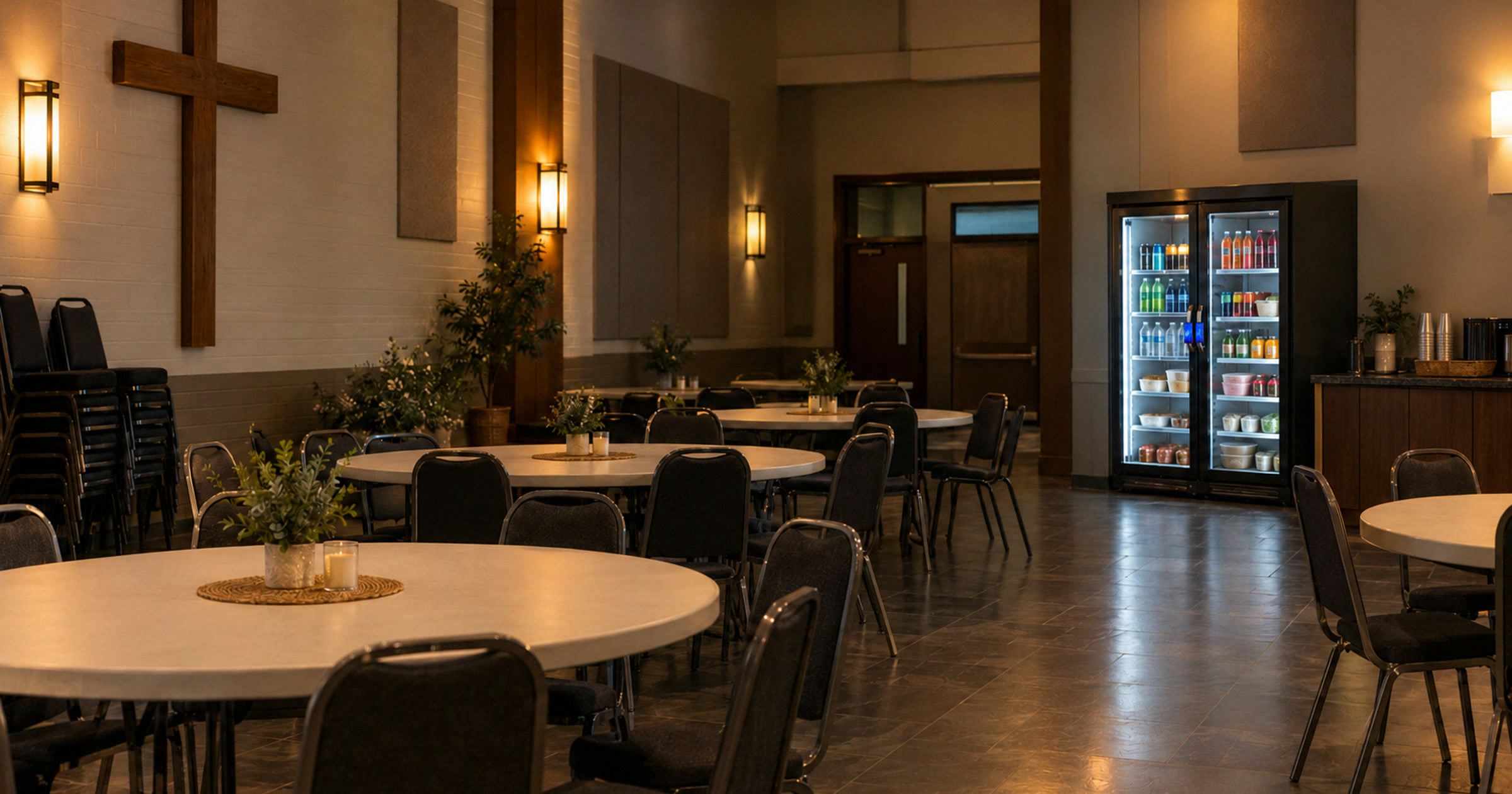
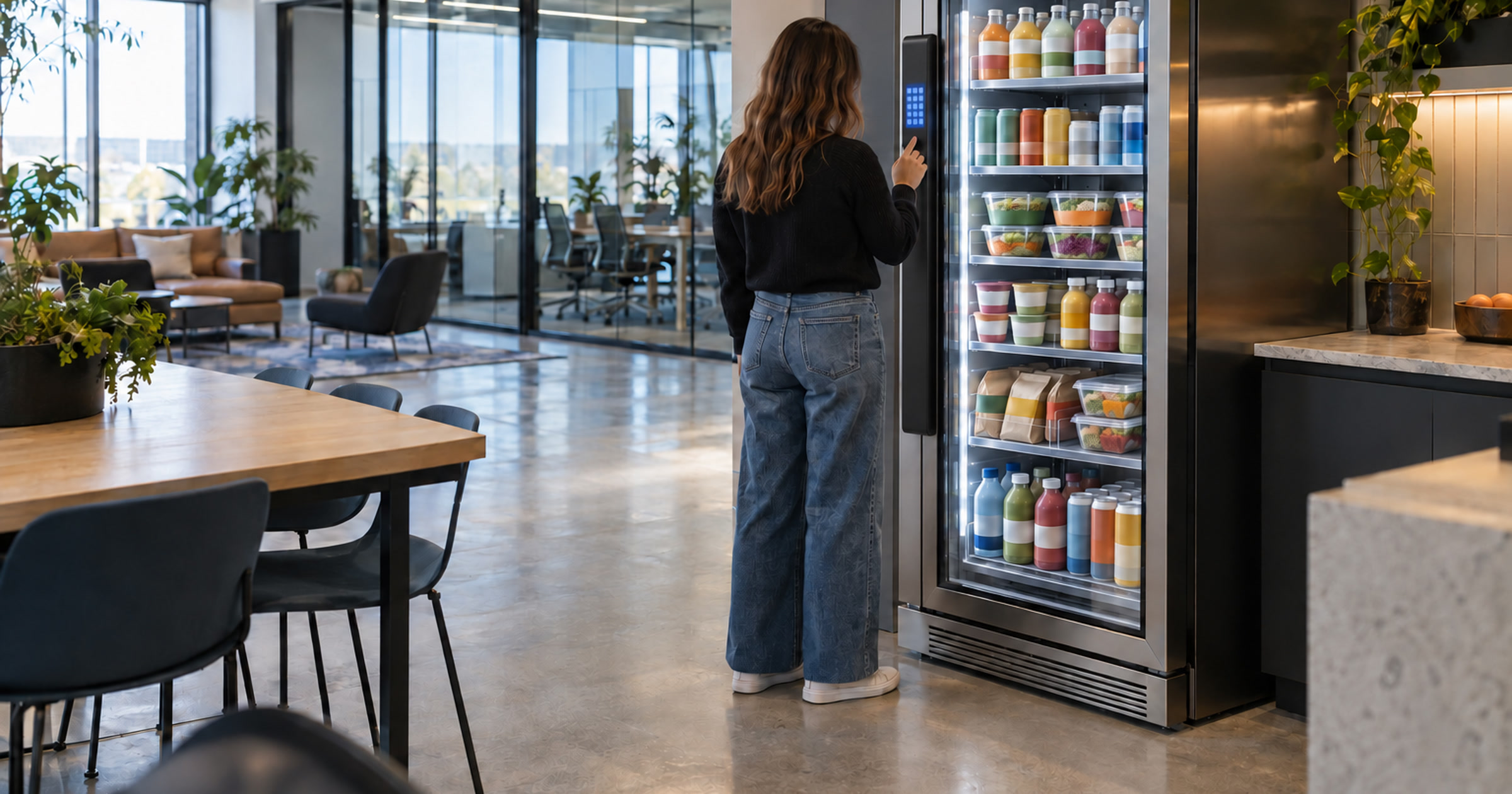
For a small office, that could mean a clear-glass smart cooler near the meeting room path. For a clinic staff area, it could mean keeping grab-and-go away from patient-facing space. For a training room or workshop location, it could mean putting cold drinks where attendees already step out between sessions.
None of this requires pretending vending is the main event. It is not. The main event is the business. Smart vending earns its place when it quietly removes a daily friction point.
That is the buyer test I would use before opening or refreshing a location: if someone has ten minutes, can they get something cold without leaving or asking the front desk?
For new locations, this belongs beside the early room-planning decisions. For existing locations, it belongs in the first serious walk-through before anyone talks about product mix. Watch where people already stop. Watch where the team already gets interrupted. Then place the cooler where it removes friction instead of creating a new little chore pile.
If the answer is no, the floor plan is not finished yet.
We help qualified Austin-area locations add stocked smart vending and smart fridge options that fit the way the building actually works. Tell us about the location at revvolto.com/contact-us.