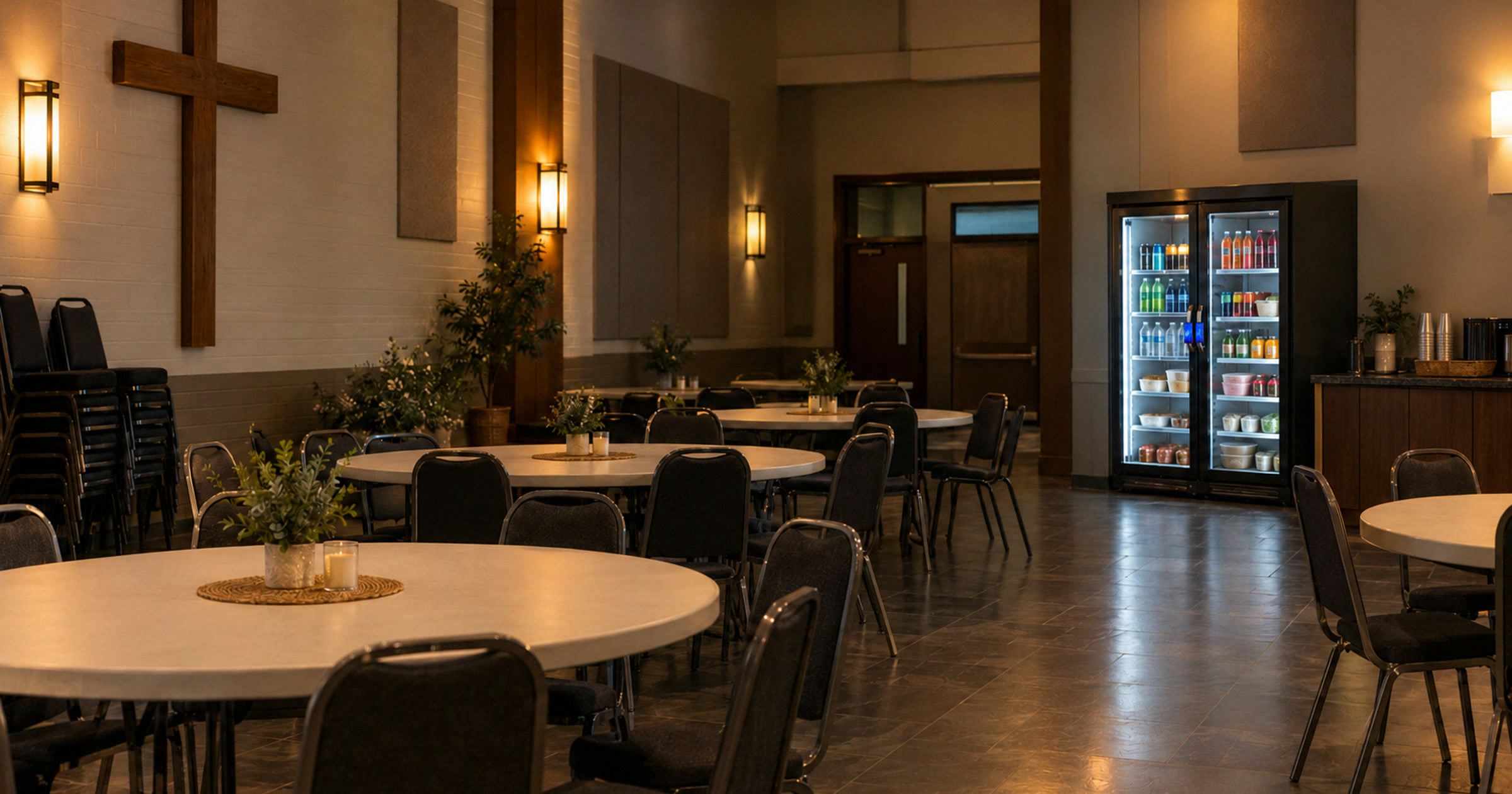
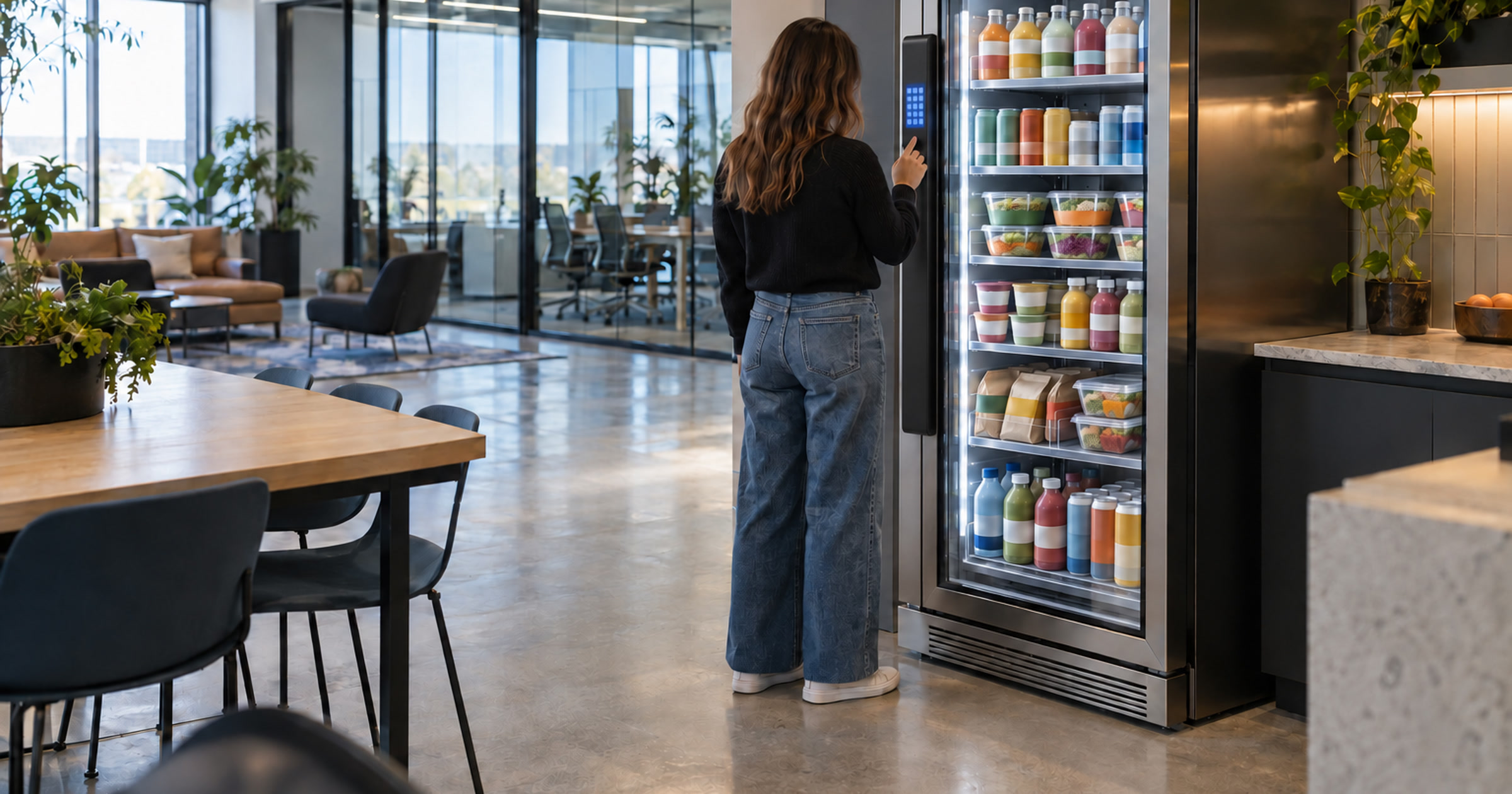
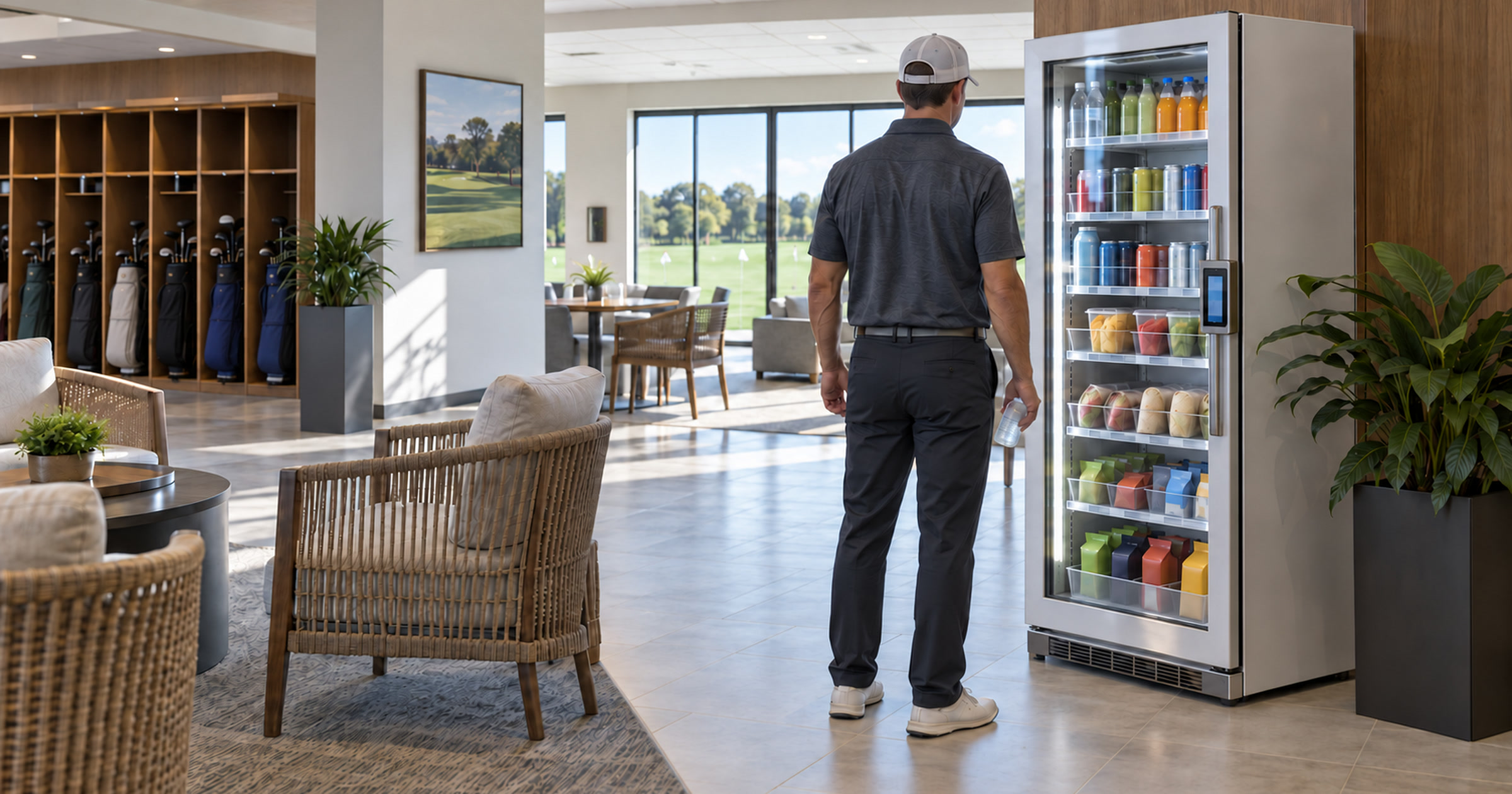
A growing Austin destination is a good reminder for any retail or mixed-use space: food access is part of the floor plan, not a leftover detail.
The Austin Chamber recently highlighted Nature’s Treasures after its move into a larger North Austin campus. The story is not about vending. It is about what happens when a local business grows into a bigger footprint with more customer movement, more team movement and more reasons for people to spend time on-site.
That is where smart vending and smart fridges belong in the planning conversation.
Not as a shiny machine in the corner. Not as an afterthought near the exit. As a practical food and drink point placed where people already pause.
Revvolto is not affiliated with Nature’s Treasures, the Austin Chamber or any organization named in the source. The local story is simply a useful planning cue for Austin-area businesses thinking through bigger rooms, longer visits and better service paths.
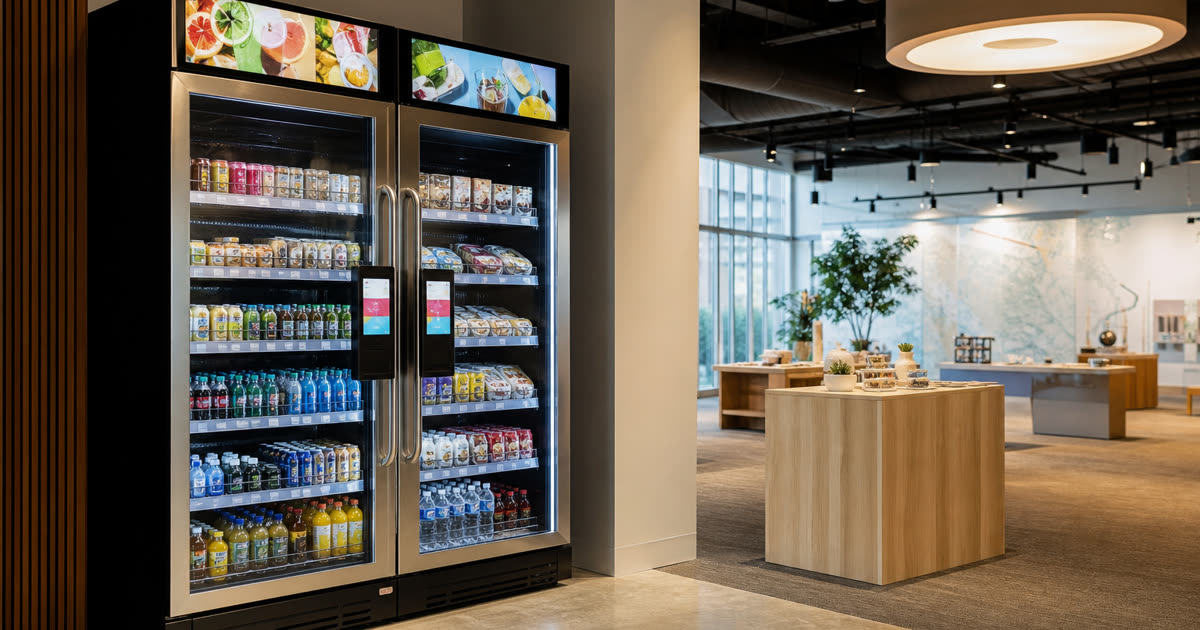
Bigger spaces change the food-access question
A small shop can often get by with nearby food options, quick staff runs and informal routines. A larger retail campus works differently.
People move across more square footage. Team members may be farther from nearby restaurants. Visitors may spend longer inside the building. Events, classes or demonstrations can create short bursts of activity that do not behave like normal retail traffic.
The food-access question changes from “can someone leave?” to “where do people naturally stop?”
That is a better question because it starts with behavior instead of equipment. A smart vending machine only works well when the placement fits the room. A smart fridge only feels useful when it sits near a real pause point. A compact micro market only makes sense when the space can support browsing without creating congestion.
For a retail campus, those pause points might sit near a workshop room, a staff corridor or a customer waiting area. The exact answer depends on the building. The mistake is pretending the answer can wait until everything else is finished.
When food access is planned late, it often lands in leftover space. Leftover space is rarely the spot people actually use.
Smart vending can keep food access off the team’s plate
The operational trap is easy to miss.
A growing retail venue wants a better experience for people inside the building, so someone adds snacks and drinks informally. At first, that feels simple. Then somebody has to buy the items. Somebody has to organize them. Somebody has to answer questions when a favorite item disappears. Somebody has to clean up the little messes that show up when food access has no real system behind it.
That is not an amenity anymore. That is a side job.
Smart vending and smart fridges are useful because they can shift that work away from the internal team. Revvolto handles stocked products, restocking, payment technology and service for qualified locations. The point is not just that people can grab something quickly. The point is that the business does not have to become its own snack operator.
For retail campuses, that matters because the team already has a job. They are helping customers, running the space, supporting events and keeping the business moving. Food access works best when it supports that rhythm instead of interrupting it.
A good vending plan protects the team from three common headaches: empty shelves, awkward payment handling and the slow creep of “who owns this?” work.
The best placement follows the path people already take
The machine is not the strategy. The path is.
If visitors naturally pause between rooms, that path deserves attention. If team members pass one corridor every shift, that path may be more valuable than a prettier but quieter corner. If a space has workshops or community events, the break between activities may be the moment that decides whether food access feels useful or invisible.
This is where Austin growth stories become useful for other businesses. A larger footprint is exciting, but it also exposes small planning gaps. People notice when water, snacks or cold drinks are inconvenient. Staff notice when every small request turns into another interruption.
Smart vending works best when the placement answers both sides of that problem.
For customers and visitors, it should be easy to see and easy to use without feeling like they are wandering into a back office. For employees, it should be close enough to matter during real breaks without blocking work areas or service movement.
That balance is not complicated, but it does require someone to think about it early.
Austin businesses can plan amenities before the room gets locked
The best time to plan food access is before the final room rhythm hardens.
Once fixtures, traffic patterns and staff routines are settled, every change gets harder. The vending unit may still fit physically, but physical fit is only one test. The better test is whether the location supports visibility, payment access, stocking access and normal movement through the space.
That is why a growing Austin retail campus is a useful signal beyond one business. Any expanding venue with longer dwell time should ask how people will eat, drink and reset without adding more work to the team.
This applies to retail, coworking, tenant amenity areas and staff facilities. The setting changes, but the buyer question stays pretty consistent: where will people pause, and who owns the work behind that pause?
If the answer is “our team will figure it out later,” the plan is already wobbling.
A better answer is to map the pause path first. Then decide whether a smart vending machine, smart fridge or compact market setup belongs there.
A simple test before adding food access
Before adding any grab-and-go option, walk the building like a customer and like an employee.
Where do people slow down without being told? Where would a stocked cooler be visible without becoming clutter? Where could service happen without blocking the room? Where would cashless payment feel natural? Where would a food and drink option help instead of becoming another thing to manage?
Those questions are not glamorous. Good floor plans rarely are. But they are what separate a useful amenity from a machine that looks fine in a photo and gets ignored in real life.
For Austin businesses growing into larger spaces, the lesson is simple: plan the pause path before the room is finished.
Revvolto helps qualified locations add modern smart vending and smart fridge service without turning the internal team into the operator. If your building is growing, changing or rethinking visitor and employee food access, tell us about the location at revvolto.com/contact-us.