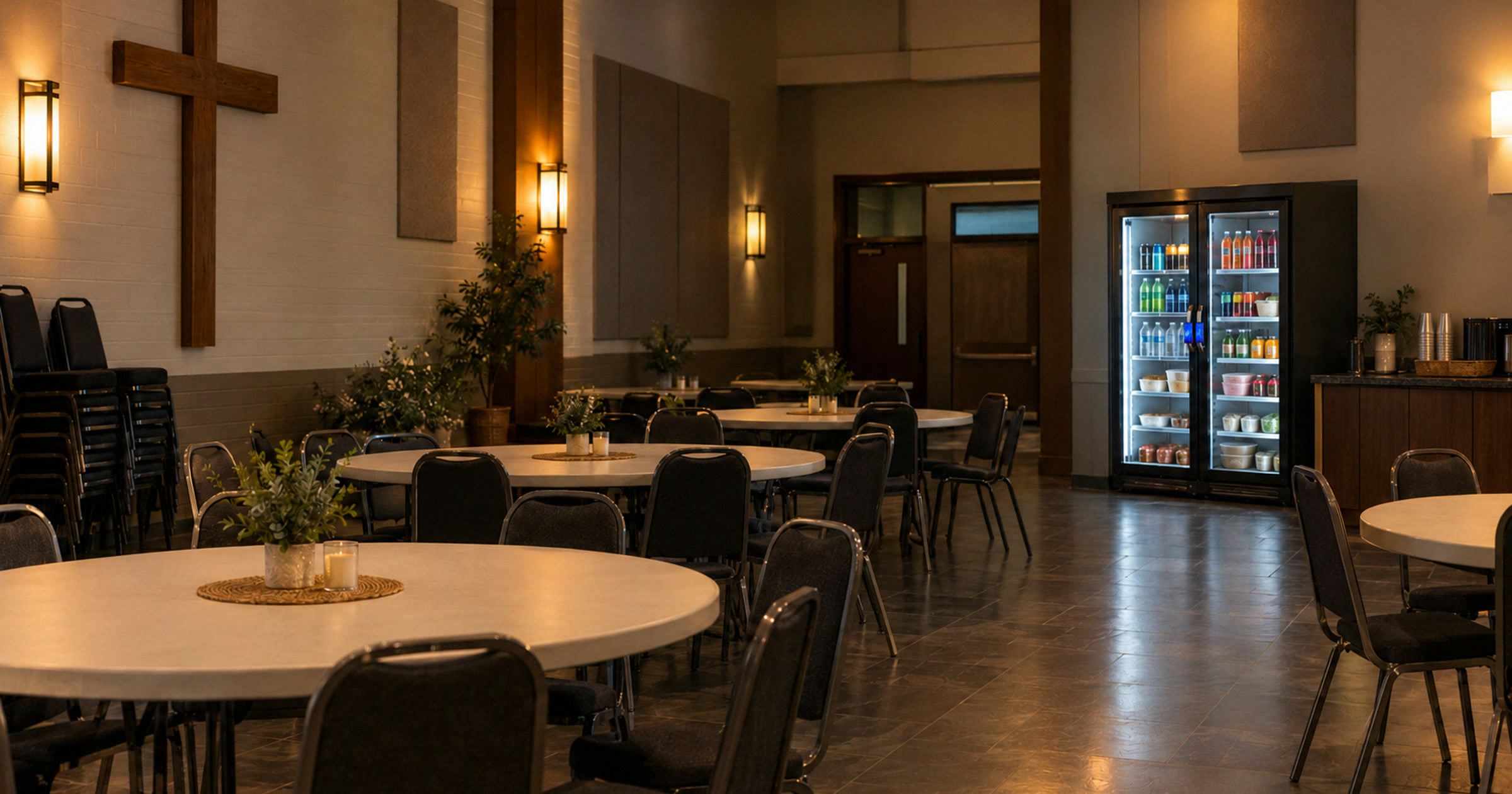
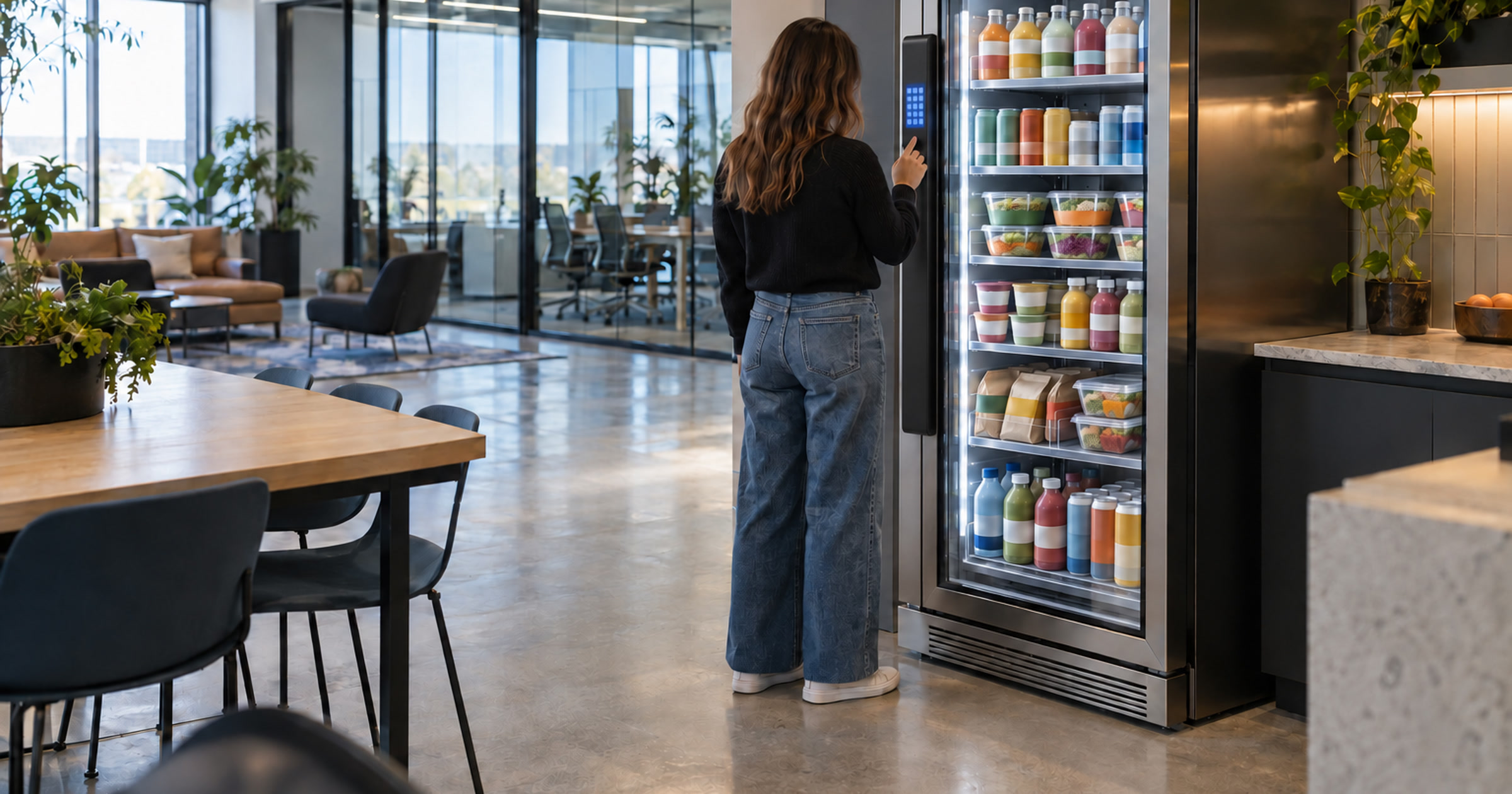
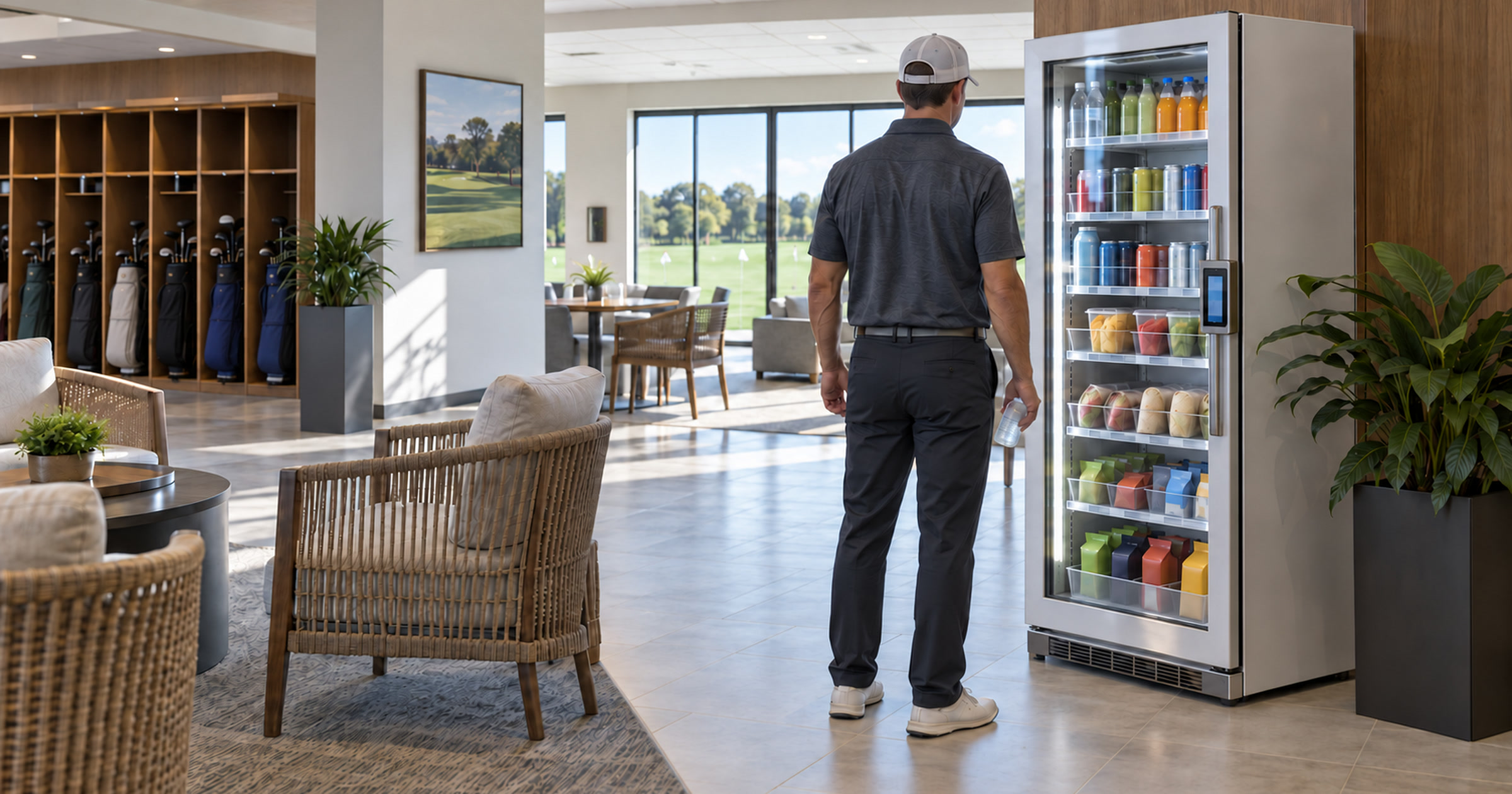
Austin’s Small Business Connections Conference is scheduled for August 19 at Palmer Events Center. The City page lists the event from 8:00 AM to 2:30 PM. It also describes a day built around sessions and a resource expo.
That is a useful local hook for a boring operational question many Austin buildings ignore: when people are already moving between programming blocks, where can they get food or a drink without leaving the path?
This is not a Revvolto partnership with the City of Austin, Palmer Events Center, or the conference. It is a planning lesson. Long business days expose weak break paths fast.
A conference day makes the problem visible
A half-day conference shows the same food access problem that can show up inside busy buildings. People have short windows. They do not want a scavenger hunt. They need something close enough to use between sessions.
The Austin event page describes a day built around expert-led sessions and a resource expo. That mix creates movement. People arrive early. They move between rooms. They pause near tables and look for something quick before the next block starts.
That pattern is bigger than one event. It is the same pattern inside a building where people have ten minutes between calls, a short break between appointments, or a narrow window before the next shift starts.
Food access fails when the only option is off the path. It also fails when the solution adds work for the team running the space. A snack table looks simple until someone has to buy it and keep it filled. Then someone else has to clean it up.
Smart vending works when it respects the path and removes that extra layer of work.
Smart vending should sit where people already pause
The strongest vending placement is rarely the most decorative corner. It is the spot people already pass when they are moving with a purpose.
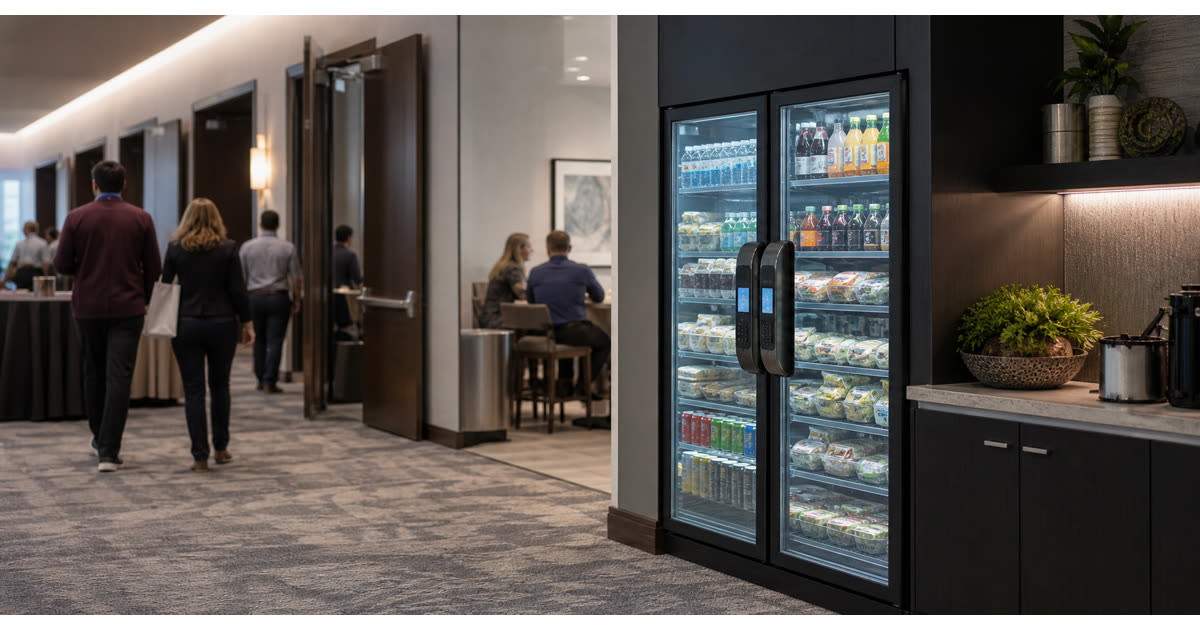
For a conference setting, that might be near a prefunction corridor or a workshop exit. For an office, it might be near the breakroom people actually use. For a clinic staff area, it might be near the corridor where employees step away for a few minutes.
The buyer question is simple: would someone see the unit during the natural break, or would they have to remember it exists?
If the answer is “they have to remember,” placement is doing too much work. People are busy. The unit needs to be visible, obvious, and not in the way.
That last part matters. A smart fridge or smart vending machine should not block a door swing, crowd a hallway, or turn restocking into a public obstacle course. The path should work for the person buying a drink and for the person servicing the unit.
The service model matters more than the machine hype
A modern machine is helpful. A modern machine in the wrong service model becomes another thing someone has to manage.
That is why the operational question should come before the equipment question. Who stocks it? Who watches product movement? Who fixes a payment issue? Who keeps the unit from becoming an empty glass box with nice lighting?
Revvolto’s role is to keep that burden off the building team. We stock and restock the unit. We support the payment tech and maintain the equipment. For qualified locations, the setup is typically at no cost to the business using the space.
That does not mean every building is a fit. It means the evaluation should start with real use. Look at foot traffic first, then check whether the service path can support the unit.
A conference day makes those variables easier to see. If people are flowing through the same corridor all morning, the placement question is not abstract. It is right there in the path.
This is also why a smart vending setup should be planned before the room is packed. If the unit arrives after traffic patterns are already fixed, the team is left hunting for an outlet and hoping people notice it. Better planning starts earlier. Put the unit where the break actually happens, then leave enough room for service without turning the corridor into a bottleneck.
Use the local hook as a building check
The value of a local Austin event is not name-dropping. The value is that it gives property teams a concrete scenario to test.
Walk the path from the entrance to the rooms people use most. Notice where they slow down. Check whether food access sits near that pause point or somewhere people avoid when time is tight.
Then ask the unglamorous questions. Can the unit be restocked without disrupting the space? Is there enough visibility for people to use it? Does the placement support the day instead of adding another errand?
For conference venues and business centers, those questions are the difference between an amenity people appreciate and an amenity people forget.
Austin keeps giving property teams reminders that movement matters. This week, the reminder is a small business conference. Next week, it might be a tenant buildout or a route change.
The lesson stays the same: put food access where the day already bends.
If you want to see whether a Revvolto setup fits your location, tell us about the building at revvolto.com/contact-us.