
Austin smart vending gets more useful when it follows how people actually enter and move through a building. That matters right now because CapMetro’s August 2026 service changes are a reminder that arrival patterns are not fixed forever.
CapMetro says the updates began August 16, 2026. The changes include an extension of Route 2 along Springdale Road, Route 217 serving Vargas Road instead of Montopolis Drive, and weekday UT Shuttle frequency changes on two routes. That is not a vending story by itself. It is a building-operations cue.
When transit patterns shift, the real arrival path can matter more than the amenity list. If people arrive through a different side of the building or wait in a different common area, the best food-access point may move with them.
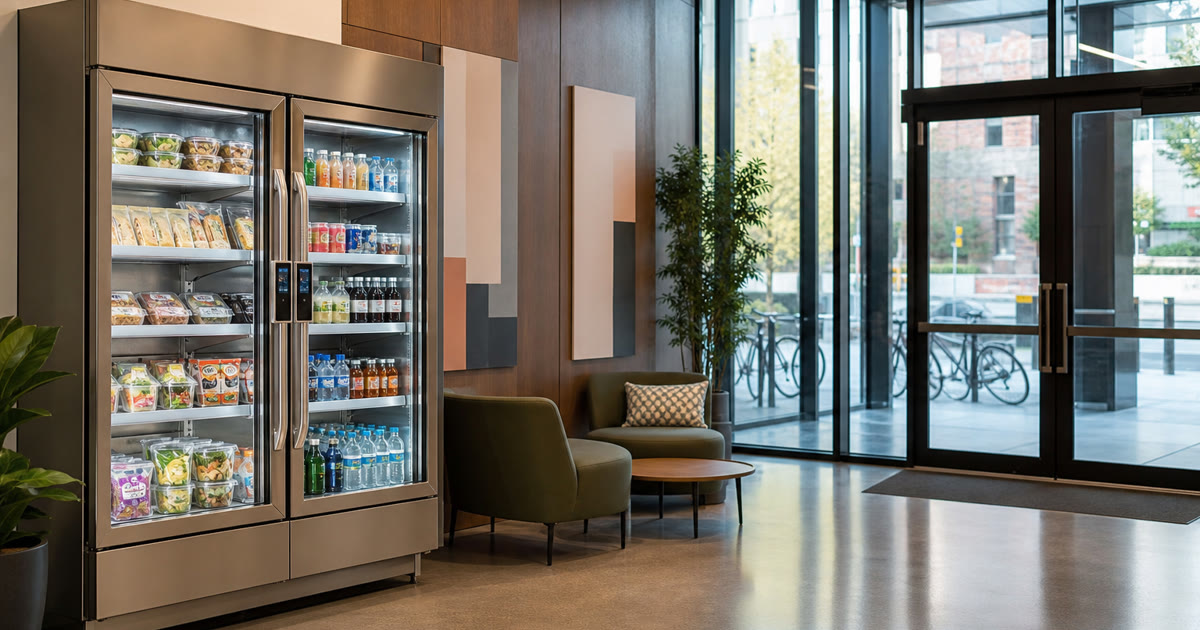
Austin smart vending should follow the arrival path
A smart vending machine or smart fridge works best when it sits where people already pause. Transit served buildings have a natural test: follow the line from arrival to the first real stop inside the property.
For some locations, that stop is an elevator bank. For others, it is a lobby seating area or staff corridor. The question is not where a machine looks nice in a floor plan. The question is where someone can grab a drink or snack without turning a short break into a building tour.
CapMetro’s August update gives Austin property teams a clean reason to recheck that path. Route 2 changes affect East Austin connections. Route 217 changes touch access to schools, housing, and community spaces. UT Shuttle changes affect campus-adjacent movement. None of that means every nearby building should add vending tomorrow. It means arrival paths deserve a fresh look.
That fresh look should be practical. Stand at the entrance people actually use. Walk toward the place they naturally pause. Look for power, sightlines, and service access. Then make sure someone can browse without blocking the path. If the best spot fails those basics, it is not the best spot.
The pause point beats the pretty corner
The prettiest corner in a lobby is rarely the most useful one. It may be too far from the entry path. It may sit behind furniture. It may make restocking awkward. Worse, it may put food access where no one wants to stop.
A better placement starts with behavior. People coming off a bus or shuttle are usually moving with a destination in mind. So are people walking in from nearby parking or bike storage. A smart fridge near that movement path can support the moment before they disappear into the building.
That does not mean crowding the front door. The better play is a nearby pause zone: close enough to be seen, far enough to stay out of traffic, and simple enough for the site team to keep clear.
This is where modern smart vending helps. Cashless access, stocked product variety, and operator-managed restocking can make the amenity feel like part of the building instead of a side project. We handle stocking and service for qualified locations. Payment tech is part of the setup, so the property team is not stuck managing snack duty.
The machine still has to earn the spot. If the entrance area is narrow, use a smarter location. If the breakroom is hidden, rethink the route. If staff and visitors move through different paths, choose the audience you are actually trying to support.
Transit changes can expose service ownership gaps
A transit update can also expose a quiet operations problem: nobody owns the everyday food-access plan.
The leasing team may care about resident experience. Facilities may care about placement and power. Operations may care about restocking access. A campus group may care about student or staff convenience. If those decisions are split across teams, the amenity can stall before anyone even picks a machine.
That is why transit served buildings should treat vending as an operating decision, not decor. The right setup answers three questions before installation.
Who is the main user group?
Where do they naturally pause?
Who handles service after the machine is in place?
Those are simple questions, but they prevent a lot of nonsense. A smart vending unit near a shuttle-heavy entrance has a different job than a smart fridge in a staff-only breakroom. A lobby placement has different visibility and service needs than an amenity-room placement. A mixed-use property may have to separate visitor convenience from employee access.
The local hook is not that CapMetro changed a few lines on a map. The point is that buildings change when movement changes. Food access should change with it.
What Austin buildings should check before adding smart vending
Before adding Austin smart vending near a transit served building, start with a walkthrough at the time people actually arrive. Morning traffic tells you one story. Late afternoon tells you another. A shift-change window may tell you the story that matters.
Watch the pause points. Look for the path from the entrance to elevators, shared rooms, or staff-only areas. Note where people already slow down. Then check the unglamorous stuff. Confirm outlet access and door swings. Check the delivery path, clear floor area, and visibility.
The product mix should fit the audience. A campus-adjacent staff area may call for cold drinks and quick meals. A mixed-use lobby may call for simple grab-and-go items. An office building may care more about coffee drinks and afternoon snacks. Keep the decision tied to the audience, not a generic shelf plan.
Service access matters just as much. A machine that is easy to use but miserable to restock becomes a recurring headache. The operator should be able to reach it without interrupting the building every time inventory changes.
This is the Revvolto lane: modern smart vending, smart fridges, and micro market options that fit real buildings. We look at traffic, audience, and placement first. Product mix and service ownership come before treating the machine as solved.
A better amenity starts with the path people already use
CapMetro’s August service changes are a useful reminder for Austin buildings: people do not experience amenities on a spreadsheet. They experience them while moving through real spaces.
If a transit served entrance or shuttle path is becoming more important, food access belongs in that conversation. The same goes for a campus-adjacent lobby. Not as a gimmick. Not as a giant market buildout by default. As a practical amenity placed where people already pause.
Smart vending works when it respects the building. It should be easy to notice, easy to use, and easy for the operator to service. That is the difference between a machine people pass and a machine people actually use.
If you are reviewing food access for an Austin office or campus building, tell us about the location at revvolto.com/contact-us.



