The Austin Chamber has a State of Tech program scheduled for August 20 at Austin Central Library. The agenda centers on deep tech, including advanced hardware and space technology. That is the news hook, but the useful lesson is simpler: when people gather for dense work sessions, the breaks matter more than the room brochure admits.
This is not about Revvolto being involved with the Chamber, the library, or the event. We are not claiming that. The point is that business events expose the same food access problem that shows up in offices, shared workspaces, and mixed-use buildings across Austin.
People do not leave a two-hour tech luncheon because they hate the speaker. They leave because the coffee line is long, the snack table is gone, or the closest useful food option is outside the building. Once they leave the path, you may not get them back on time.
Tech events reveal the pause-path problem
A good event has a rhythm. People arrive, settle in, then spill into a hallway with ten minutes to answer a message and grab a drink.
That pause is where the food access plan either works or gets weird.
The Austin Chamber event page lists the State of Tech program for 11:00 a.m. to 1:00 p.m. at Austin Central Library. That is not an all-day trade show, but it is long enough for a real break-path question. Where does someone grab a cold drink without turning the event desk into a snack counter?
For property teams, the same question shows up outside events. Tenant meetings and training days create short spikes of movement. The old answer was a folding table and a last-minute shopping run. That can work once. It is a bad system.
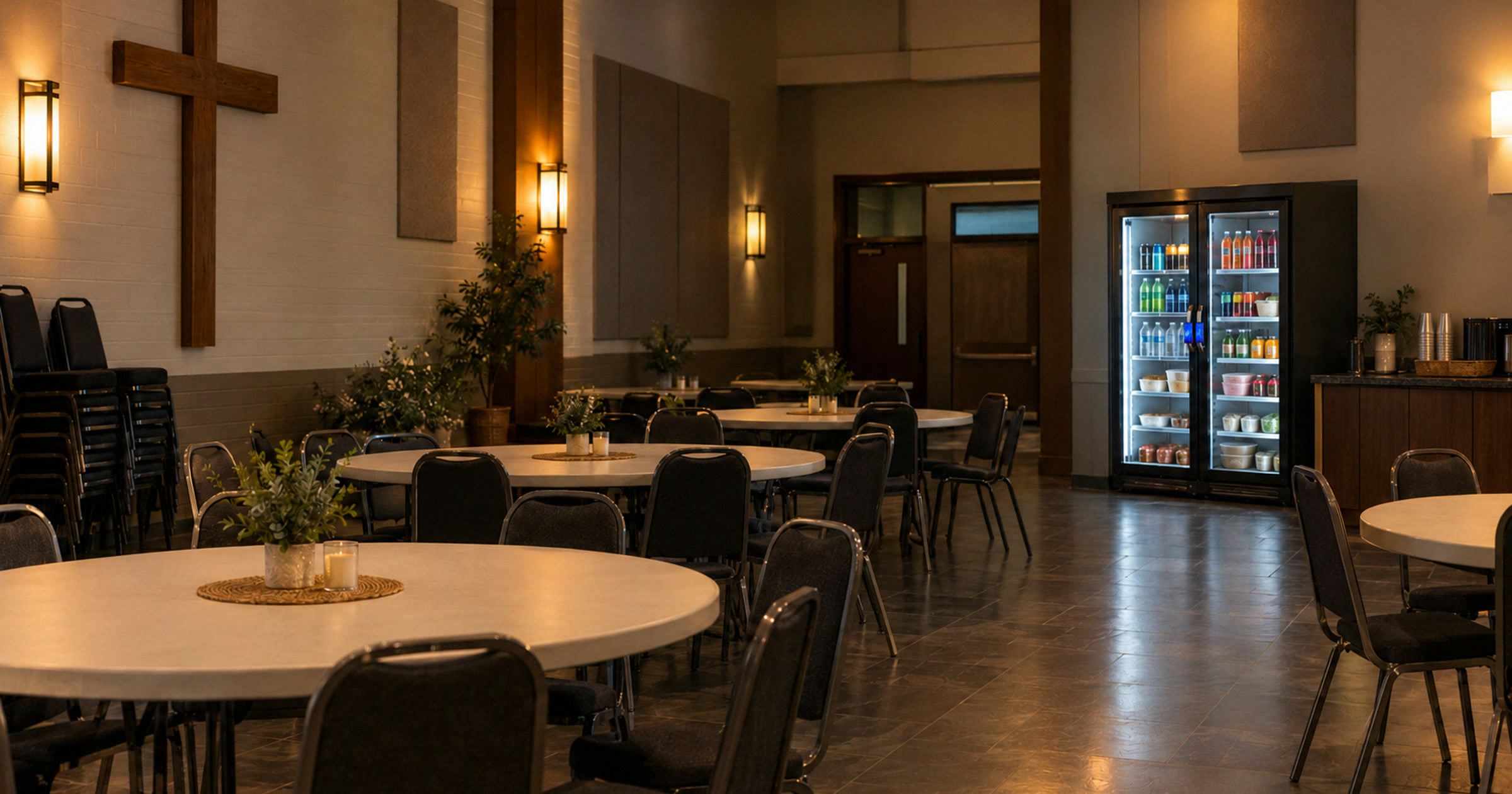
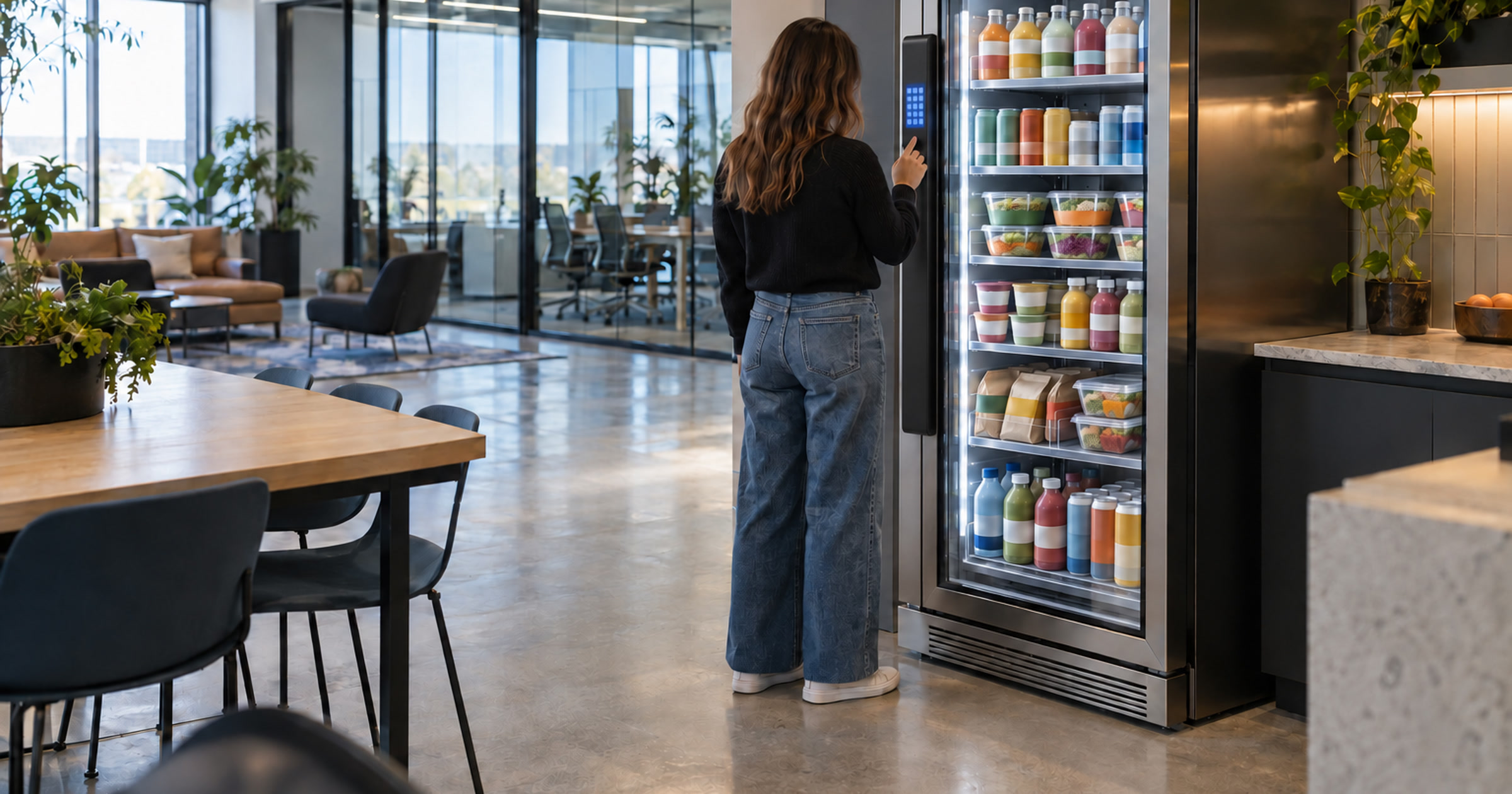
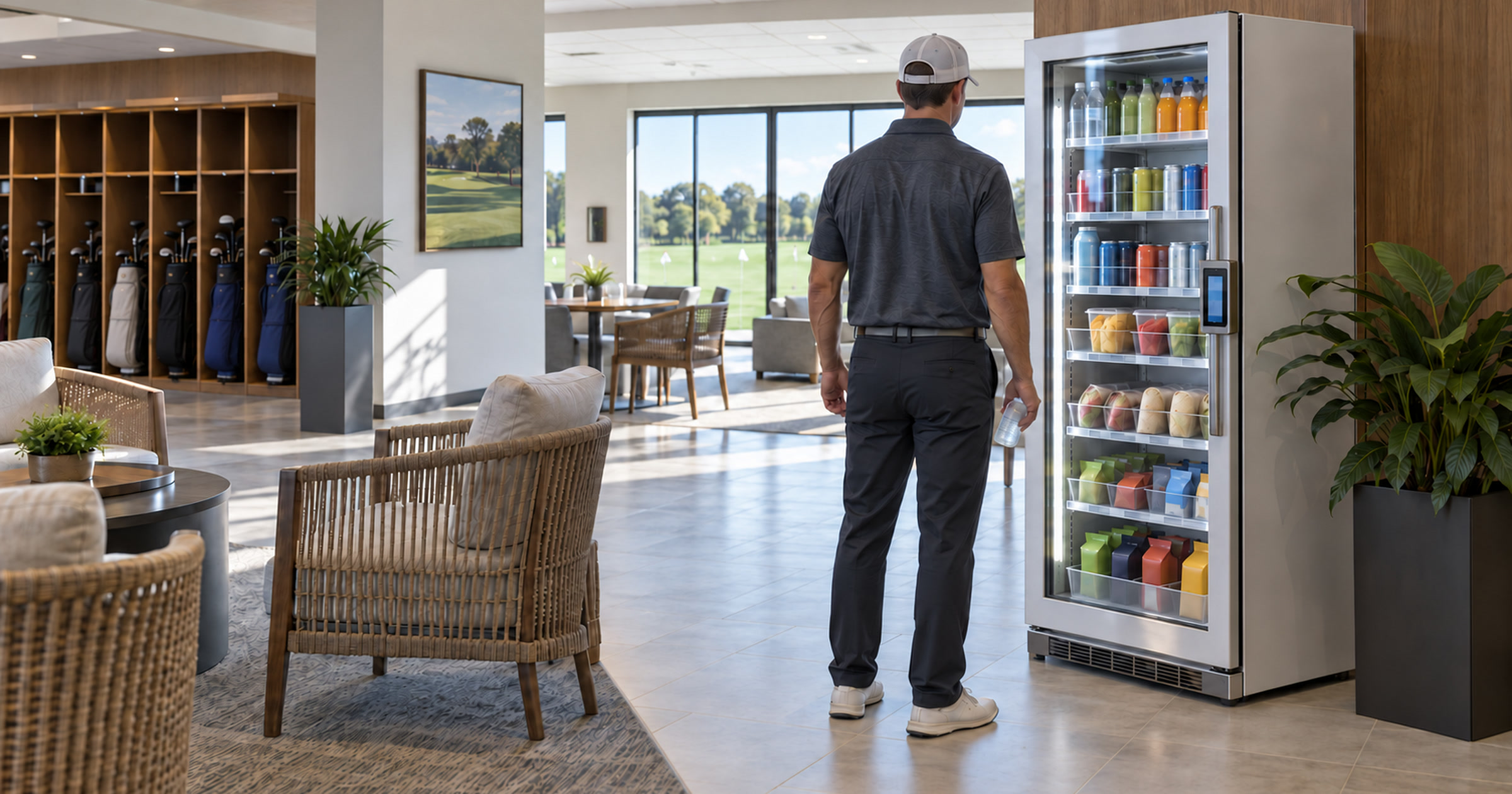
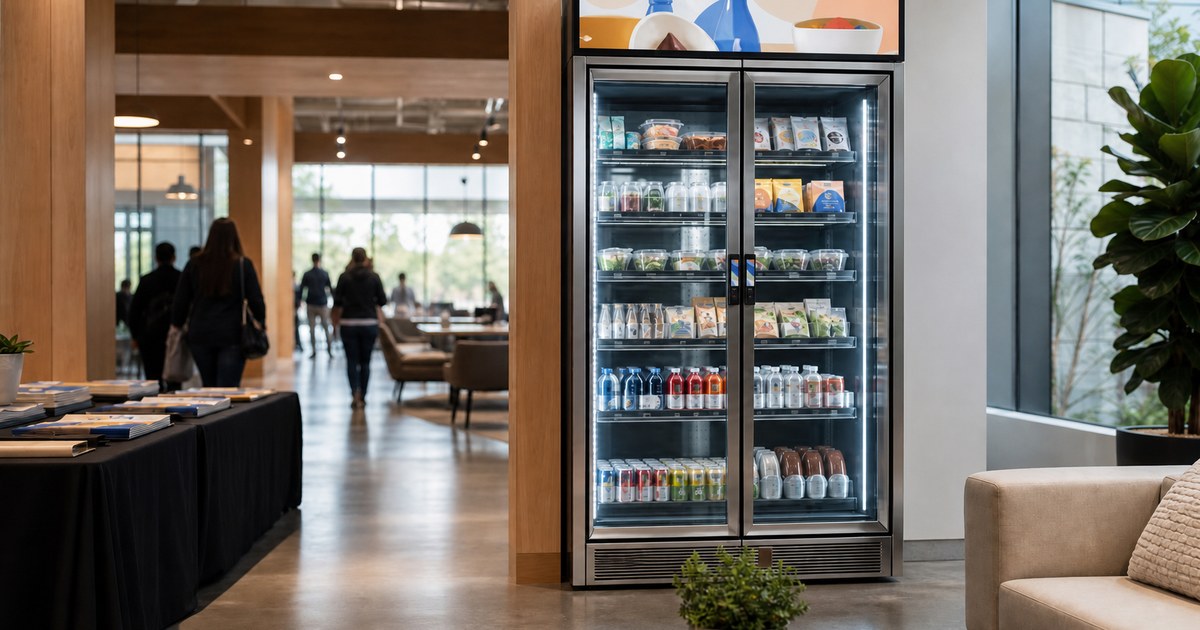
A smart vending machine or smart fridge gives the building a steadier option. Put it near the path people already use, keep it visible, and make the transaction quick. The best placement feels boring in the right way. People see it, use it, and get back to the room.
Austin buildings need amenities that handle bursts
Event traffic is lumpy. So is office traffic now.
Hybrid schedules made the old breakroom math less neat. Some days feel quiet. Other days, the building suddenly has a packed training room and three teams in town at once. Food access has to flex without asking the front desk to become catering support.
That is where compact smart vending has an advantage over a one-off snack setup. It can sit near a lobby, conference corridor, or staff area. It does not need a full cafe buildout. It also does not require your team to own the snack restock problem.
For qualified locations, we typically handle the unit and service at no cost to the property or business. Fit still matters. Traffic patterns and service access decide whether the placement makes sense.
The buyer mistake is treating food access as an event-day detail. It is a building-flow decision. If people repeatedly gather in the same room or move through the same corridor, that is a signal. The amenity belongs where the pause already happens.
The right setup is quiet, stocked, and close
A tech event does not need a giant market to solve a ten-minute break. Most buildings do not either.
The better question is whether people can get something useful without leaving the route. A smart fridge with cold drinks and simple grab-and-go items may be enough. A smart vending cooler may fit better when the corridor is tight. A small micro market can work when the building has a larger shared lounge and steady daily traffic.
The format matters less than the behavior. People choose the option that is close, clear, and fast.
That is why placement beats novelty. A machine tucked behind a column looks like an afterthought. A cooler in the wrong hallway becomes decoration. A unit near the room exit, elevator bank, or shared seating area has a better chance because it meets the break where the break happens.
Stocking matters too. The mix should match the setting. A tech luncheon does not need a product wall trying to be a grocery store. It needs drinks, simple snacks, and food people can carry back without making a mess.
Use the event as a planning test
If your Austin building runs meetings or tenant events, use the next busy day as a test.
Watch where people pause. Watch where the line forms. Watch who gets pulled away from their real job to solve food and drink problems. That tells you more than a floor plan. If the same corner gets crowded every time, the plan is already telling on itself. Put the amenity near that behavior, not in the spot that looks tidy on a layout.
A good vending plan should reduce friction for the people in the room and for the people running the room. The win is not flash. The win is that nobody has to improvise the snack plan every time the calendar gets full.
We help Austin-area businesses look at building flow and service path before recommending a smart vending machine or smart fridge. If your location has recurring traffic spikes and no good grab-and-go option nearby, that is worth a conversation.
Tell us about the location at revvolto.com/contact-us.