CapMetro’s approved August 2026 service changes are a useful nudge for Austin building teams: watch how people actually move before you decide where food and drink access belongs.
The official CapMetro page says the changes begin Sunday, August 16. CapMetro describes the goal as easier trips and better connections. Route 2 will extend along Springdale Road between Oak Springs Road and 7th Street. Route 217 will shift to Vargas Road so more people can reach nearby schools and community spaces. Some UT Shuttle routes will change weekday frequency. CapMetro’s broader service changes overview explains how these updates are organized.
Revvolto has no affiliation with CapMetro or the City of Austin. The point is simpler: transit changes are a reminder that foot traffic is never fixed. When movement changes outside your building, the weak spots inside your building show up faster.
That matters because a transit shift does not announce itself inside the building. It shows up as a new cluster by the door. It shows up as more people waiting near the lobby before a ride. It shows up when the closest drink is still across the property, even though the daily path has moved.
Food access belongs on the path people already use
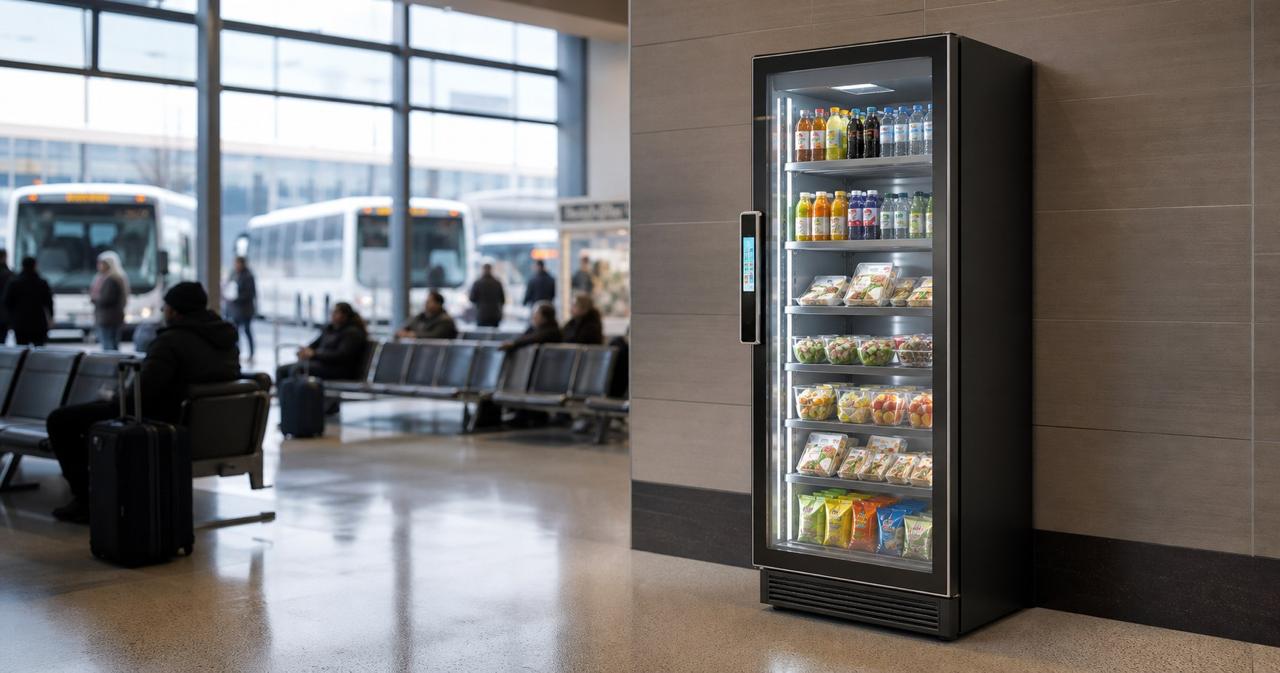
A smart vending machine or smart fridge works best when it meets people in a real traffic path. That sounds obvious until you walk buildings that bury food access in the place nobody naturally passes.
A resident coming in from a bus stop is not hunting for a snack room three corners away. An employee between meetings is not taking a detour to a basement vending area. A student, visitor, or contractor moving between a lobby and a shared room is not thinking about your floor plan. They are thinking about the next thing on their day.
That is why transit-adjacent buildings should treat food access as part of circulation planning, not as a leftover amenity. If a route change sends more people past an entrance or lobby, that spot deserves a second look.
The best placement question is not “Where can a machine fit?” The better question is, “Where do people already pause long enough to use it?”
Route changes can reveal building blind spots
CapMetro’s August update is not a vending story. It is a movement story.
When a route extends or shifts, the practical effect is that some buildings feel different at certain times of day. A lobby gets more early arrivals. A training room sees more people coming in without a car. A mixed-use property has more residents or workers entering from a different side of the building.
None of that automatically means a building needs smart vending. It does mean the old amenity map may be wrong.
For Austin property teams, the useful move is to walk the building like a tired person with ten minutes between obligations. Start at the entrance people use after transit. Follow the path toward mail or elevators. Look for the spot where people slow down but do not have to make a special trip.
That is usually where modern vending earns attention. Not because it is flashy. Because it is where the friction already is.
Smart vending should reduce work, not add another chore
Food access gets worse when the building team becomes the snack team.
A basket at reception runs out. A shared fridge turns into a mystery zone. A supply shelf starts as a nice idea and becomes another thing someone has to check and refill.
Smart vending and smart fridges solve a different problem when they are run properly. Revvolto manages the stocked unit and payment support for qualified locations, typically at no cost to the business or property. The building gets a modern cashless food and drink option without assigning a staff member to play part-time pantry manager.
That matters in transit-connected spaces because the demand can come in waves. Morning arrivals are different from afternoon exits. Class breaks are different from office lunch. Resident traffic is different from visitor traffic. A staffed snack setup usually struggles with that rhythm because someone has to notice the pattern and keep up with it.
A managed smart cooler or vending unit is cleaner: place it where the use case is real, keep the products stocked on a regular cadence, and let the data from actual purchases help shape the assortment over time.
Austin buildings should plan for movement, not averages
Average traffic is a lazy planning number.
The useful detail is when people arrive and where they enter. Then watch how long they pause before they move on. A building with modest total traffic can still have a strong vending location if the same corridor gets reliable use at the right moments. A busier building can still waste a unit if it hides the machine in a dead corner.
CapMetro’s August service changes are a good reason to do that walk-through again, especially for buildings near shifting routes or shared workspaces.
Look for three signals. First, people pass the spot without needing directions. Second, they have a natural pause point nearby. Third, the area can support service access without getting in everyone’s way.
If those three are true, the food access question gets much more serious.
Revvolto helps Austin-area businesses and property teams figure out whether a smart vending machine, smart fridge, or micro market setup fits the way people already move through the building. If your location has a transit-adjacent traffic path worth checking, tell us about it at revvolto.com/contact-us.