Austin just got another signal that travel demand is not slowing down. On August 13, AUS announced Austin’s first nonstop route to Paris. Daily summer service is scheduled to begin March 27, 2027. Two weeks earlier, AUS reported its busiest month ever. The airport served 2,102,853 passengers in June 2026.
That is airport news on the surface. For hotels and mixed-use buildings, it is also a food-access planning cue.
When more travelers move through Austin, the pressure does not stop at the terminal. It shows up in lobby paths, elevator banks, and meeting floors. It also shows up during late check-ins and staff breaks. That is where Austin smart vending earns its place.
Revvolto has no connection to AUS or Delta Air Lines. We are not connected to the City of Austin, Visit Austin, or the new route announcement. We are using the news for the practical lesson it points to: if a building expects more movement, the food plan needs to follow the movement.
Austin smart vending should follow the travel path
A travel-driven building does not fail because it lacks snacks. It fails because the snacks are in the wrong place.
Hotel teams already know this. Guests do not move through a building like a floor plan diagram. A late arrival goes from rideshare to front desk to elevator. A conference attendee cuts from the meeting room to a call. A staff member grabs ten minutes between service bursts. If food and drink access sits outside those paths, people ignore it or ask the front desk for help.
That is the real test for smart vending in Austin travel settings. The machine should sit where people already pause, not where there happened to be leftover wall space.
For a hotel, that might mean the elevator path near meeting rooms. For a mixed-use building, it might mean the lobby-to-office route. For a travel-adjacent workplace, it might mean the staff corridor that sees traffic before and after normal meal windows.
A smart cooler in the wrong corner becomes furniture. A smart cooler on the right path becomes useful.
International traffic changes the hours problem
The Paris route itself is scheduled for 2027, so this is not a next-week operational panic. Good. That gives property teams time to plan instead of duct-taping food access after demand arrives.
International travel makes the hours problem sharper. Arrival times and body clocks rarely line up neatly with meal service. Meeting schedules and event traffic make the gap wider. Even a strong lobby cafe cannot cover every guest moment without adding work.
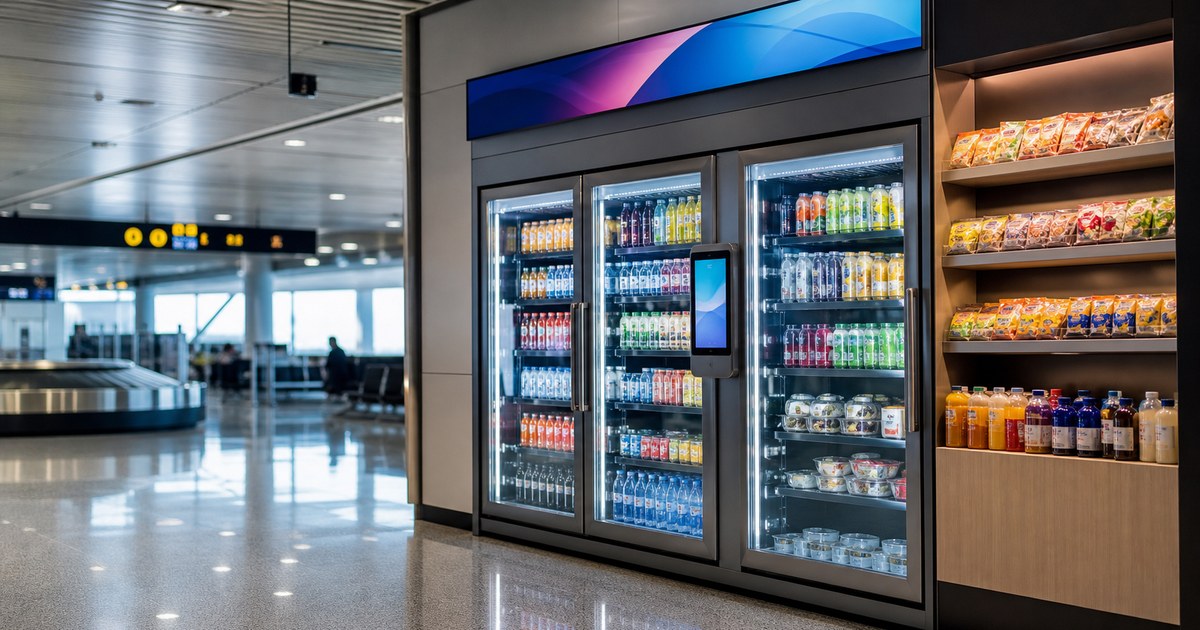
This is where a smart vending machine or smart fridge can fill a specific gap. It gives people a simple way to buy cold drinks, snacks, and grab-and-go items without asking the front desk to become a convenience store. It also keeps the food-access decision inside the building instead of sending people out at the exact moment they would rather not leave.
The point is not to replace hospitality. The point is to protect it from doing jobs it was never staffed to do.
The best placement question is boring and useful
Before a hotel or mixed-use property adds any food amenity, ask one boring question:
Where do people naturally stop for thirty seconds?
That question beats a pretty rendering. It forces the team to look at traffic instead of decoration. A vending unit near the wrong door can technically be visible and still be useless. A smart fridge near the right turn can solve a daily problem without becoming a project. This is boring work, which is why it often gets skipped.
Look for the short pauses. Elevator wait zones. Meeting-room spillover. Staff routes. Lobby edges that do not block circulation. If the placement interrupts movement, it will annoy people. If it disappears behind furniture, it will be forgotten.
Austin growth stories make this easy to overthink. The better move is simpler: match the food access to the actual path through the building.
Service ownership matters after opening day
The food plan is not finished when the machine is plugged in.
Someone still has to stock it. Someone has to support payments and catch product misses. If that work lands on the property team, the amenity starts to feel like another small operational leak.
That is the Revvolto fit. We install modern smart vending and smart fridge options. We keep them stocked on a regular cadence and handle payment tech. In qualified locations, we also take service off the building team’s plate. The buyer should not have to become a snack operator just to offer better food access.
The new Austin to Paris route is a headline. The useful takeaway is quieter: travel growth creates more small hunger moments inside buildings. If your property serves guests or staff on uneven schedules, plan the pause path now.
Do the walk before you buy the amenity. Stand at the elevator. Stand outside the meeting room. Watch where someone would actually grab a drink without making a special trip. That thirty-second test will tell you more than another brainstorm about perks.
If you are choosing where smart vending belongs in an Austin building, start with the path people already use. Then make the food access obvious, serviced, and easy to say yes to.
Tell us about the location at revvolto.com/contact-us.