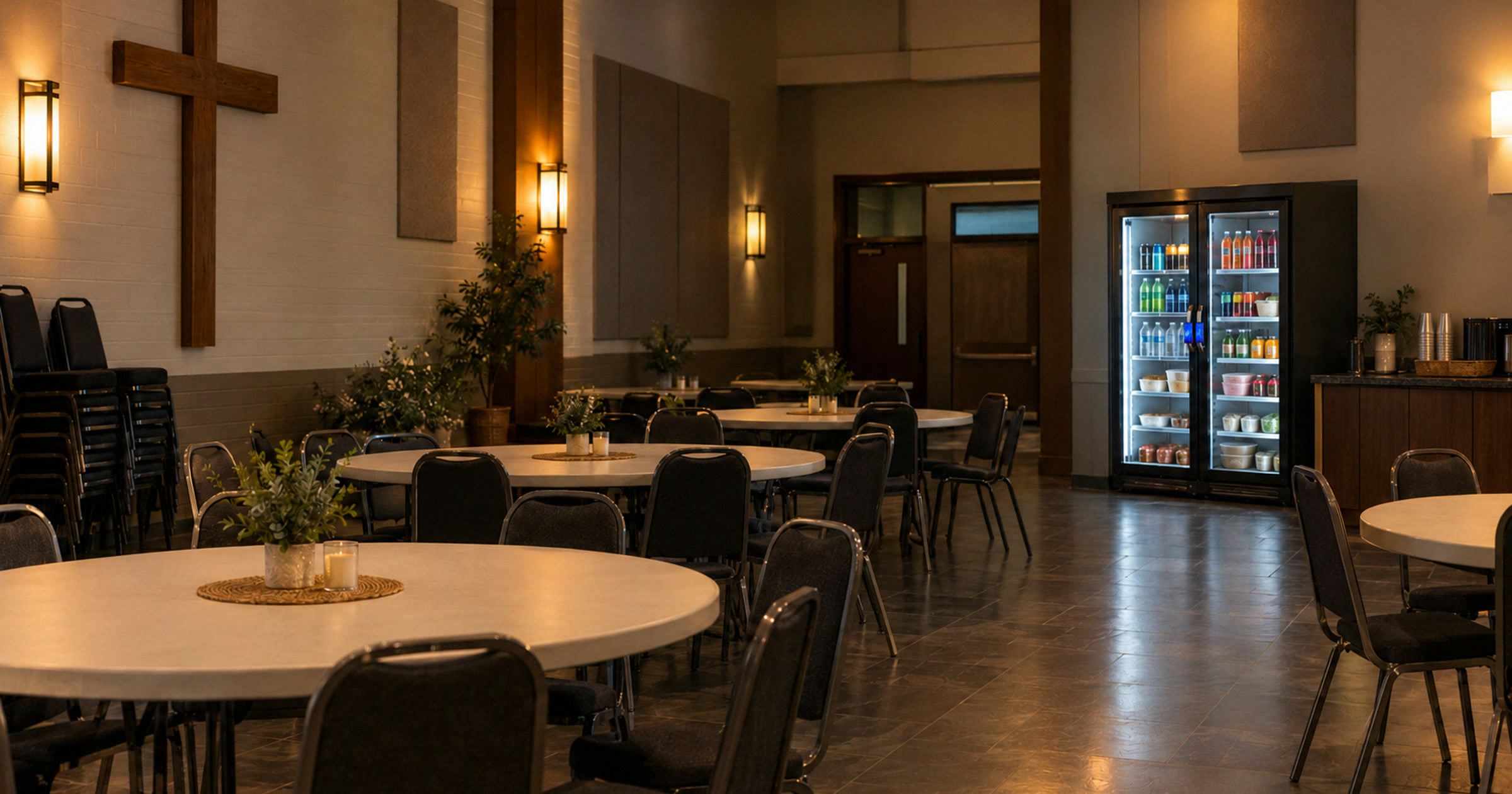
Community Impact reported this week that AFS Cinema is expanding with a third theater in Austin, with construction underway and the new screen expected to add more room for film programming. AFS also describes the cinema as a community hub, and its site shows current screenings plus concessions.
Revvolto is not affiliated with AFS Cinema. The hook is broader: when Austin venues add deeper programming and give people more reason to stay longer, food access becomes part of the experience. Not the headline. Not the mission. Just one of those practical things people notice when it is missing.
For venues and shared buildings, the question is simple. Can people grab a cold drink or quick snack without leaving the path they are already on?
More programming changes the break path
A new room or added showtime sounds like a programming decision. It is also a building-flow decision.
People arrive before the start time. Some come straight from work. Some wait between screenings. Some use the lobby as a meeting point before heading into a room. The longer the dwell time, the more the food question shows up in small ways.
That does not mean every venue needs a full market buildout. Most do not. The useful test is smaller: where do people already pause, and what would make that pause easier?
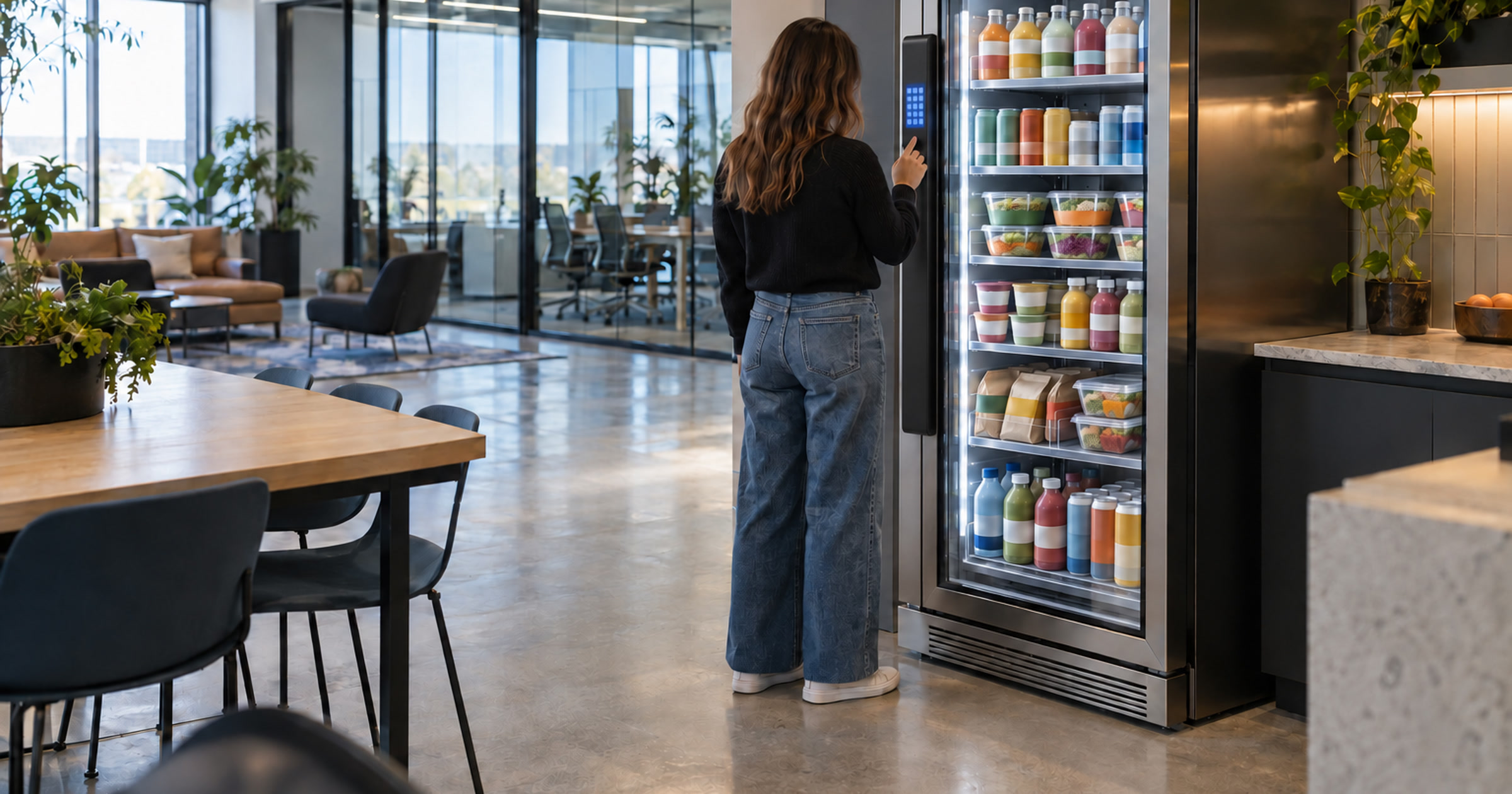
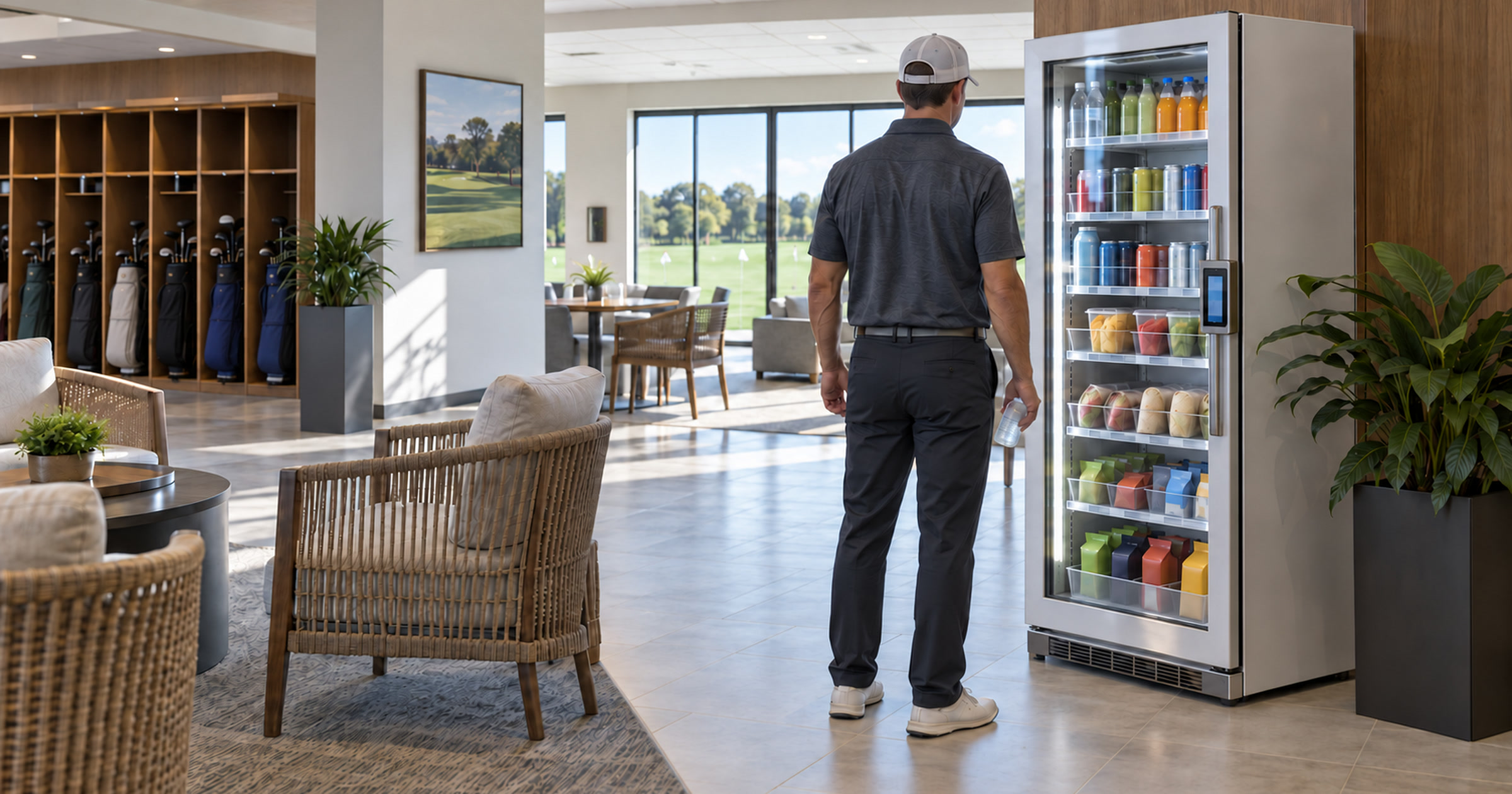
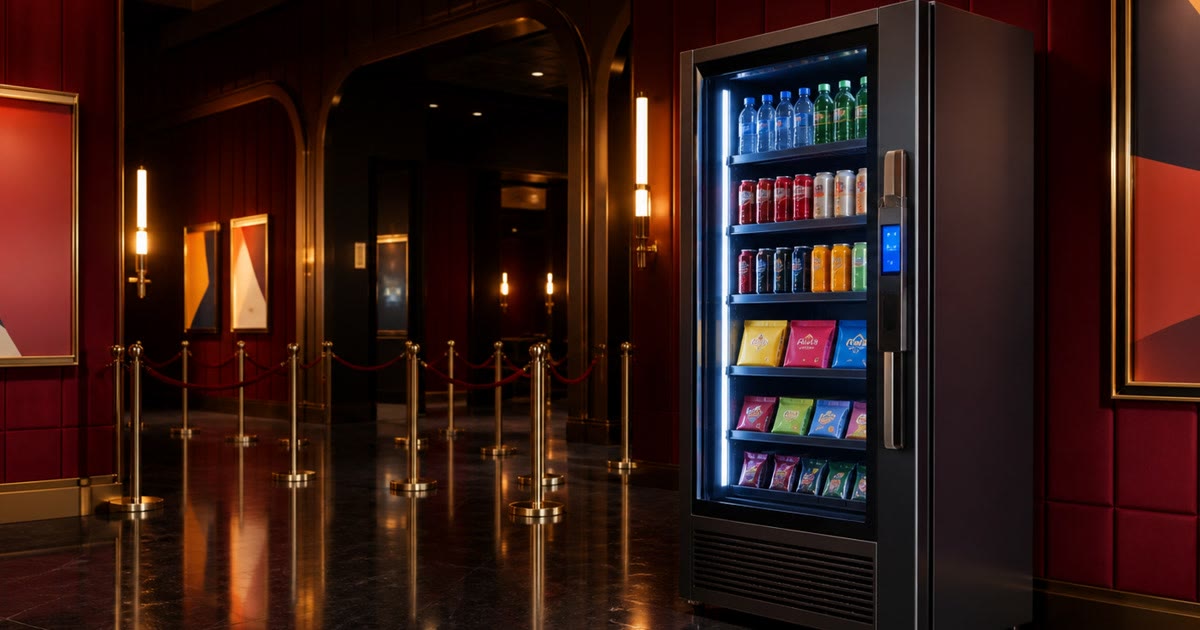
Smart vending in Austin fits that kind of problem when the placement is clean. A glass smart cooler or compact smart vending machine can support the waiting window without turning a lobby into a convenience store. It works best when the unit sits near the natural break path, stays visible, and does not crowd a doorway.
Bad placement makes even good equipment feel awkward. Good placement makes the amenity feel obvious.
Venues should plan for the in-between moments
The in-between moment is where old food planning falls apart.
Before a screening, people want something fast. After a screening, they may not want to leave right away. During a longer event, they need an easy option that does not pull them away from the schedule.
That is not unique to theaters. The same pattern shows up in training spaces and hotel meeting areas. It also shows up in office lounges. A building can run like a venue for a few hours even if nobody calls it one.
This is where smart fridges and modern vending machines are useful because they can be right-sized. The goal is not to overbuild. The goal is to match the food access to the actual movement inside the space.
A single smart cooler near a lobby path may do more good than a larger setup hidden down a back hallway. A compact micro market can make sense when people stay longer and there is enough repeat traffic. The format should follow the behavior, not somebody’s generic amenity checklist.
The service plan matters as much as the machine
A vending unit is not finished when it is plugged in.
Someone has to think about restocking access. Someone has to think about payment support. Someone has to think about whether the product mix fits the audience and the time of day.
That is where the old version of vending often creates friction. The machine exists, but the operational plan is vague. Then the venue team gets pulled into questions it never meant to own.
Revvolto’s role is to keep the setup low-friction for qualified locations. We stock the unit and handle restocking. We support the payment tech and maintain the equipment. The point is not just to add a machine. The point is to remove a small but real piece of building workload.
A cleaner setup also protects the main experience. People came for the thing happening in the room. The food option should stay out of the way until it is needed, then be easy enough that nobody has to think hard about it.
For Austin venues and shared commercial spaces, that can matter more than the machine itself. A modern unit should feel useful without becoming another thing for the team to babysit.
The local lesson is not about one cinema
The AFS Cinema expansion is a timely Austin example, but the buyer lesson is bigger than one address.
When a building adds programming or gives people more reason to linger, the food plan deserves a second look. If the only option is to leave the building, the experience has a leak. If the closest option creates a line at the wrong moment, the schedule feels worse than it has to.
Smart vending will not fix bad programming or poor traffic design. Good. It should not pretend to.
What it can do is cover the practical gap between “people are here longer” and “we do not want our team managing snacks.” That is the useful middle. It is not flashy, which is exactly why it works.
The best setup starts with the path. Where do people enter? Where do they wait? Where can service happen without interrupting the room? If those answers are clear, the equipment decision gets easier.
For Austin buildings with more evening traffic or more shared-use space, food access should be planned before people start building workarounds. A smart fridge or smart vending machine will not be the reason someone visits. It can be the reason the visit feels easier.
If your building has the traffic and needs a cleaner grab-and-go setup, tell us about the location.