Downtown Austin keeps adding places where people move between work, travel, and home in the same few blocks. That is great for the city. It is also a planning problem for buildings that expect people to stay on-site longer than a quick lobby pass-through.
A current example is Waterline. Visit Austin lists 1 Hotel Austin at 98 Red River Street as a 2026 opening inside a 74-story mixed-use tower with hotel rooms, office space, and apartments. KVUE reported that the hotel portion is expected to open in August, while the Downtown Austin Alliance report it cited says more than 160,000 people visit downtown Austin every day.
That kind of foot traffic sounds glamorous until someone has to answer a basic question: where do people get a cold drink, a snack, or a quick meal when the main restaurant is closed, busy, or not what they need?
Mixed-use buildings create weird food gaps
Hotels, offices, and apartments do not run on one schedule.
A guest may come in late. A resident may want something after the cafe closes. A front-desk team may need a quick break without leaving the property. Office workers may move through the building at odd times because downtown schedules are less predictable than they used to be.
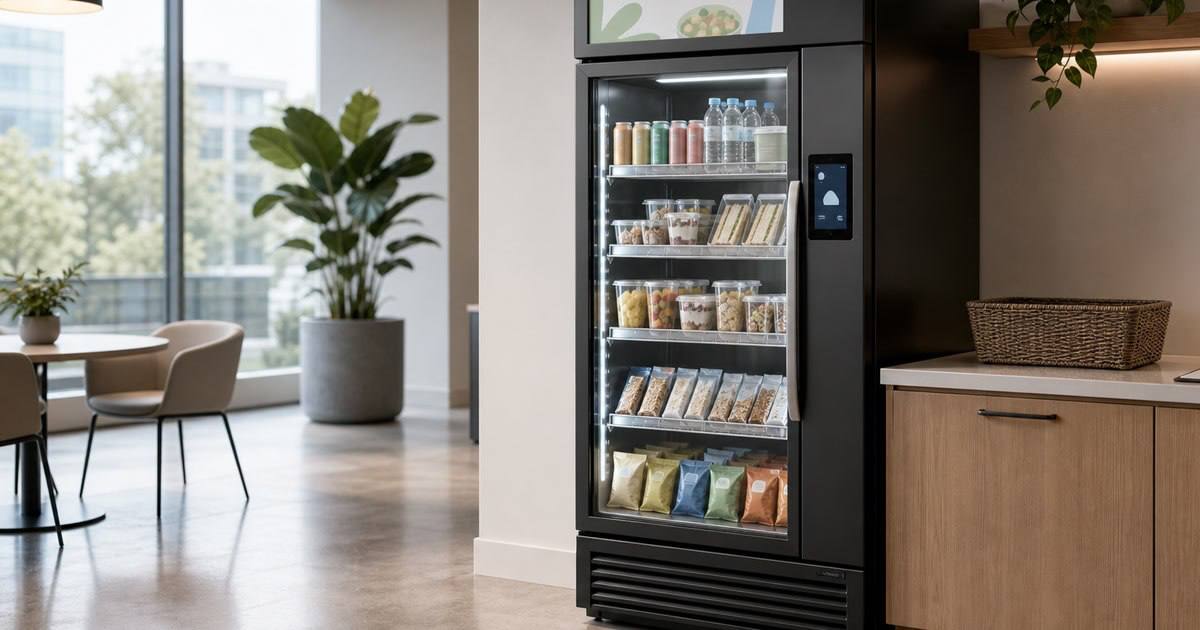
A restaurant helps. A coffee bar helps. Neither one covers every small food-and-drink moment. Smart vending and smart fridges fit the in-between moments: cold drinks, packaged meals, snacks, and grab-and-go items that stay available without asking the building team to run a tiny store by hand.
That is the part worth planning before the opening rush.
Placement matters more than the machine
The worst vending plan is usually the one that starts with, “Where can we hide this thing?”
For mixed-use hospitality buildings, the better question is where people already pause. Near the elevator bank can work if it does not block circulation. A staff corridor can work if the goal is employee access. A resident amenity lounge can work if the unit feels like part of the space rather than a leftover appliance.
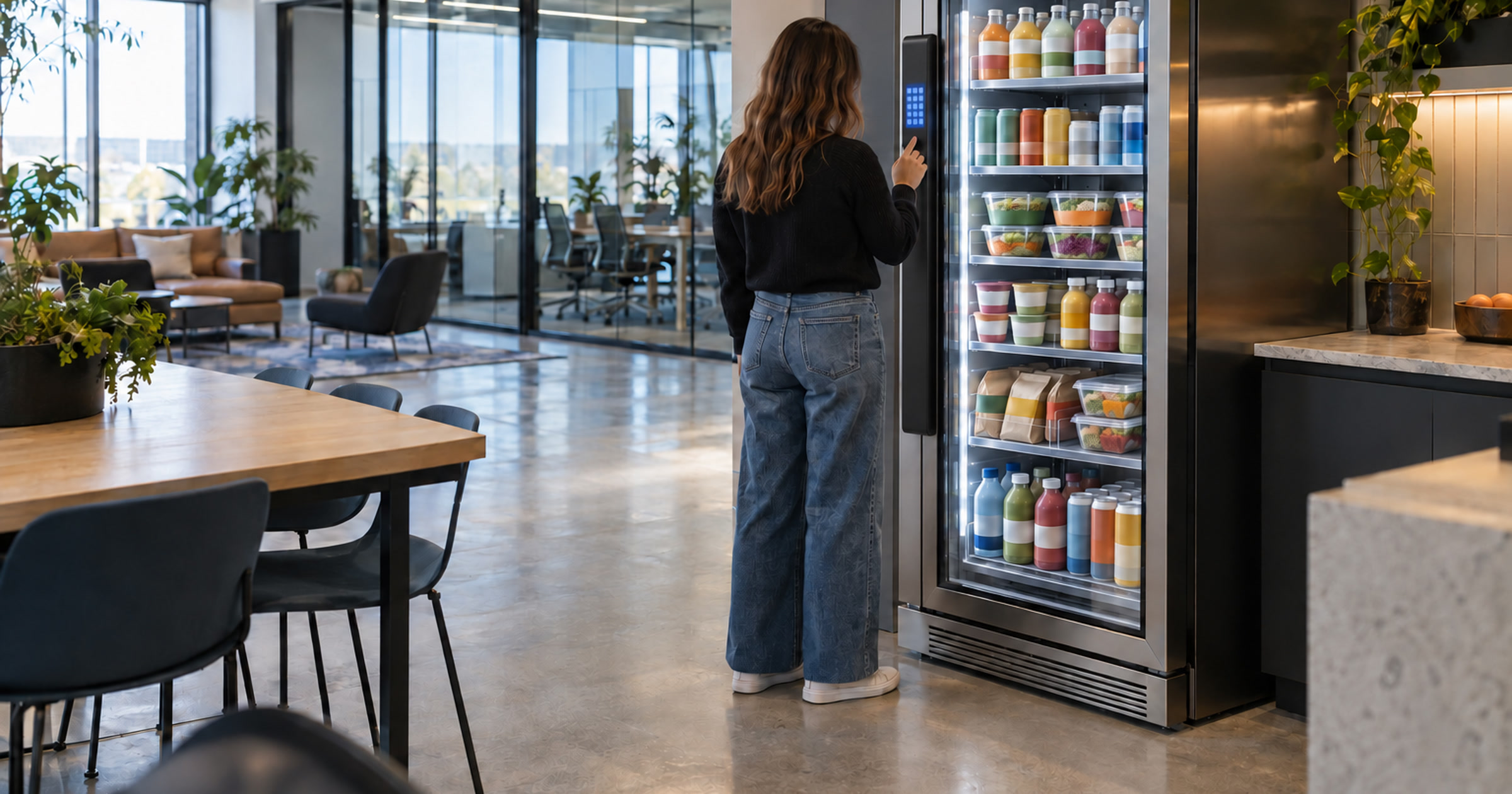
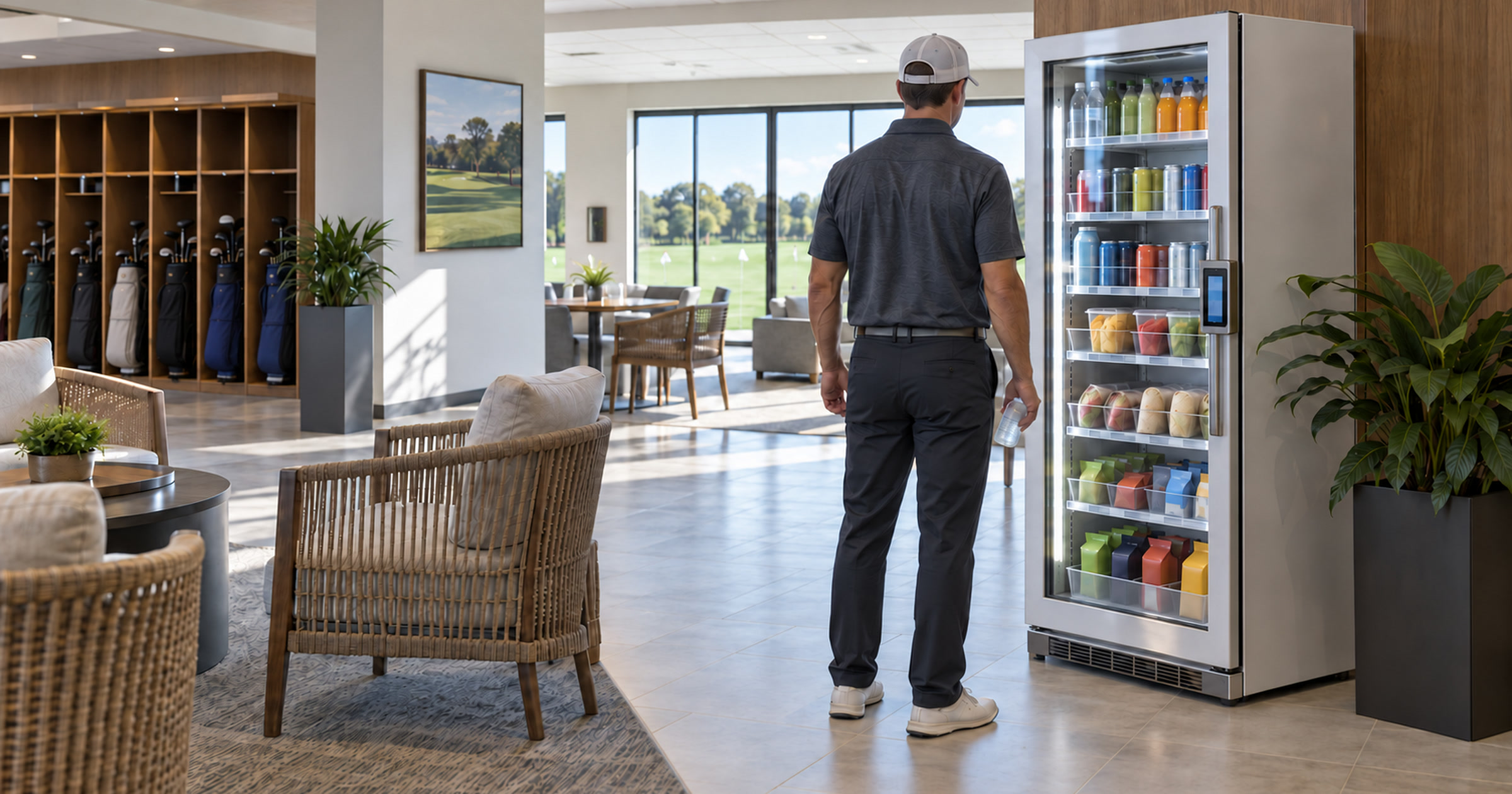
The machine format matters too. A glass-front smart fridge may fit a premium lounge better than a traditional vending machine. A double-door cooler may make sense when the building needs more variety. A compact unit may be enough if the real need is late-night drinks and a few reliable snacks.
The point is not to add hardware. The point is to remove friction.
Austin buildings should plan for service, not just style
Pretty spaces still need boring operational answers.
Who restocks the unit? Who handles payment support? What happens when a product runs out? Does the unit sit where service can happen without turning the lobby into a loading zone?
We care about those questions because they decide whether the amenity feels useful after week two. A smart vending setup only works if the product mix, placement, restocking cadence, and service access match the building.
That is especially true in downtown Austin, where hospitality, residential, and office uses keep blending together. The next wave of openings should not treat grab-and-go access as an afterthought. People notice when a building makes the small moments easier.
If you are planning food-and-drink access for a hotel, apartment community, office, or mixed-use property, talk with Revvolto. We can help decide whether smart vending or a smart fridge belongs in the plan, and where it will actually get used.