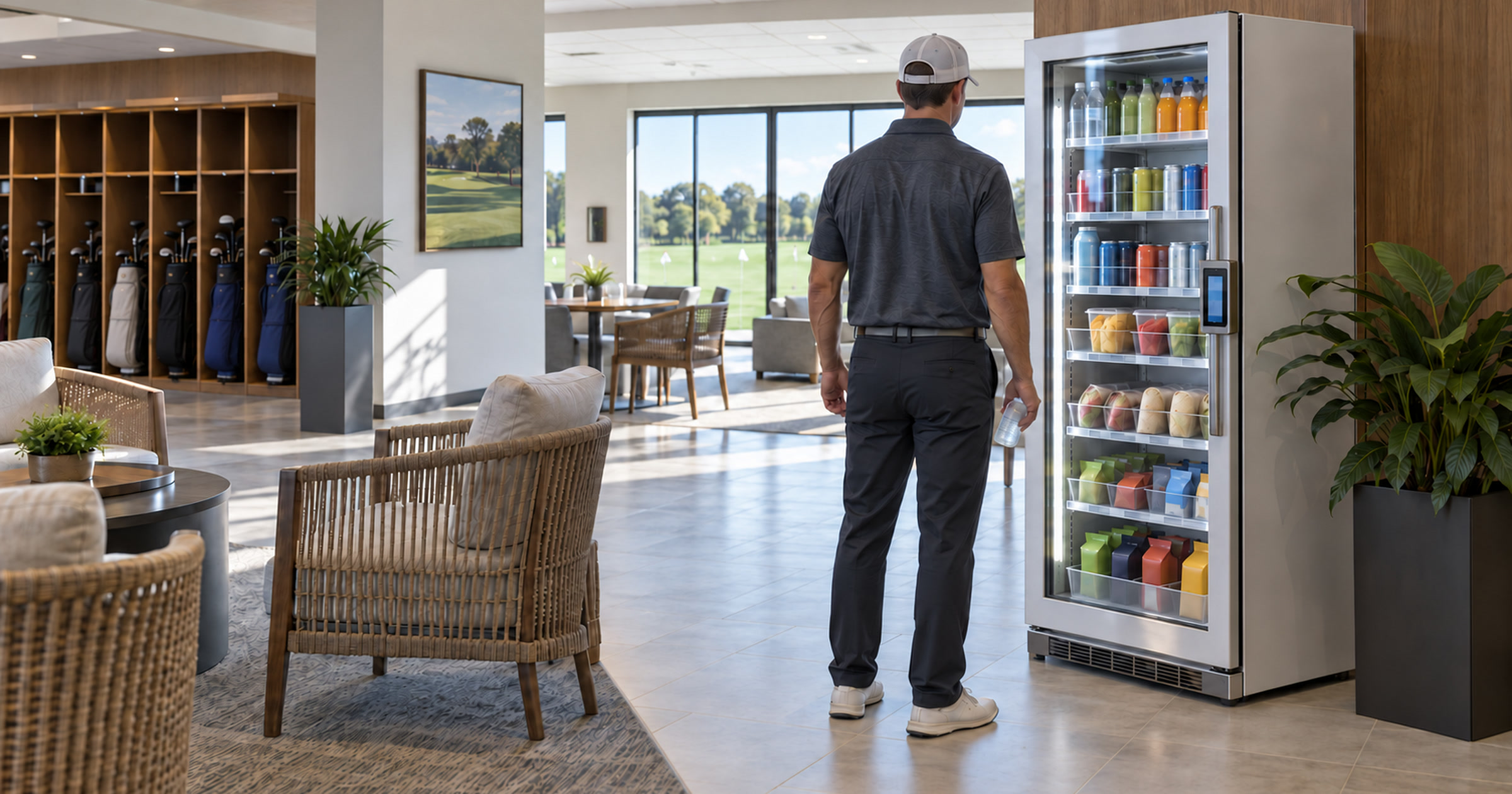
Gym vending machines sound simple until the first member asks the front desk which drink to buy, whether the machine is working, or who handles the refund question.
That is the real test for a fitness studio. The machine is not just there to sell cold drinks and packaged snacks. It has to fit the member path, support cashless checkout, and stay out of your team’s way.
A good smart vending setup can make a studio feel more complete. A bad one becomes another front desk chore wearing a glass door.
Start with the member path, not the machine
Most gyms do not have unlimited floor space. Every square foot has a job. Some space moves people from check-in to class. Some space gives members a place to reset after class. Some space needs to stay clear because crowding near doors or equipment gets ugly fast.
That is why the first vending question should not be, “Where can we fit the unit?” The better question is, “Where do members already pause?”
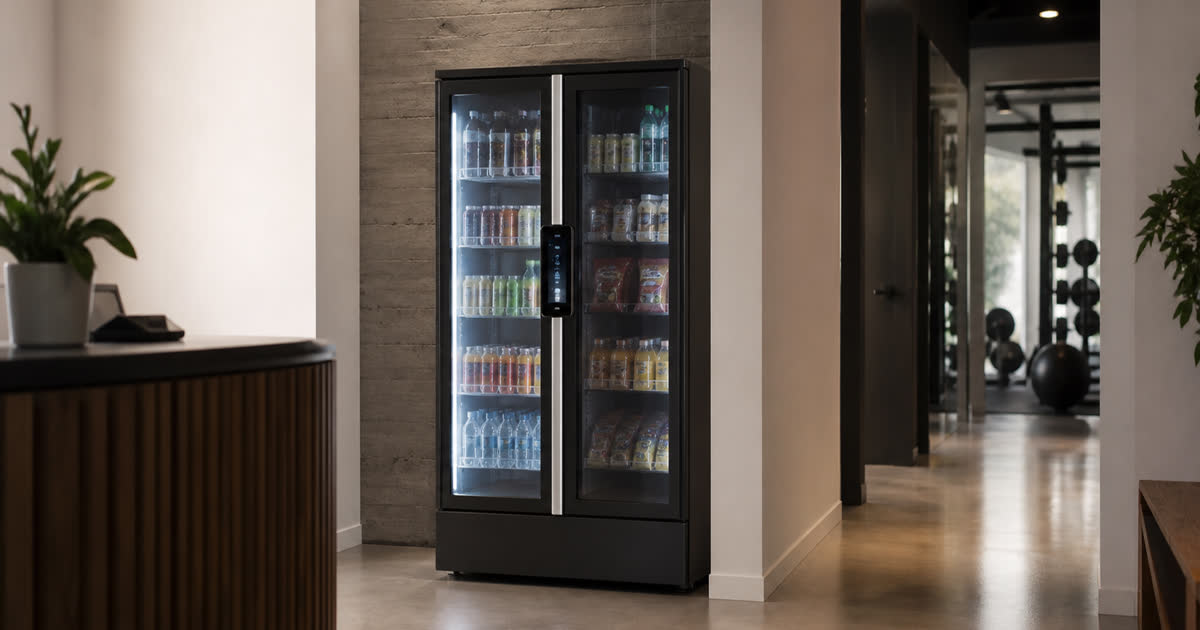
For a boutique studio, that might be the path between the workout room and lockers. For a larger gym, it might be a corridor near the lounge area. For a training facility, it might be the spot people pass after a session when they are already leaving.
The unit should be visible enough that members notice it without turning the entry into a traffic knot. If someone has to cross the studio floor or interrupt staff to find it, the placement is doing too much theater and not enough work.
Accessibility also matters. The U.S. Access Board’s ADA guidance on accessible routes and clear floor space is not a vending design checklist, but it is a useful reminder: placement decisions should leave clear, usable paths around building elements. Do not let a convenience amenity become a hallway obstacle.
Keep the front desk out of the snack business
Fitness staff already answer enough tiny questions. Class timing. Check-in issues. Towel requests. Membership changes. Equipment questions. The last thing they need is a second job as snack support.
That is where the operating model matters more than the box.
Before adding gym vending machines, decide who owns the recurring work. Product mix should not become a guessing game for the person running the desk. Restocking should not depend on someone noticing the last cold drink disappeared. Payment questions should have a support path that does not turn your team into the middleman.
This is where Revvolto fits best. We bring modern smart vending or smart fridge options to qualified locations, then own the stocking and service work. The point is not to give your team a prettier fridge to manage. The point is to give members better on-site access without adding a chore list behind the counter.
If your staff has to chase inventory or service, the vending setup has missed the assignment.
Product mix should match the room’s rhythm
A gym does not need a random snack wall. It needs a focused mix that matches when people use the space.
Early-morning members may want a cold drink before work. Evening members may want something quick on the way out. Staff may need an option during long shifts when leaving the building is not realistic.
That does not mean the blog should make health claims, promise better performance, or pretend a vending machine is a nutrition program. It means the product mix should make sense for the way the building is used.
A practical gym vending setup usually starts with cold drinks and packaged grab-and-go items. From there, purchase data and restock patterns can help refine assortment over time. That is useful because the best product mix is not always obvious from day one.
The mistake is treating the machine like decoration. A good-looking unit still needs turnover, service access, and a product mix people actually use. Otherwise it is just an appliance with ambition.
Cashless checkout needs a clear support path
Gyms are already cashless in many member interactions. Vending should feel just as normal.
But cashless does not mean “set it and hope.” Payment support needs clear ownership. If a card reader goes down or a member has a transaction question, the studio should know where that issue goes.
The PCI Security Standards Council’s merchant resources are useful background for payment-security awareness. They do not prove any specific Revvolto device or location is compliant. They do reinforce a practical buyer point: payment systems deserve real operational attention, not vibes.
For the buyer, the question is simple. Who supports the payment experience when something goes wrong?
If the answer is “probably the front desk,” the plan is not finished.
Ask the boring questions before the unit arrives
The boring questions are the ones that prevent the mess later.
Can members see the unit from the natural traffic path? Can service reach it without cutting through an awkward area? Can doors open without crowding the walkway? Does the location have enough daily use to support a stocked smart vending setup? Who handles payment questions?
That is not glamorous. Good operations rarely are. But it is the difference between a useful member amenity and a small machine-shaped headache.
Revvolto is built for the useful version. For qualified Austin-area fitness locations, we can help evaluate whether smart vending or a smart fridge makes sense. We can also map the right placement and service model before the unit arrives.
If your gym wants better on-site food and drink access without turning the front desk into snack patrol, tell us about the location.