Austin’s healthcare workforce conversation is not only about recruiting people. It is also about the buildings those people work in all day.
Workforce Solutions Capital Area held its second annual State of Healthcare Workforce Forum on August 20 at Austin PBS for Central Texas healthcare workforce leaders. That is a local workforce story, but it also points to a building operations question: when staff are moving through training and shift work, where can they get food or a cold drink without leaving the path they are already on?
Revvolto is not connected to Workforce Solutions Capital Area, Austin PBS, St. David’s Foundation, or the forum. The useful takeaway is broader for Austin area healthcare workplaces: staff food access works best when it is planned around real break paths, not treated like decoration after the layout is done.
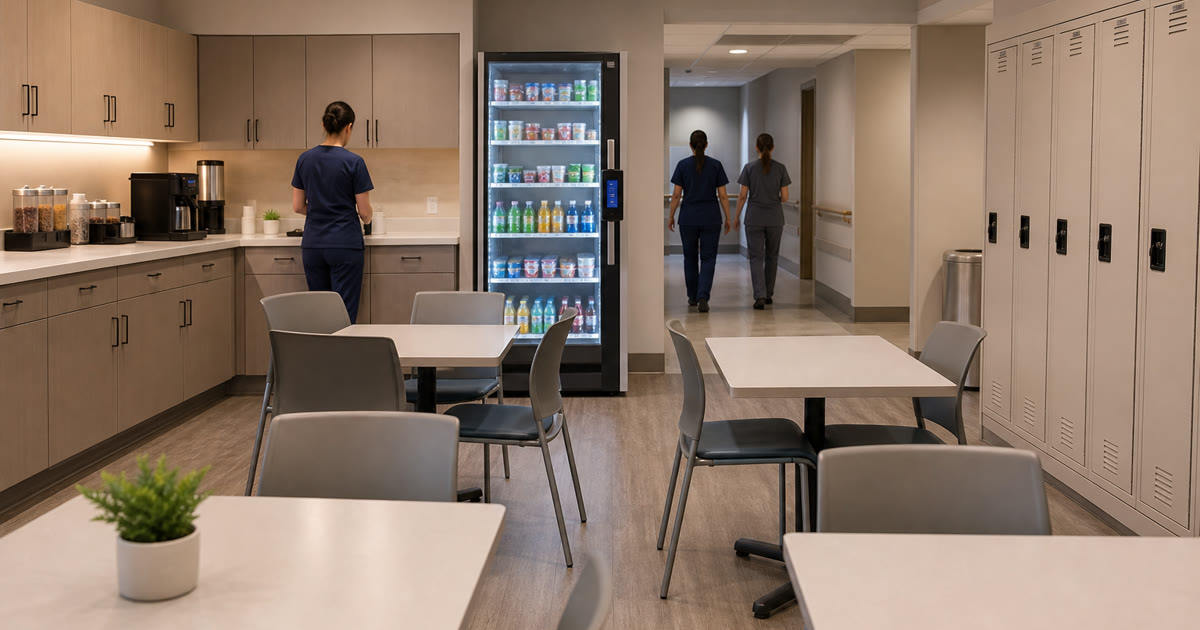
Staff food access belongs in the working path
Healthcare facilities are busy in a specific way. People move between staff rooms and working corridors all day. Breaks can be short. Schedules can be uneven. The best vending placement respects that movement.
A smart vending machine or smart fridge in a staff-only area can support the small moments that get missed in a floor plan. A nurse leaving a training session. A technician between tasks. An admin team working through a long meeting block. None of that requires a big market buildout. It does require a practical spot with power, visibility, and room for service.
That is where buyers should slow down. A staff amenity is only useful if people can reach it during the actual workday. If the unit sits too far from the staff path, people skip it. If it blocks service access, the facilities team inherits a problem. If it looks public when it should be staff-only, the placement creates confusion.
The right question is simple: where do staff already pause?
That question sounds small until the day gets busy. Then the difference between a reachable staff cooler and a forgotten appliance down the hall becomes obvious. Placement is not glamour work. It is the part that decides whether anyone uses the amenity.
Healthcare settings need tighter placement discipline
A clinic, training center, or medical office cannot treat food access like a generic office perk. The setting has privacy, workflow, and visitor-boundary concerns. Revvolto’s role is not to make medical claims or solve staffing. We provide stocked, managed smart vending and smart fridge options for qualified locations where the placement makes operational sense.
For healthcare-adjacent spaces, that usually means keeping the unit away from patient rooms and clinical work areas. Staff lounges and workforce training areas are cleaner fits. They give employees access without making the vending unit feel like part of patient care.
The product mix also matters. A healthcare staff area may call for cold drinks, lighter meals, and practical snacks that fit a long day. The exact assortment should come from usage data and service feedback, not from a one-time guess in a conference room.
That is the quiet value of a managed smart fridge or smart vending setup. We can stock, restock, and adjust the mix over time. Your team does not have to turn the breakroom into a side job.
The service route is part of the decision
Food access is not only about the front of the machine. It is also about how the machine gets maintained.
A smart cooler needs enough clearance for doors and service visits. If the best staff path is too tight, the answer may be a smaller format or a different wall. Better to find that out before the room is full of furniture.
This matters in healthcare workforce spaces because the room often has multiple jobs. The same area may support meetings in the morning, staff breaks in the afternoon, and training sessions on another day. A vending setup should make those routines easier, not create one more thing for the building team to manage.
Cashless payment support helps too. Staff may not carry cash during a shift. A modern vending machine or smart fridge should fit how people already buy things, while keeping the setup simple for the site team.
The better plan also leaves room to learn. A staff area may start with one smart cooler and a focused mix. If usage points toward colder meals or more drinks, the assortment can change without asking your facilities team to run a pantry program. That is the difference between buying a piece of equipment and choosing a managed amenity.
Austin healthcare growth should include the small stuff
Big workforce conversations tend to focus on hiring pipelines, training, and sector growth. Those are the right conversations. But the daily staff experience is built from smaller decisions too.
If your Austin healthcare workplace is adding training space or refreshing a staff lounge, food access deserves a line on the plan. Not because snacks fix workforce pressure. They do not. Because small, useful amenities can remove friction from long workdays.
A good placement plan should answer who uses the area, when they pause, and how service reaches the unit before anything is installed. It should also keep the setup clearly staff-only.
Revvolto can help qualified Austin area locations test that fit. We install modern smart vending machines and smart fridges, then handle stocking and service. If your healthcare staff area has the traffic and the right placement, tell us about the location at revvolto.com/contact-us.