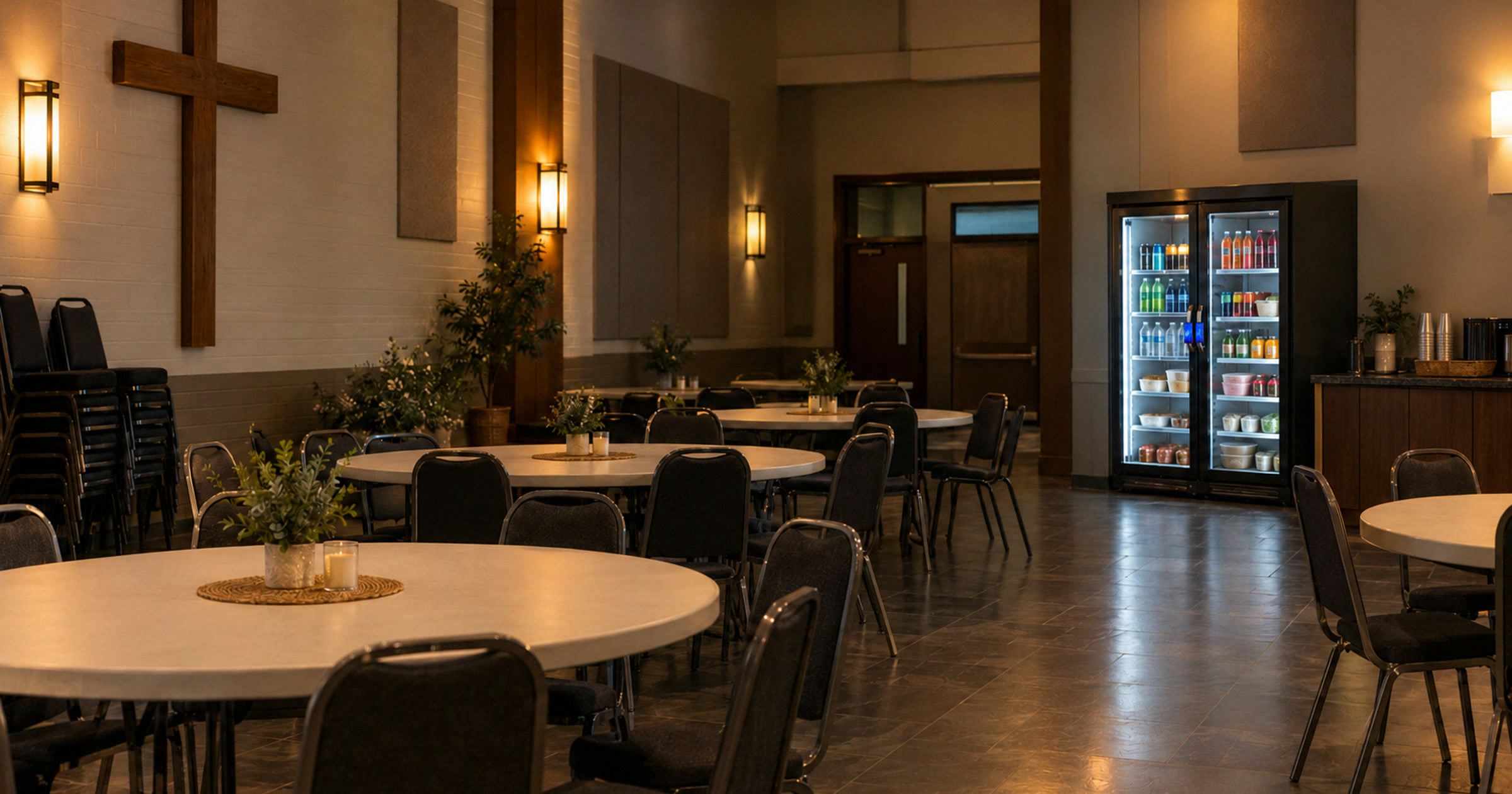
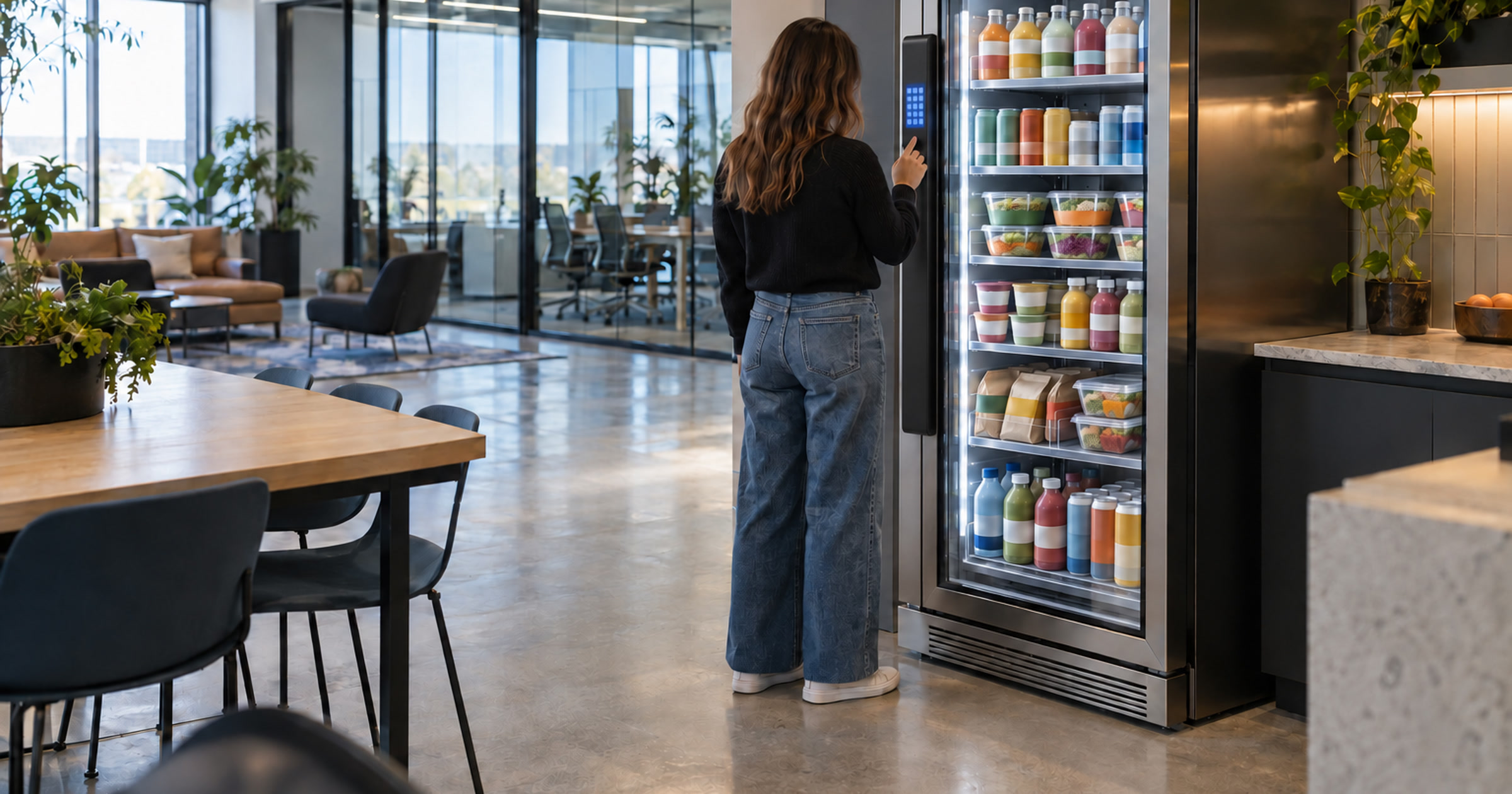
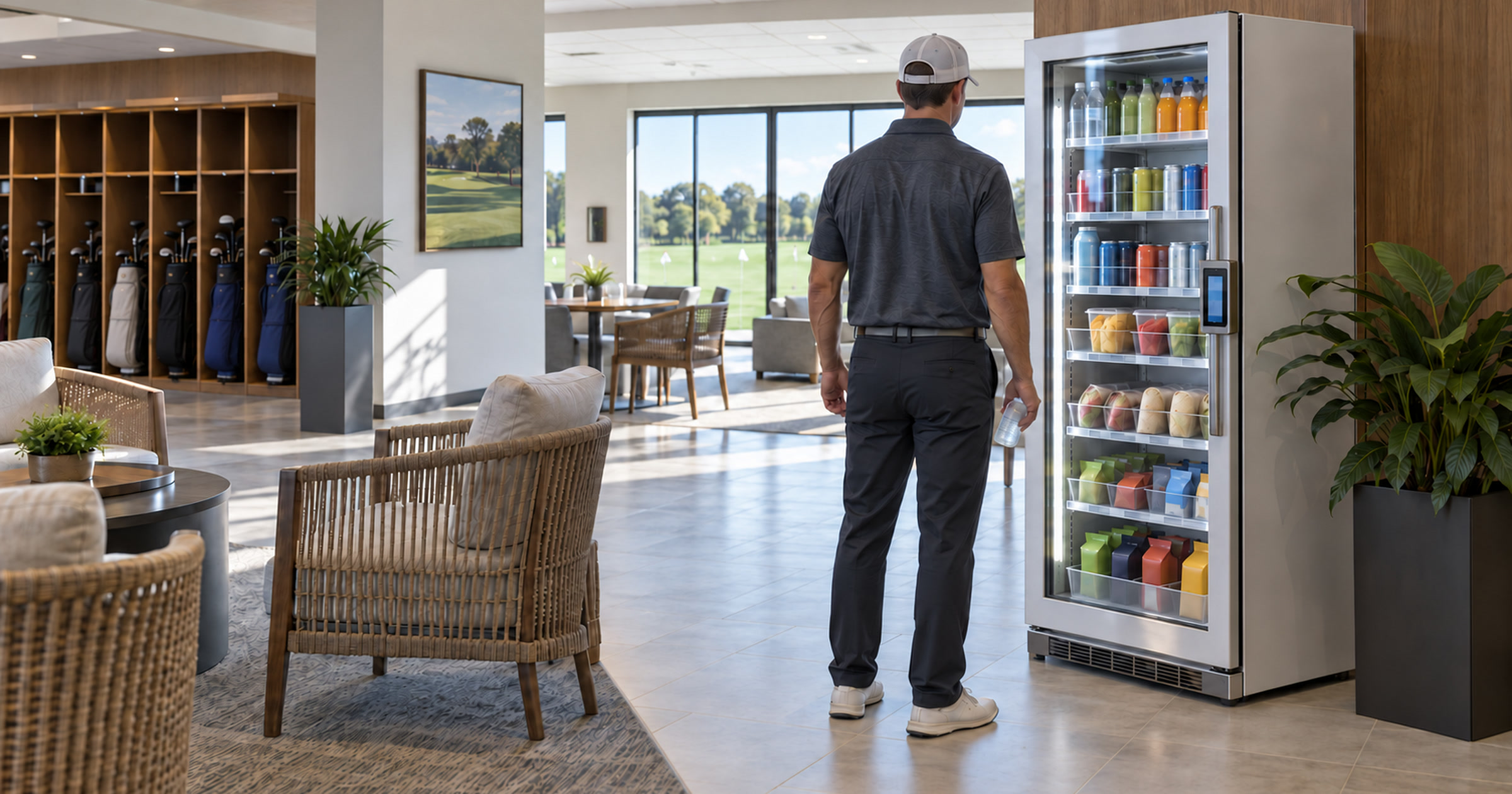
Hotels are full of small food-access moments that rarely deserve a full café, but still create work for someone.
A guest wants a cold drink after the restaurant closes. A night-shift employee wants something better than a random vending corner. A meeting attendee has eight minutes between sessions. None of those moments is dramatic. They are just real, daily friction inside hospitality properties.
That is where hotel smart vending can fit. Not as a replacement for service. As a controlled, stocked, cashless option that supports the building without asking the front desk or operations team to become a snack department.
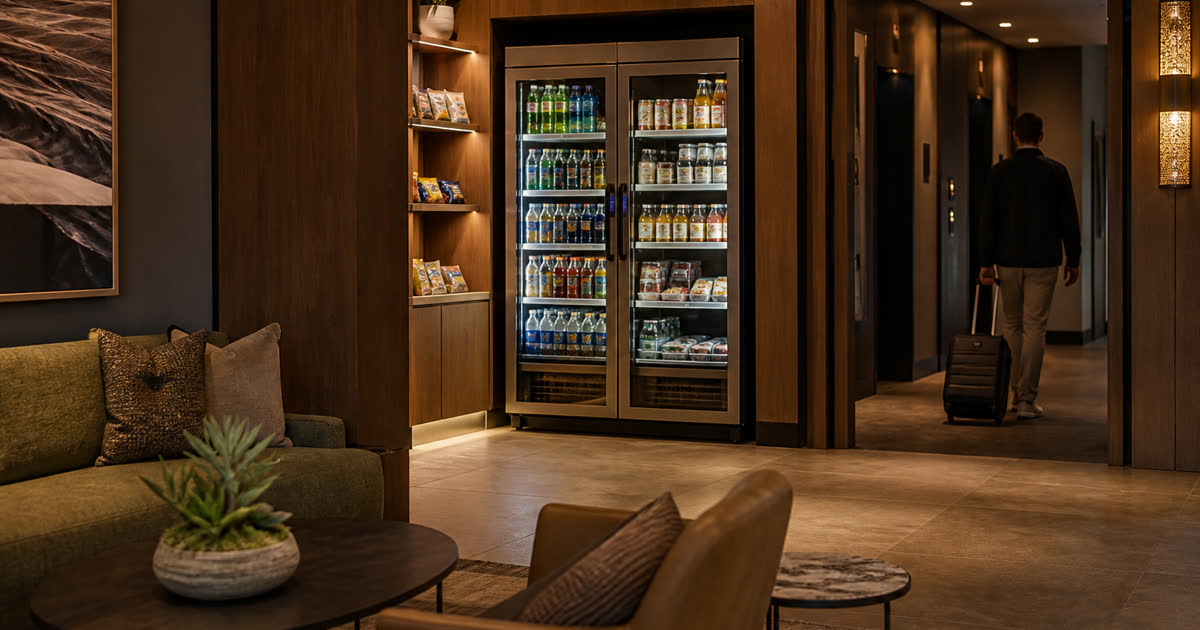
Why hotels should treat vending as an operations decision
A vending machine in a hotel is easy to underestimate because the unit looks simple. The real decision is not the machine. It is the operating model around it.
Who stocks it? Who handles payment issues? Where does service access happen? Does the placement respect the guest path and the team path? Does the setup make the lobby look more premium, or does it feel like a leftover appliance pushed against a wall?
Those questions matter because hospitality teams already manage enough moving parts. IFMA describes facility management as the work of integrating people, place, and process inside the built environment. That lens is useful here. Smart vending is not just a food-and-drink amenity. It affects the guest path and the work behind the scenes.
For hotels, the strongest vending setups usually start with a practical map of where people already pause. That might be near elevators, a staff break area, or a lobby-adjacent market nook. The point is not to add another object to the building. The point is to support a real pause point without adding a recurring chore.
Revvolto handles stocked equipment, payment support, and service for qualified locations. That matters because the value is not only the cooler. It is the fact that the cooler does not become a quiet new job for the property team.
Pick the right hotel moment before picking the machine
Hotel vending gets weaker when the question starts with hardware. Single-door cooler? Double-door smart fridge? Compact market? Those choices matter, but they should come after the use case.
A lobby alcove is different from a staff pantry. A conference-floor corridor is different from a late-night guest path. A service-area placement is different from a public-facing amenity. Each one has a different buyer question.
For a guest-facing area, the main issue is presentation. The machine should feel modern, clean, and intentional. Cashless payment should be straightforward. The product mix should fit short, low-friction buying moments.
For a staff-only area, the main issue is support. Employees may have limited break windows, overnight shifts, or routes that do not pass a public market. A stocked smart fridge can help bring food and drink access closer to where the team actually works.
For conference or event floors, the question is timing. Rushes come in waves. A smart cooler can support the in-between moments when people want something fast without reopening a full-service operation.
The best option is the one that matches the path. If the placement is wrong, even a beautiful machine becomes clutter with a payment screen.
Plan the placement around access, not just visibility
Visibility helps, but access is what keeps a hotel vending setup from becoming annoying.
A unit needs enough room for guests or staff to browse without blocking the route. It also needs a service path, because stocked equipment has to be maintained. If the only good-looking spot forces every restock visit through a crowded guest bottleneck, the design is not finished.
Accessibility planning also belongs early. The 2010 ADA Standards include clear-width rules for accessible routes, including a general 36-inch minimum for walking surfaces. That does not turn a blog post into a site compliance review. It simply makes the point that vending placement should be checked against real circulation space before anyone falls in love with a corner.
Payment planning matters too. PCI Security Standards Council merchant resources remind merchants to treat payment data security as an operating responsibility, even when transaction volume is small. For a hotel team evaluating cashless vending, that means payment support should be part of the vendor conversation. Who owns the payment stack? Who handles support issues? What happens when a guest has a failed transaction?
Good hotel smart vending answers those questions before the equipment arrives.
Make the product mix fit hospitality behavior
The right product mix is not the same for every hotel.
A lobby machine might lean toward cold drinks, travel snacks, and simple grab-and-go items. A staff break area may call for more filling options. A conference-floor cooler might favor fast choices people can buy between sessions.
The trap is trying to make one generic assortment serve every moment. Hotels have different audiences moving through different parts of the building. A smart vending setup should be flexible enough to adjust over time based on actual purchase patterns and restock data.
That is one reason modern vending can beat the old set-it-and-forget-it approach. Purchase data can help refine assortment over time. Service records can show what moves, what sits, and where the setup may need a change.
That does not mean AI magically knows what every guest wants. It means the operator has better signals than guesswork. For a property team, that is the useful part.
What to ask before adding hotel smart vending
Before choosing a machine, ask a few blunt questions.
Where do people already pause? Which team would feel the relief if food access improved? Which path can support both users and service? What would make the setup feel like part of the property instead of an afterthought?
If the answers point to a real daily use case, hotel smart vending can be a strong fit. If the answer is only “we have an empty wall,” keep looking.
Revvolto helps qualified hospitality properties evaluate the location, match the format to the use case, and keep the unit stocked and maintained. The right fit might be a smart vending machine, a smart fridge, or a compact grab-and-go market format.
The real win is simple: convenient food and drink access without handing the property team another recurring job.
If you are weighing a hotel vending setup, tell us about the location at revvolto.com/contact-us. We will help you decide whether the space is a real fit or just a snack-machine daydream with better lighting.