
Austin area entertainment spaces are not just competing on attractions anymore. They are competing on how the whole visit feels once people are inside.
That matters because a recent local opening signal points to a familiar building problem. Community Impact reported that Kids Empire is coming to Pflugerville’s Stone Hill Town Center. The report says the indoor playground concept leased 8,500 square feet and is planned for late 2027 near a movie theater. The specific business is not the point for Revvolto. This is not an affiliation claim. The useful lesson is simpler: when more indoor venues pull people into longer stays, food and drink access becomes part of the space plan.
For Austin smart vending, this is where the conversation gets practical. A modern smart cooler or compact micro market can support visitors and staff without turning the front counter into a snack desk. The right question is not whether a venue could squeeze in a fridge. The question is where food access belongs so it helps the visit instead of interrupting the operation.
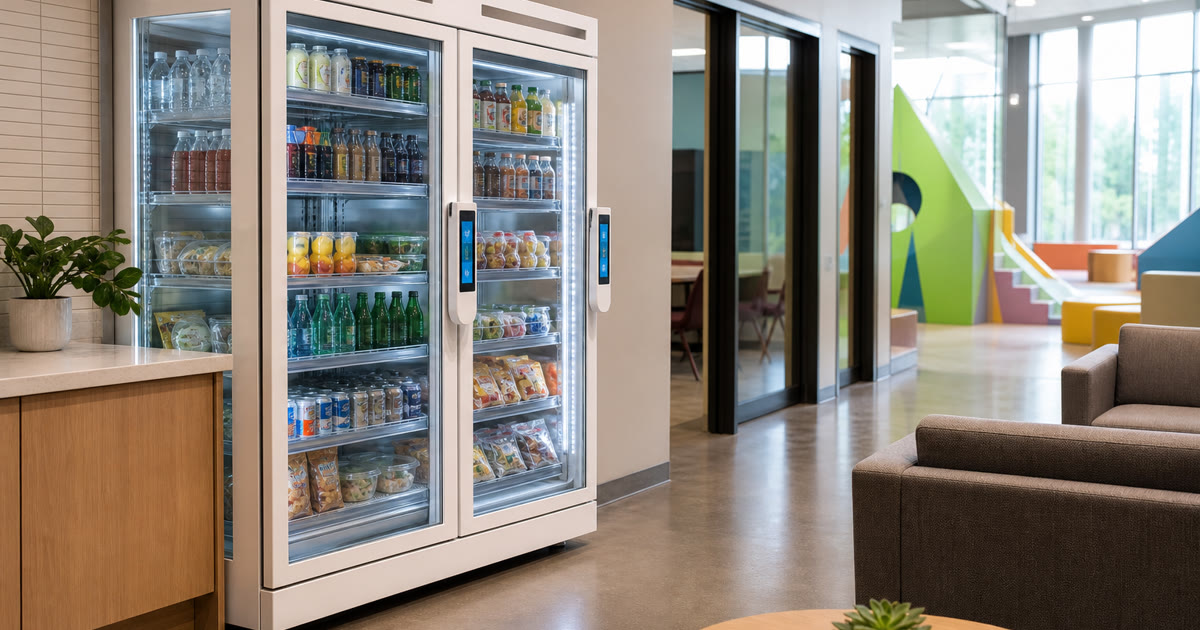
Austin smart vending should follow the pause path
Indoor entertainment venues have natural pause points. People wait before an activity starts. Staff move between the check-in desk and the back room. Adults linger while the main attraction does its job.
Those pauses are where food access can either help or create friction. If snacks and drinks sit too close to check-in, every transaction competes with admissions questions. If they are tucked too far away, people miss them. If the setup blocks a hallway, it becomes a facilities headache before it becomes a revenue idea.
A better vending plan starts with movement. Where do people slow down without being told? Where can a staff member restock without crossing the busiest doorway? Where can a cooler be visible without becoming visual clutter?
That is the difference between putting a machine in a building and designing a useful amenity. The machine is only one part of the decision. The bigger decision is whether the space gives people a clean moment to use it.
This matters more in entertainment environments because traffic is uneven. A venue can feel quiet during one hour and crowded the next. A grab-and-go food setup has to survive both conditions. It should be obvious during a rush, calm during a lull, and easy to service without dragging boxes through the main guest path.
The front desk should not become the snack department
Food access sounds easy until the counter team inherits it.
That is the hidden problem with casual snack setups. Someone has to notice gaps, answer questions, and handle payment confusion. Someone also has to keep the area clean. In a venue that already depends on check-in and scheduling, piling food operations onto the same team is asking for small problems to multiply.
Smart vending works best when it removes that extra layer. Cashless payment keeps the line away from the counter. Remote inventory visibility can support a better restock rhythm. A clear service path helps the operator maintain the machine without disrupting the venue.
The goal is not to make snacks feel fancy. The goal is to make them feel handled.
For a venue operator, that distinction matters. A machine that looks polished but creates staff interruptions is not really low friction. A compact setup that fits the waiting path and has a clear restock plan is far more useful, even if it takes up less visual space.
Revvolto’s role is built around that operational side. We look at the site, the likely users, and the service path before recommending a format. That could mean a smart cooler, a vending machine, or a micro market. For qualified locations, Revvolto typically handles stocking and maintenance. We also support payment technology so the amenity does not become another counter task.
Indoor venues need a format decision, not a default machine
Not every venue needs the same setup.
A small waiting area may only have room for a single clear-glass smart cooler. A larger indoor venue may benefit from a compact micro market wall with refrigerated items and shelf-stable snacks. A staff-heavy space may need a back-of-house option that serves employees more than visitors.
That is why the local opening hook is useful. Retail centers and indoor activity concepts are not identical, but they create the same planning question: where do people pause long enough for food access to matter?
The answer should shape the format.
If the main gap is quick drinks during short waits, a smart fridge or cooler may be enough. If people stay longer and return to the same lounge area, a compact market setup may fit better. If staff coverage is thin, the best answer is usually the one that creates the least extra work.
This is also where old-school vending thinking breaks down. A traditional vending box can technically dispense snacks, but that is a low bar. Modern venues usually need something that looks like it belongs in the room. Clear glass and cashless access help the machine feel intentional. A professional service plan keeps it from feeling bolted on.
Food access should not fight the design of the place. It should make the visit easier and keep the operation cleaner.
The buyer question is service ownership
The useful buyer question is not “Should we add vending?” It is “Who owns the food access experience after the novelty wears off?”
That question catches the real work. Products change. Traffic shifts. A cooler needs cleaning. A payment issue needs a path. A restock visit needs room to happen. If nobody owns those details, the amenity becomes another loose end.
For indoor entertainment venues, service ownership matters because the experience is already busy. Family recreation spaces and retail-center amenities face the same pressure. Visitors are not there to study the snack program. Staff should not have to become vending coordinators between normal tasks.
A good smart vending plan gives the location a clear operating model. The space supports the machine. The machine supports the visit. The operator supports the product mix and service cadence.
That is the practical lesson from new indoor venue growth around Austin. More places are designing experiences that keep people inside longer. The smartest ones will plan the pause path before the crowd shows up.
If you are looking at food access for an Austin area venue or staff space, tell Revvolto about the location. We will help decide whether a smart vending machine, smart fridge, or compact micro market actually fits the room.



