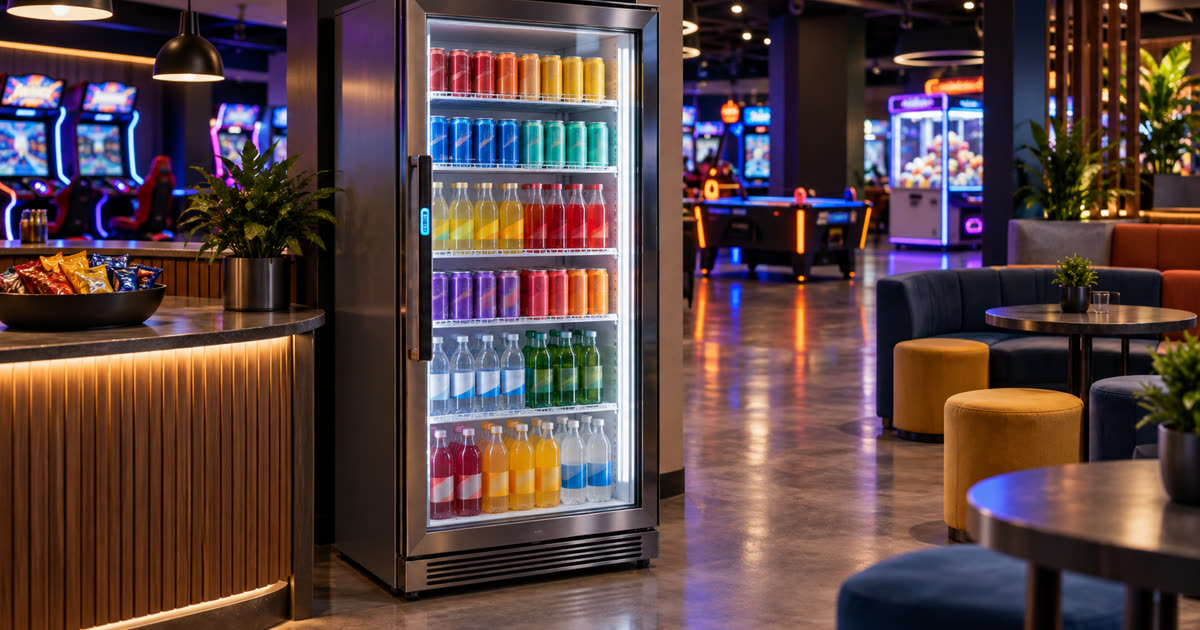
Family entertainment centers run on movement. Guests come in for arcade play, birthday parties, and all the small gaps between them. Local smart vending works when it respects that motion instead of getting treated like a lonely machine in a back corner.
For family entertainment operators, the best vending placement is rarely the fanciest wall. It is the spot where people already pause with a card in hand, a kid asking for a drink, or a party lead trying to keep the schedule moving. IAAPA describes family entertainment centers and location-based entertainment venues as spaces that can include arcades, trampoline parks, and interactive museums. That range matters because the food-access problem changes by layout, not by a generic vending checklist.
A smart vending machine or smart fridge should make the visit easier. It should not pull your team away from check-in or floor coverage.
Put the machine near the pause, not the noise
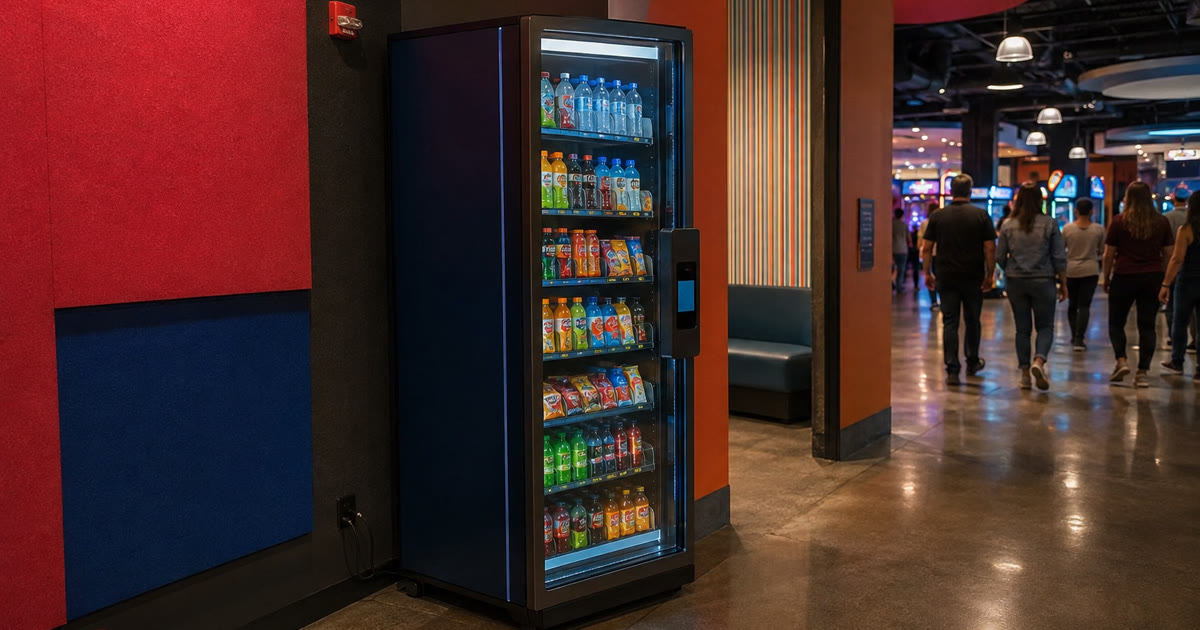
The strongest placement starts with the path. Watch where guests stop without being told to stop. That might be near the party-room hallway, beside the arcade card reload area, or just outside the redemption counter queue.
The machine should be close enough to help but not so close that it jams up the main counter. In a family entertainment center, people do not move in neat office-style patterns. Groups cluster. Kids drift. Parents carry bags and party supplies. A vending unit that blocks the wrong turn can become a small traffic problem fast.
This is where local service matters. A provider who only thinks in machine dimensions misses the point. The better question is how the location actually breathes on a Saturday afternoon. Where do families wait before a party room opens? Where do staff members already answer snack questions? Which area has power, visibility, and enough room for a clean service visit?
Revvolto looks at that fit before treating the machine as the answer. A smart cooler in the right alcove can support the guest experience. The same cooler in the wrong hallway becomes one more thing your team has to manage.
Match the product mix to the visit length
Family entertainment visits can be short, but they are not always quick. A parent may plan on one hour of arcade play and end up staying through a birthday party, a redemption delay, and one more game card reload. That makes grab-and-go food access useful, especially when the main counter is busy or the venue does not want to run a full snack bar all day.
The product mix should fit the moment. Drinks usually matter first because people ask for them constantly. Packaged snacks and simple chilled items can fill the gap between meals without turning the venue into a restaurant. For staff, the same unit can help during long weekend shifts when leaving the floor is not realistic.
This is not a health claim or a magic revenue story. It is a convenience decision. If people are already inside the building and already looking for something quick, a cashless smart vending setup gives them a cleaner option than sending every question to the counter.
The machine should also stay easy to understand. Family entertainment centers have first-time visitors, tired parents, and staff moving fast. Clear glass, simple payment flow, and visible stock make the unit feel normal instead of like tech furniture trying too hard.
Keep payment and access boring in the best way
Cashless vending is useful in family entertainment centers because guests are already using cards, phones, or wristbands in many venue setups. The vending transaction should feel just as simple. Tap, take the item, move on.
Payment still deserves careful handling. PCI Security Standards Council guidance is clear that payment terminals must still be reviewed in the broader payment environment. A device by itself does not magically settle every compliance question. For operators, that means the vending partner should explain who owns payment tech and service response without making your team become the help desk.
Accessibility belongs in the placement conversation too. The U.S. Access Board notes that ADA Standards apply to places of public accommodation and commercial facilities in new construction, alterations, and additions. That does not mean a blog post can certify your site. It does mean you should avoid placing equipment where it blocks usable routes, creates awkward reach, or crowds the wrong doorway.
A smart vending plan should be boring on the operational details. Power, service access, and customer help paths should be clear before the machine arrives. Boring is underrated when your Saturday lobby is already doing circus math.
Let your team stay focused on the experience
The hidden cost of a snack setup is staff attention. Every out-of-stock shelf or payment question lands somewhere. Usually it lands on the person who was supposed to be checking in a party, explaining game cards, or helping a guest find the next attraction.
That is the real buyer problem for family entertainment centers. The food access has to help the visit without becoming another mini department.
Revvolto handles stocking, payment tech, and maintenance for qualified locations. The goal is not to hand you a machine and wish you luck. It is to place a modern vending or smart fridge setup where it fits the building, then keep it useful after opening weekend.
A good local smart vending setup should pass a simple test: if the lobby gets busy, does the machine reduce questions or create them? If it reduces the questions, you probably placed it well.
If your family entertainment center is looking at smarter food and drink access, tell us about the location at revvolto.com/contact-us.