Micro market vs vending machine is not a battle between “old” and “new.” That framing is lazy, and it pushes buyers toward the wrong question.
The better question is fit.
A vending machine, smart vending machine, smart fridge, or compact micro market can all make food and drinks easier to access inside a building. The right format depends on the site: how much space exists, who uses it, whether access should be controlled, how much variety the location needs, and how much staff attention the host wants to avoid.
For Revvolto, the decision starts with the host’s operating reality, not a shiny equipment preference. A hotel lobby, apartment amenity area, warehouse breakroom, clinic staff room, and office pantry do not need the same setup. They need the setup people will actually use without turning the location team into a snack department.
What a vending machine does best
A vending machine is strongest when the location needs a controlled, compact, easy-to-understand setup.
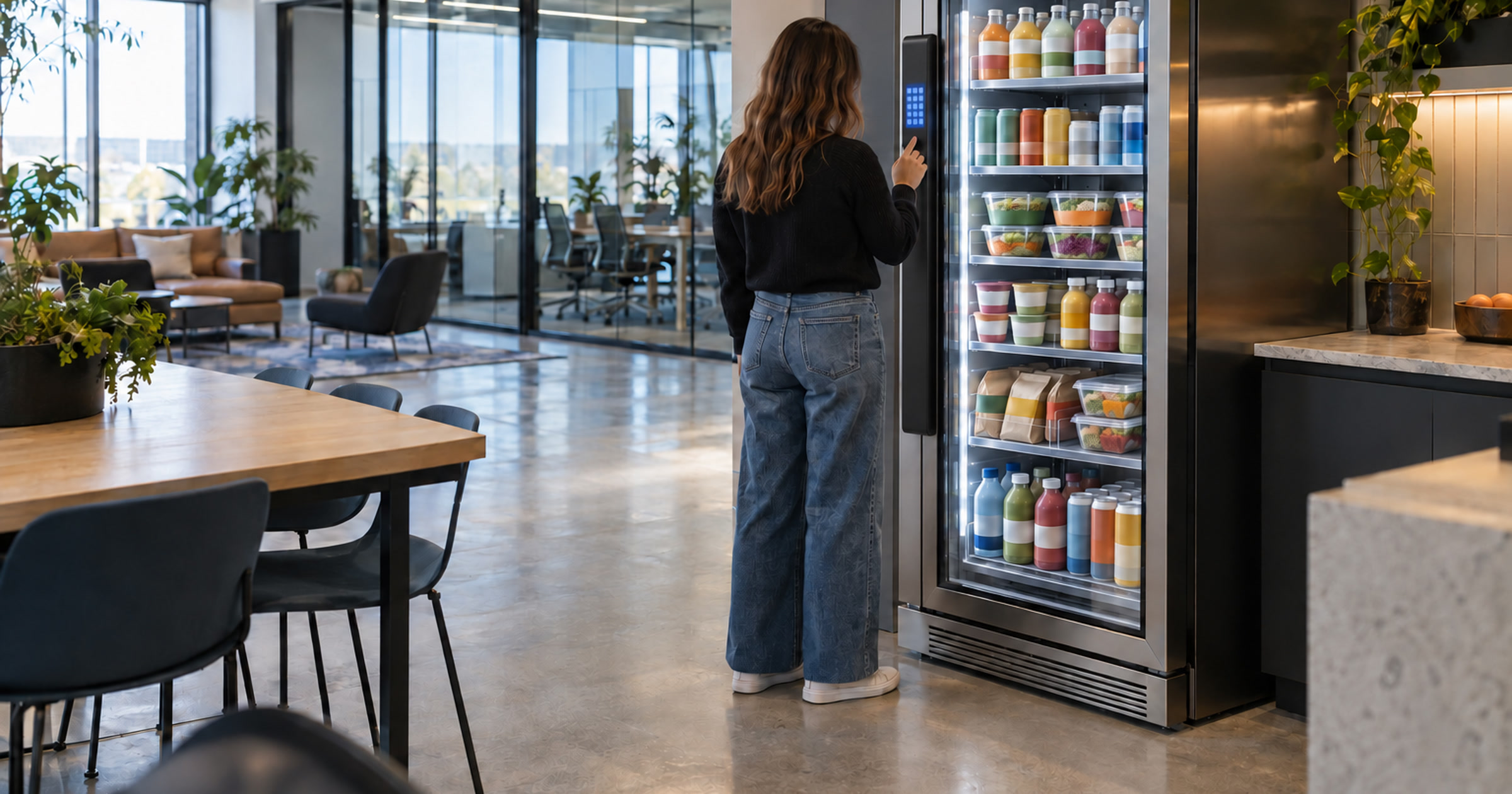
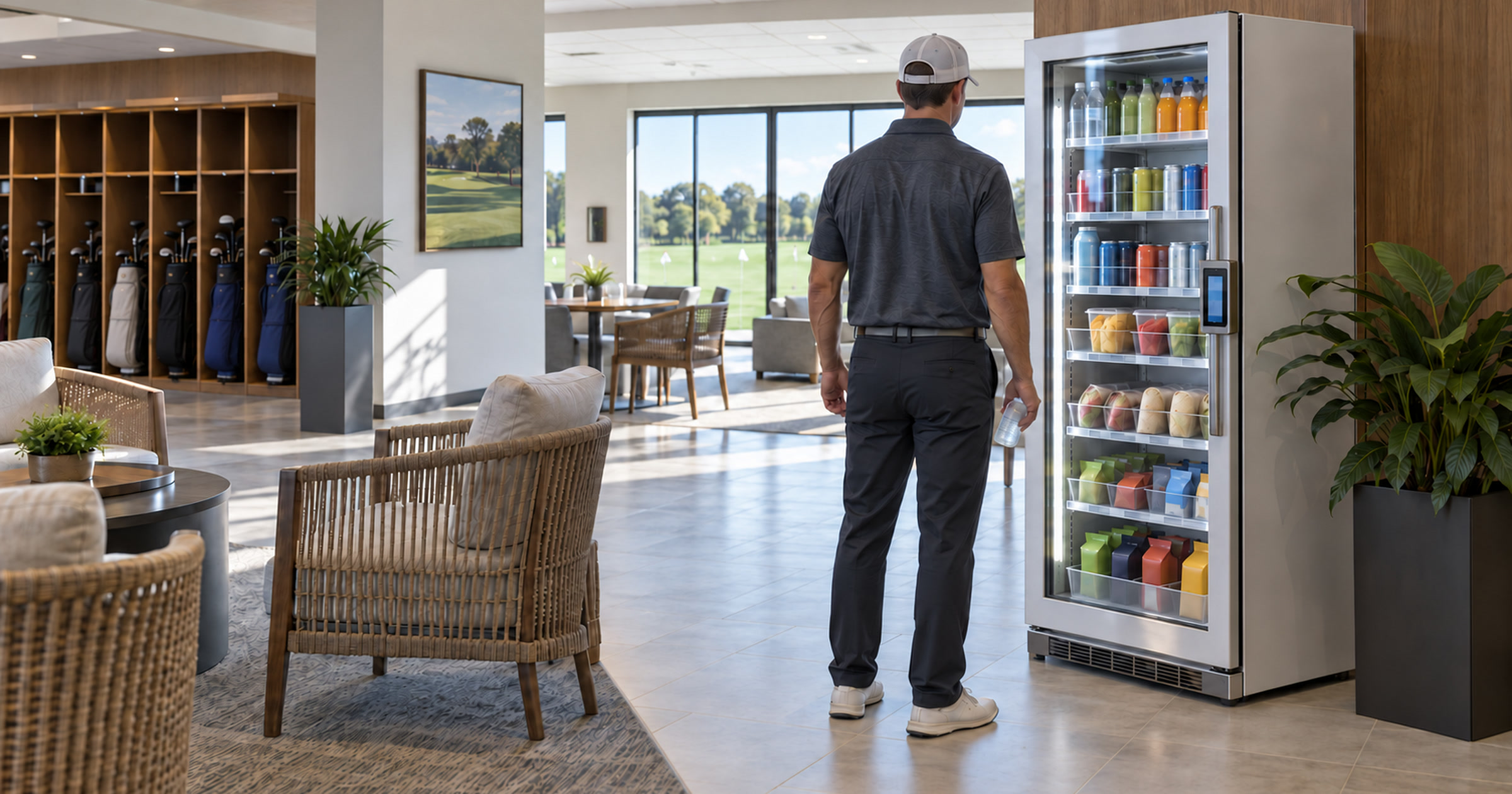
That sounds simple because it is. The machine holds the products, presents the selection, supports payment, and keeps the shopping moment contained. For many sites, that is exactly the point. A gym member wants a cold drink after a workout. A dealership customer wants something easy while waiting. A warehouse team may need quick access during a short break. Nobody needs a whole market experience for that.
Modern vending also gives operators cleaner control over stock, service, and product movement. With the right equipment and provider process, purchase and inventory reporting can help guide restocks and product changes over time. The machine does not “know” what people want. The data gives the operator better clues than guesswork.
A vending machine also protects the host from a common problem: sprawl. A bigger open setup can look great on day one, then slowly turn into a place where packaging, missing items, loose displays, or unclear ownership start creating work. A machine keeps the amenity tighter.
That makes vending a strong fit for locations with limited square footage, high traffic near a defined wall or corridor, staff-only access, or a host team that wants the food and drink amenity to stay low-maintenance.
For related placement thinking, Revvolto’s guide to small-space vending solutions explains why compact can beat bigger when traffic flow and service access matter.
Where a micro market can make sense
A micro market can work when the location has enough space, traffic, and buying variety to justify a more open format.
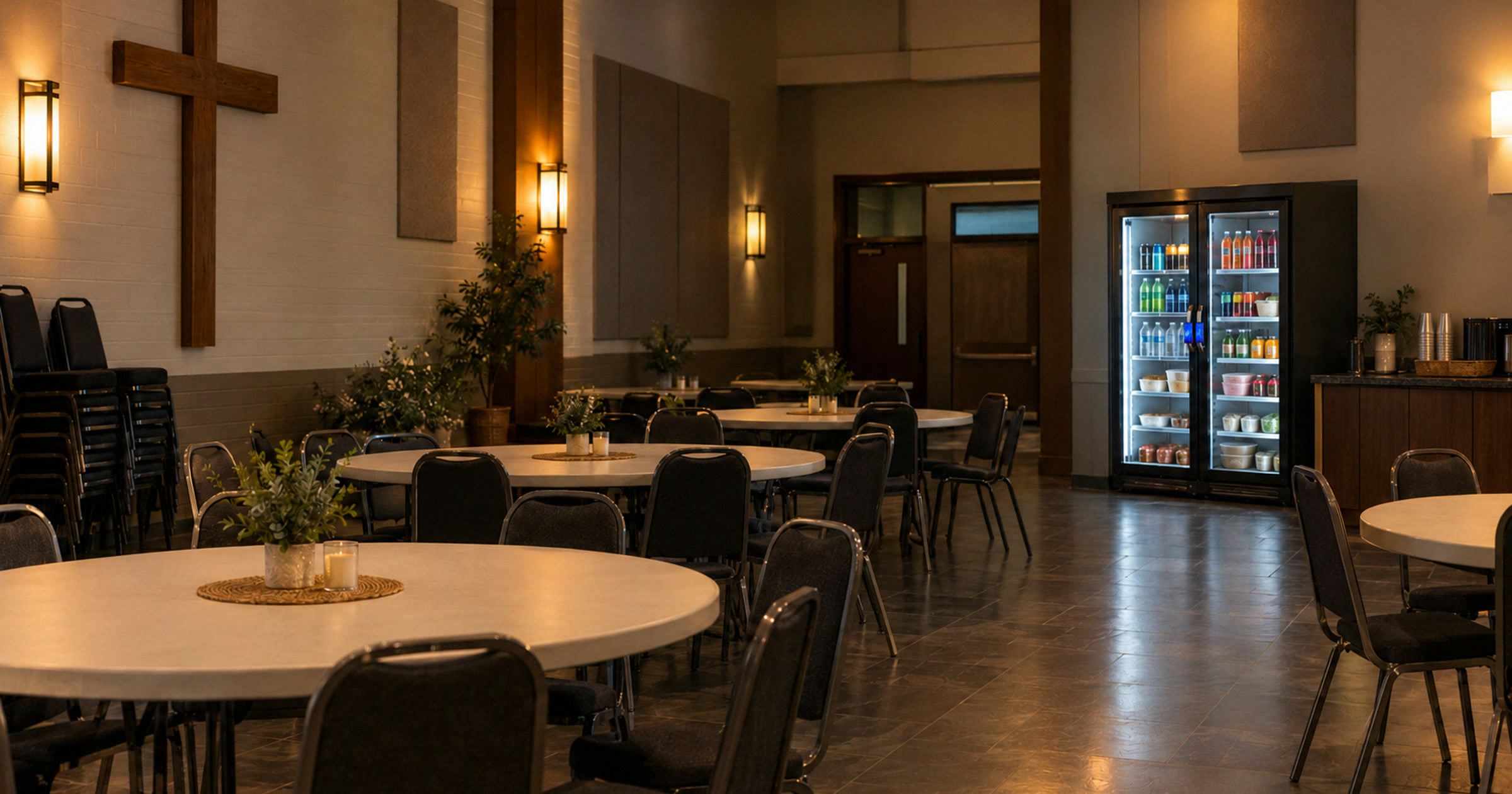
The appeal is clear. A market-style setup can show more products at once, support a broader mix, and feel more like a small self-serve pantry than a single machine. That can be useful in larger breakrooms, tenant amenity areas, hospitality spaces, or sites where people stay long enough to browse.
But the open format has trade-offs. It needs room for shelves, coolers, circulation, service access, and a clean shopping path. It also needs a clear plan for how products stay organized and how the area avoids becoming visual clutter. A market that feels premium in a rendering can feel messy fast if nobody owns the details.
Cold products add another practical layer. If refrigerated food or drinks are part of the plan, temperature-sensitive items need the right equipment and handling discipline. The U.S. Food and Drug Administration’s consumer guidance on refrigerator thermometers is a useful reminder that cold food is not just “another shelf.” Temperature context matters, even when the blog is not making a legal or equipment certification claim.
A micro market is usually better considered when the site has a strong daily audience, enough dwell time, and a location team that wants a broader amenity experience. It is not automatically the premium choice. It is the right choice only when the space and operating model support it.
The format decision usually comes down to control
The difference between micro market vs vending machine often comes down to control: control over space, products, access, payment flow, and host workload.
Vending is more contained. That can be a feature, not a limitation. The buyer gets a cleaner footprint, easier placement, and a defined service object. It is often a strong fit for hallways, breakroom corners, service lounges, compact lobbies, staff areas, and locations where the host wants the amenity to be useful without feeling like a buildout.
A micro market is more open. That can feel warmer and more flexible, but it also asks more from the space. It may need more wall length, more merchandising discipline, and a clearer plan for how people move through the area. If the site is too small, too public, or too hard to service, the market can become more complicated than the problem it was meant to solve.
Payment responsibility belongs in the decision too. Hosts do not need to become card-security experts, but they should know who owns the payment setup, support path, and issue handling. The PCI Security Standards Council explains that PCI standards apply broadly to entities involved in payment processing. For Revvolto content, that is a scope reminder, not a claim that any specific equipment or site is PCI certified.
A good provider should help the host think through these details before equipment shows up. If the answer is only “bigger is better,” keep asking questions.
How Revvolto helps hosts choose the right setup
Revvolto does not need every location to choose the biggest format. That is how you end up with expensive-looking clutter.
The better path is a site-fit review. Start with the audience, traffic pattern, space, access needs, product expectations, and service route. Then decide whether the location needs a vending machine, smart vending machine, smart fridge, smart cooler, compact market setup, or a mix of formats.
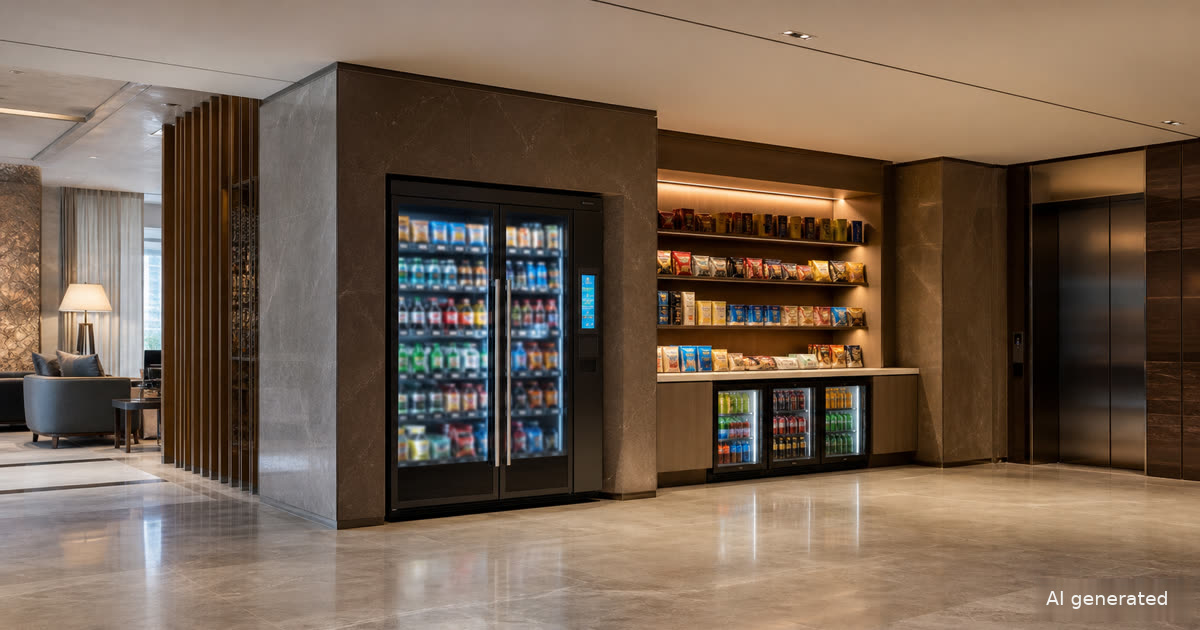
A hotel lobby may benefit from a polished grab-and-go alcove. A warehouse may need a contained machine that works around shift timing. An apartment building may need a clean amenity-area setup that residents can use without staff involvement. A clinic staff room may need compact access that does not interrupt patient flow or front-desk work.
Those are different buying moments. The format should respect that.
For qualified locations, Revvolto typically handles the equipment setup, stocking, restocking, payment tech, and service. The host gets a modern grab-and-go amenity without building an internal food program around it.
If your team is weighing a micro market vs vending machine, Revvolto can help review the site and recommend the format that fits the space, the users, and the workload you actually want to avoid. Start here: contact Revvolto.