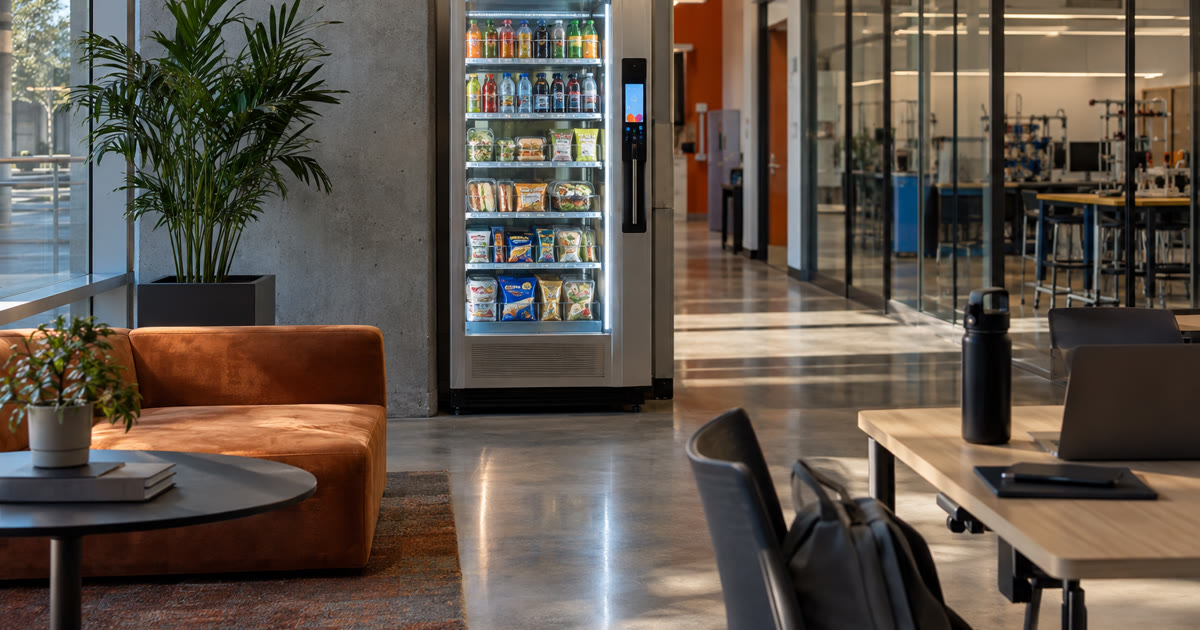
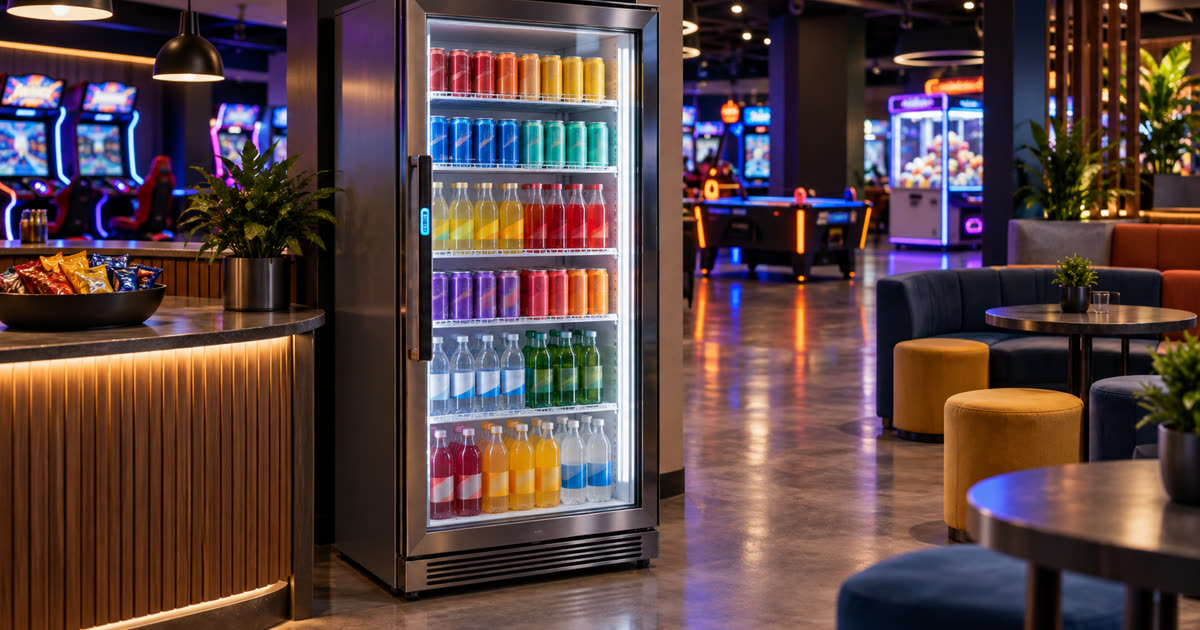
An office pantry sounds simple until someone has to keep it alive.
At first, it looks like hospitality. A few shelves, a fridge, some drinks, snacks, maybe better coffee if the budget is feeling brave. Then Monday happens. Someone notices the sparkling water is gone. Someone else asks who approved the new protein bars. The fridge gets crowded. The invoice lands in the wrong inbox. A half-open box of something begins a quiet second career in the back corner.
That is the real office pantry problem. Not the snacks. The ownership.
For Austin workplaces, an office pantry alternative should solve the convenience problem without creating a tiny grocery department inside the company. Offices, coworking-adjacent teams, professional services firms, showrooms, studios, and mixed-use workplace buildings often want better on-site food and drink access. They usually do not want another recurring task wearing a wellness hoodie.
The right setup may be smart vending, a smart fridge, a compact market, or a vending machine with a better product mix. The point is not to copy a Silicon Valley pantry photo from 2014. The point is to give people practical access to food and drinks without handing the host team a clipboard and saying, “Congratulations, you run retail now.”
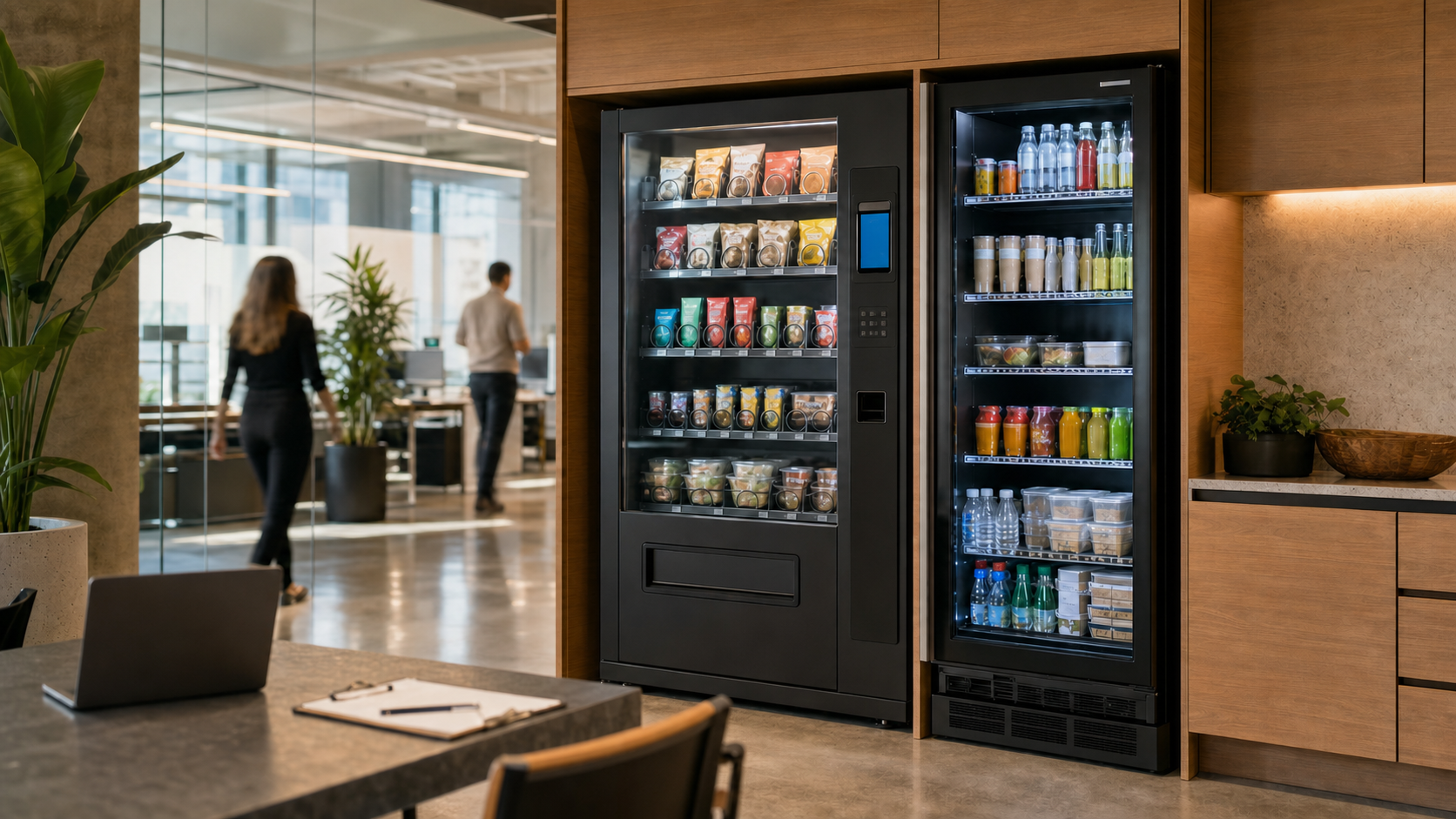
A stocked pantry is not free if your team manages it
The most expensive part of a traditional office pantry is not always the food. Sometimes it is the attention tax.
Someone has to notice what is gone. Someone has to order more. Someone has to receive it, store it, organize it, clean around it, answer questions about it, and explain why the snack everyone liked disappeared because one person ordered the wrong replacement from a portal last Thursday.
That work rarely belongs to one clean job description. It drifts. Office managers get it. Front desk teams get it. HR gets it. Facilities gets it. The most organized person within thirty feet gets it, which is how many workplace perks quietly become unpaid side quests.
That does not mean office pantries are bad. A well-run pantry can be useful. But it is only well-run if someone is actually running it. If the company does not want to manage purchasing, restocking, food handling decisions, vendor coordination, shrink, cleanup, and employee complaints about flavor democracy, then the pantry model is already arguing with the goal.
A better question is: what job are you trying to get done?
If the goal is “give employees and visitors easier access to snacks, drinks, and grab-and-go options,” then an operated vending or smart fridge setup may be the cleaner answer. Revvolto brings Austin-area businesses modern, cashless smart vending or smart fridge options — and, where the site supports it, compact market setups — typically at no cost to qualified hosts. Revvolto handles stocking, restocking, payment technology, and maintenance so the host does not become the operator.
That is the difference between an amenity and a chore with granola.
Refrigerated options need operational discipline, not office optimism
The moment an office pantry includes refrigerated food, the work changes.
Shelf-stable snacks are one thing. Refrigerated drinks, meals, yogurt, salads, or other chilled grab-and-go items bring temperature, rotation, product selection, and cleaning questions into the room. That does not mean an Austin workplace should avoid refrigerated options. It means the setup should be handled like real food access, not like someone added a fridge and hoped vibes would do inventory control.
The FDA says refrigerators should be kept at 40°F or below as part of food-safety guidance for slowing bacterial growth. That supports one narrow planning point: refrigerated workplace food options require temperature-aware handling and operational discipline. It does not prove food safety, cold-chain compliance, product safety, equipment validation, temperature performance, freshness, spoilage prevention, regulatory compliance, health outcomes, nutrition quality, Revvolto equipment performance, any smart fridge installation, any vending machine installation, any Austin office, any future site, any stocked item, any restocking workflow, any operator practice, or any product rotation decision. Before the fridge starts acting like it has a law degree, keep the source in its lane. Source: FDA
An operated smart fridge or vending setup gives the host a better structure for those questions. Who stocks it? Who rotates items? Who decides what belongs there? Who handles equipment issues? Who notices when people buy all the cold brew but ignore the extremely responsible drink that tastes like someone liquefied a board meeting?
A pantry can answer those questions if the company assigns the work. An operated amenity answers them by design.
Cashless access beats honor systems and mystery reimbursements
Traditional office pantries often create an awkward payment question: is the company paying for everything, subsidizing some items, charging employees, or pretending the honor system will remain noble under fluorescent lighting?
The honor system is charming until it becomes accounting folklore.
Cashless vending and smart fridge setups make the transaction cleaner. People tap, pay, grab, and move on. The host does not need a cash box, a spreadsheet, a reimbursement ritual, or a passive-aggressive note taped near the chips.
But payment convenience still needs support ownership. If a tap fails, a product does not vend, a charge looks odd, or a user has a question, the host team should not accidentally become the payment desk.
The PCI Security Standards Council describes PCI DSS as a global standard that provides technical and operational requirements designed to protect payment account data. That supports one narrow buyer point: payment roles, processor responsibilities, and support ownership should be clear before an Austin workplace adds cashless vending, smart vending, a smart fridge, or a compact market setup. It does not prove PCI compliance for any vending machine, smart vending machine, smart fridge, payment terminal, payment processor, app checkout, software dashboard, operator, Austin installation, future installation, Revvolto setup, checkout flow, card tap, mobile wallet payment, employee purchase, visitor purchase, customer transaction, refund process, charge dispute, support workflow, help desk response, host responsibility, or workplace policy. It also does not guarantee payment security, eliminate fraud risk, certify a provider, bless a payment experience, or make “tap-to-pay” a complete support plan. Source: PCI Security Standards Council
That is why the office pantry alternative conversation should include payment support before the unit goes live. Who handles refund questions? What should employees do if something fails? What information should the host never collect? Who monitors repeat issues?
If the answer is “ask the office manager,” congratulations, you built a vending machine and hired the nearest desk by surprise.
The better alternative should fit how the workplace actually moves
A good office pantry alternative is not one format. It is a fit decision.
Some workplaces need a vending machine with snacks and drinks because traffic is steady, space is limited, and people mostly want fast choices. Some need a smart fridge because refrigerated grab-and-go options matter more than a broad snack wall. Some need a compact market feel because the site has enough daily movement and the right space for browsing. Some need nothing yet because the headcount, access, or location does not support a useful setup.
That last answer is underrated. Not every space needs a bigger amenity. Some need the right-size one.
ENERGY STAR maintains product information for commercial refrigerators and freezers, including commercial equipment categories and buying considerations. That supports one narrow planning point: refrigerated workplace amenities involve equipment choices that should be considered before a business adds chilled food access. It does not prove energy savings, utility savings, environmental benefit, ENERGY STAR certification, equipment eligibility, equipment performance, refrigeration performance, Revvolto equipment performance, any smart fridge installation, any vending machine installation, any Austin workplace, any future site, any operating result, or any specific cost outcome. It also does not replace a site-specific equipment review. Source: ENERGY STAR
Before choosing a pantry alternative, Austin workplaces should ask:
- How many people are on site on a normal day?
- Do people need snacks, drinks, meals, or all three?
- Is the site active after normal business hours?
- Is there enough traffic to keep products moving?
- Where would people naturally pause without blocking circulation?
- Who should handle stocking, payment support, and maintenance?
- What should the host team never have to touch?
The right format should disappear into the daily rhythm. People use it because it is where they already are, not because someone launched an internal campaign asking adults to please enjoy the amenity.
Revvolto gives Austin workplaces the perk without the pantry job
The office pantry alternative worth caring about is not “another way to buy snacks.” It is a way to add food and drink access without making the workplace run a food program.
Revvolto helps qualified Austin-area workplaces add modern, cashless smart vending or smart fridge options — and compact market setups where the location supports it — without the host taking on the daily operating burden.
That matters because the failure point is rarely the idea. People like convenient food and drinks. Employees like not leaving the building for every snack. Visitors appreciate a better option than stale lobby coffee and whatever survived in someone’s drawer. The failure point is usually ownership.
Who stocks it?
Who cleans around it?
Who fixes issues?
Who handles payment questions?
Who changes the product mix when the building’s actual behavior laughs at the original plan?
With the right operator, those questions have an answer before launch day. Revvolto evaluates site fit, recommends the right setup, stocks and restocks the unit, runs the cashless payment experience, handles maintenance, and keeps the host out of the snack-management business. For qualified placements, the setup is typically provided at no cost to the host.
That is the real promise: not a prettier pantry. Less work.
If your Austin workplace wants better food and drink access without managing an office pantry, Revvolto can help evaluate whether smart vending, a smart fridge, or a compact market setup makes sense for the site. Start with the layout, the traffic, and the jobs your team should not inherit. The snacks come after that.
Talk to Revvolto about an office pantry alternative for your workplace