
Austin has another useful reminder sitting on today’s calendar: big stadium days are not only about the event. They are also about how people move before, during, and after it.
The City of Austin Center for Events listing for UT vs Texas State points readers to game information and parking details for the September 5 event at Darrell K Royal Texas Memorial Stadium. The same page also points to transportation and accessibility resources. Revvolto is not connected to the game or the venue. The buyer lesson is broader and practical: when a building pulls in waves of people, food access has to match the pause point.
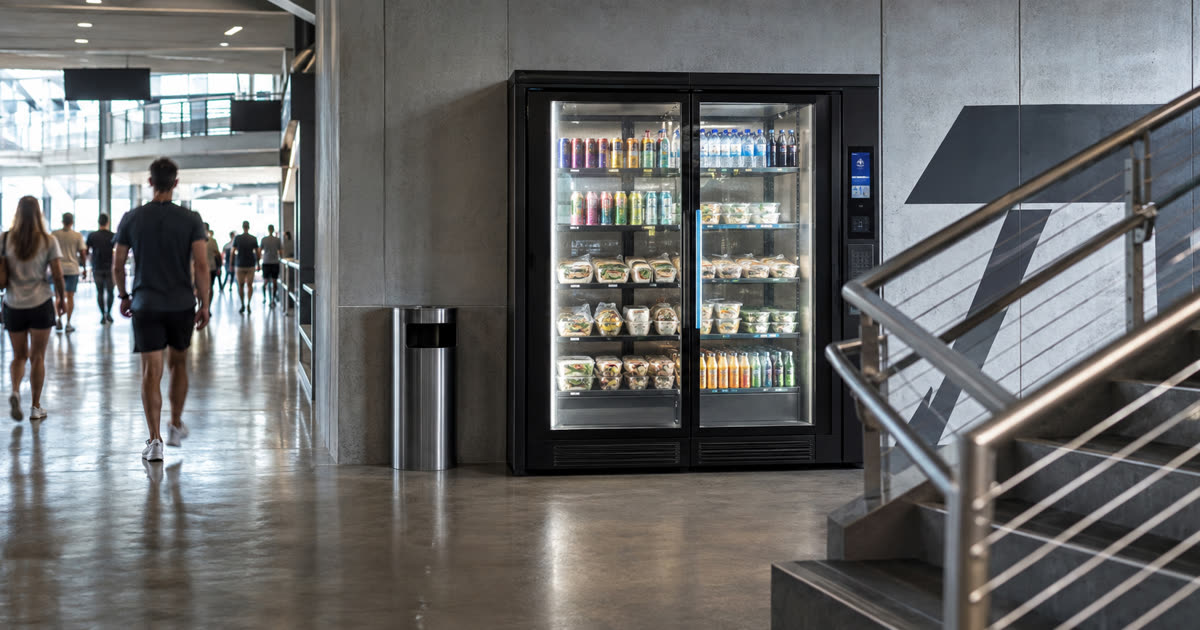
That is where smart vending earns attention. Not as a novelty machine tucked into a random corner. As a stocked, cashless amenity placed where people already stop.
Stadium days expose the real pause points
Large Austin event days make movement visible. People arrive early. Some wait for rides. Staff and vendors work long windows. Nearby buildings feel spillover traffic before and after the main event.
For property teams, that movement matters because food access is rarely solved by the nearest retail block alone. A visitor may not want to leave the building. A staff member may have a short break. A tenant may need something simple before heading into another scheduled window.
Smart vending and smart fridges fit this kind of operational gap because they do not require a staffed counter. They can serve a clear pause point while keeping the building team out of daily snack management.
The placement question is not “Where is there an empty wall?” That is how buildings end up with equipment people walk past.
A better question is: where does the building already create a natural pause?
For a stadium-adjacent property, that might be a lobby edge or shared lounge. A staff corridor can work when service access is clean. For a campus building, it could be the space between training rooms and common areas. For a mixed-use property, the answer may change by daypart.
Food access should follow the building rhythm
A smart vending plan works best when it follows the rhythm of the property. Event traffic is different from weekday staff traffic. A morning lobby pattern is different from an evening ride-share pattern. Weekend visitors move differently than regular tenants.
That sounds obvious until the amenity is placed like furniture.
The City listing is useful because it shows how many operational details surround one public event. Transportation changes. Parking rules matter. Access planning matters. Those are not vending details, but they are building-operation details. Food access belongs in that same planning conversation.
The mistake is treating food and drink access as a finishing touch. In high-traffic properties, it is part of how people experience the building.
A smart fridge near the right pause point can support someone who is between commitments. A cashless smart vending unit can give staff a reliable option when leaving the site is inconvenient. A small micro market layout can work when there is enough space and steady traffic to justify more variety.
None of that requires turning the building team into a snack department. Revvolto handles stocking and restocking for qualified locations. We also support payment technology and service. The property still has to choose the right spot. The operator should carry the ongoing work.
The best location is usually not the loudest one
High traffic does not automatically mean good placement. A crowded entrance can be the wrong spot if people are rushing through it. A beautiful lounge can fail if people do not use it during the hours when food access matters.
The right location has three things: a real pause, clean access, and enough regular use.
The real pause is the moment people naturally slow down. Clean access means the machine can be stocked and serviced without fighting the building layout. Regular use means the location has enough daily demand beyond one spike.
That last point matters. A stadium day can reveal a pattern, but it should not be the only reason to add equipment. Smart vending works better when event traffic supports an everyday use case instead of carrying the whole business case.
That is why nearby offices and campus facilities should look beyond the big day. Residential buildings and staff-heavy properties should do the same. The stronger question is how the building behaves on normal days and what event days reveal about the same movement.
If the answer is “people always stop here and there is no simple food option,” that is worth a closer look.
Smart vending should reduce work, not create it
A stocked amenity sounds easy until someone has to own it. Product selection and restocking can turn a simple perk into another task list. Payment issues, refrigeration, and service access can do the same.
That is the part buyers should pressure-test early.
Who decides the product mix? How often is the unit serviced? What happens when an item sells through faster than expected? Can the machine support cashless payment without adding a front-desk workaround? Does the placement leave enough room for service without blocking the normal route?
Those are practical questions. They are also the difference between a useful amenity and a machine that becomes building clutter.
Revvolto’s role is to make the food-access piece easier for qualified sites. We bring modern smart vending, smart fridge, and micro market options. We stock and maintain them. We help think through placement so the unit supports the way people already move through the property.
That matters most when the audience is mixed. Staff, visitors, and tenants do not all use a building the same way. A good smart vending setup respects that without pretending one machine solves every operational problem.
The local lesson for Austin properties
Austin event days are good stress tests. They show where people gather. They show which entrances actually matter. They show which areas become dead zones once the main rush passes.
The buyer takeaway is simple: do not wait until a building is busy to figure out food access.
If your property sits near a campus or venue, walk the area people already use. Mixed-use corridors and staff-heavy sites should get the same test. Watch where people pause. Check whether service access is realistic. Then decide whether smart vending, a smart fridge, or a compact micro market belongs there.
Revvolto helps qualified Austin-area locations add stocked, cashless food and drink access without making the building team manage the machine.
If you are planning an amenity around real movement instead of a leftover wall, tell us about the location.



