
A marina is not a normal lobby with a prettier view.
People arrive from dock paths, parking areas, and service counters. Some are there for ten minutes. Some are waiting out weather. Some are working the property while everyone else is headed for the water. If food access sits in the wrong place, it becomes a forgotten refrigerator with a view.
A smart cooler can work well in a marina, but only when the restock plan is part of the placement decision. The unit has to fit the way boaters, staff, and service crews already move through the property.
That starts before install. Not after the first empty shelf.
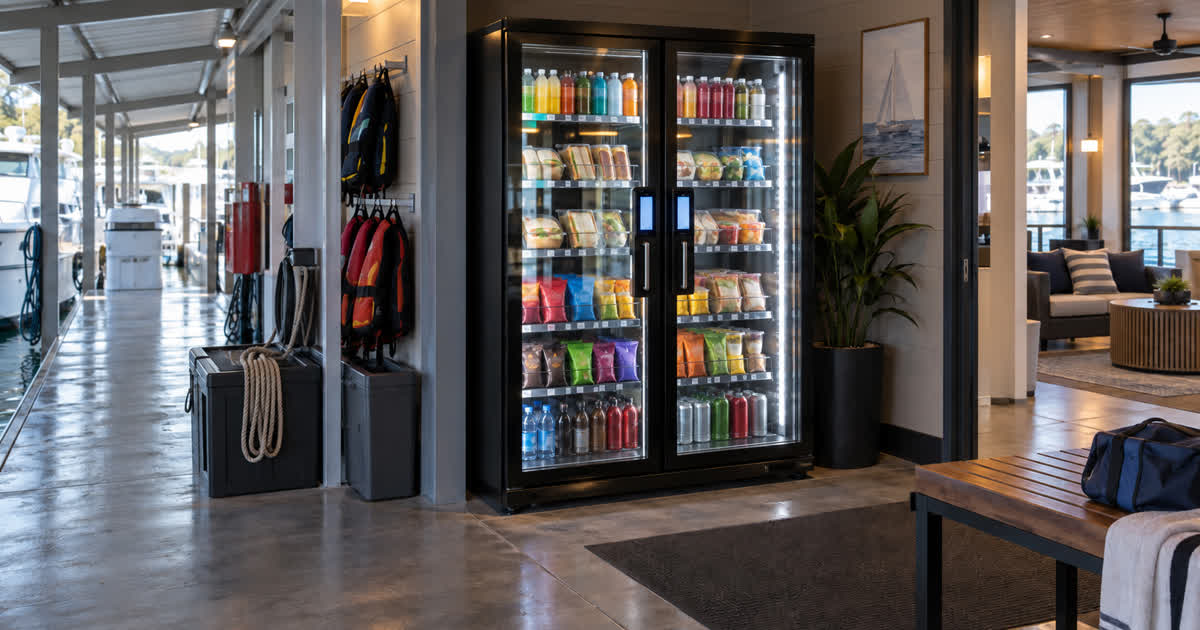
Plan around the dock path, not the prettiest wall
The best marina placement is usually close to a real pause point. That might be a clubhouse entry, harbormaster lounge, or dockside store alcove near the service route.
The wrong test is, “Where would this look good in a photo?” The better test is, “Where do people already slow down with a hand free?”
Boaters often carry gear instead of shopping like normal lobby traffic. Staff may be moving between dock checks and counter work. A smart cooler should sit where a quick stop feels natural, not where someone has to detour through the wrong room.
The U.S. Access Board notes that recreational boating facilities can include fixed and floating facilities, and that accessible routes connect site elements such as buildings and boat slips. That is not a vending rule. It is a useful reminder that marina movement is a design problem, not just an amenity decision.
For Revvolto, the practical placement question is simple: can someone find the cooler and keep moving without creating a pinch point?
If the answer is no, the machine belongs somewhere else.
Restocking has to be boring in the best way
A smart cooler looks easy from the customer side. The service side is where bad placements expose themselves.
A marina setup should give Revvolto a clean restock path. That means the unit cannot be trapped behind furniture, past a narrow door swing, or inside a room that is locked whenever the right person is off duty.
The useful restock route is predictable. A technician can reach the machine, reload products, and leave without turning the marina team into traffic control.
That matters because marina demand can be uneven. Weekend weather and seasonal traffic can change the product mix fast. The answer is not to overpromise that a cooler is always full. The answer is to place it where stocking and service can happen on a regular cadence.
That is the difference between a modern food amenity and one more thing the office has to babysit.
Weather-protected beats waterfront drama
A waterfront setting creates a temptation: put the machine where the view is best.
Do not start there.
Smart cooler placement should protect the unit and the customer experience. Covered indoor or semi-indoor areas usually make more sense than exposed dock edges. The goal is convenient grab-and-go access, not a machine fighting weather and foot traffic all day.
A marina clubhouse, store alcove, or protected dock-adjacent corridor can still feel connected to the property. It just gives the cooler a more practical job. People see it when they are already moving through the building, and service can happen away from the most chaotic part of the site.
This is where the buyer decision gets real. If the only available spot is exposed or awkward to service, the right answer may be to change the placement before adding equipment.
A smart cooler should make the marina easier to run. If the location adds daily friction, the location is doing the wrong job.
Payment support should be planned, not patched
Cashless vending is part of the appeal for marina environments. People may not want to wait at the counter for a bottle, snack, or quick meal. Staff should not have to pause dock work to sell a granola bar.
But payment support still has to be treated seriously.
PCI Security Standards Council material on contactless payments focuses on protecting payment data in contactless acceptance solutions. For a marina buyer, the practical takeaway is not to become a payments expert. It is to ask who owns payment setup, monitoring, and support before the machine goes in.
That is part of why Revvolto’s model matters. We handle the stocked unit and the service work for qualified locations, so the marina team is not building a snack program from scratch.
The machine should feel simple to the person buying. Behind the scenes, ownership should be clear.
The marina test: access, service, and fit
Before adding a smart cooler to a marina, ask three questions.
Can people reach it during the moments when food access matters?
Can Revvolto service it without disrupting dock operations or counter work?
Does the product mix fit the real audience using that area?
If those answers are clear, a smart cooler can support boaters and staff without turning the marina office into a convenience store. It gives people a fast option when they are between the dock and the rest of the day.
If the answers are fuzzy, fix the plan first.
Revvolto helps qualified properties add stocked, cashless smart coolers and smart vending with stocking and service handled by our team. If your marina or dockside property is looking at grab-and-go food access, tell us about the location at revvolto.com/contact-us.



