
Smart fridge apartment amenities work best when the unit sits where residents already slow down, not where it simply looks good on a leasing tour. The best location is usually near an everyday route such as the package room or resident lounge.
That sounds simple. It is not. A cashless refrigerated unit can look sharp and still become furniture with snacks inside if the location is wrong. Apartment and condo teams should judge the choice by resident movement and staff workload before they decide where the amenity belongs.
For suitable buildings, Revvolto can install and operate modern refrigerated grab-and-go or compact micro market setups. We handle refills and payment questions so the property team is not stuck managing a snack shelf with better lighting.
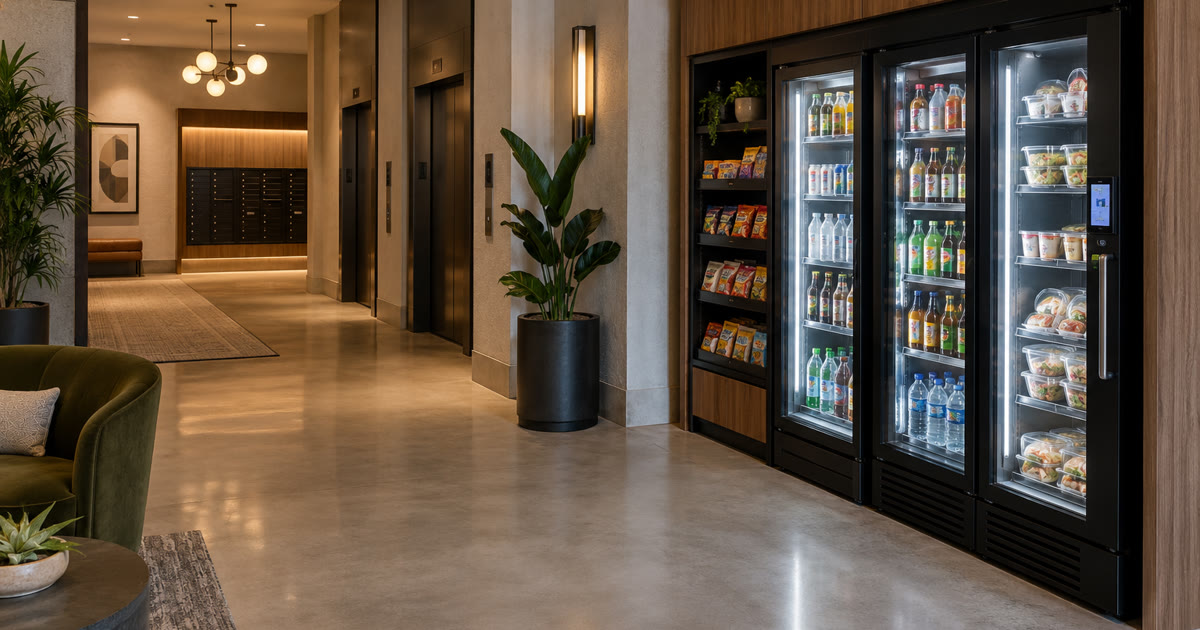
Start with the cooler location, not the empty wall
A refrigerated amenity should live close to a real reason people stop. In apartments and condos, that might be the package-room route after work or the lounge before an evening event.
The wrong test is, “Where can we fit the machine?” The better test is, “Where would a resident naturally grab something without making a special trip?” That difference matters. If the fridge is hidden in a dead hallway, residents may only notice it during a tour. If it sits near a repeated daily route, the amenity has a much better shot at becoming part of the building’s rhythm.
This is where managers should be honest about traffic. A beautiful corner does not automatically make a useful amenity. Look for areas with routine foot traffic and enough space for someone to open the door. The setup should feel intentional instead of tucked away.
Placement also has to respect access. The U.S. Access Board’s guidance on accessible routes is a useful planning reference when teams think through circulation, clearances, and reach around built environments. The unit is not an accessibility certification by itself, but the surrounding path should not create avoidable friction. The practical question is whether residents can browse and leave without the amenity blocking the room.
Keep stocking work out of the leasing team’s lap
A resident amenity can quietly create work for the wrong people. That is the part building teams should catch early.
If the unit is placed where restocking is awkward, every visit becomes harder than it should be. If boxes or furniture regularly crowd the approach, the operator route gets messy. If residents have to ask the leasing desk basic questions because the amenity is poorly labeled or poorly positioned, the amenity starts borrowing time from the staff it was supposed to help.
This is why the location should consider the operator side as much as the resident side. The fridge should be easy to reach for stocking. The area should have a clean approach. The property team should know who handles inventory and payment-support issues.
With Revvolto, the answer is straightforward: we operate the unit. That means the property is not buying snacks or guessing when to refill the cooler. The building still has to choose a good location, but the ongoing food-and-drink work does not have to become a leasing-office side quest.
Payment planning belongs in the same conversation. PCI Security Standards Council merchant resources are a useful reminder that card payments come with security expectations. Managers do not have to become payment experts, but they should choose an operator that treats cashless checkout as part of the amenity, not an afterthought.
Match the product mix to apartment life
Resident vending fails when it copies a generic office breakroom. People use the building differently. Some want a drink on the way out. Others want something convenient before using the lounge or gym.
That does not mean the product mix has to be huge. It has to make sense. A compact cooler near a package room might lean toward cold drinks and quick snacks. A resident lounge might support a broader grab-and-go mix. A building with evening use might value options that work after the leasing office closes.
The point is not to promise that every resident will use it. The point is to remove small food friction in places where residents spend time. Good amenity planning is not about adding one more object to the lobby. It is about making the building a little easier to live in.
Building teams should also avoid turning the setup into a fake convenience store. If the space is small, one cooler may be better than an oversized market wall. If the lounge is busy, the unit should not compete with seating or event flow. If the package room is tight, the cooler should not make the busiest part of the day worse.
The best placement makes the amenity feel obvious
A good smart fridge location does not require residents to decode it. They see the unit, understand the use, and can grab something without interrupting staff.
That is the standard. Not flashy. Not overbuilt. Useful.
For property managers and resident-experience teams, the location question should come before the equipment question. Where does the resident route already exist? Where can the unit be stocked cleanly? Where does the amenity help without taking over the room?
When those answers line up, smart vending becomes more than a nice-looking appliance. It becomes a low-friction amenity that supports daily building life while keeping snack operations off the property team’s desk.
If you are reviewing an apartment or condo property and want to know where a refrigerated amenity could fit, tell us about the location. Revvolto can help evaluate resident movement and product mix before the amenity lands in the wrong corner.



