
Civic buildings have a food-access problem that is easy to underestimate because the building usually looks organized from the outside.
Inside, the day is messier. Staff move through counters, offices, and back rooms. Some teams take breaks at normal hours. Others work around shift changes and evening meetings. A snack cabinet and one breakroom fridge can cover part of that. They rarely cover the whole operating day without turning someone into the unofficial food manager.
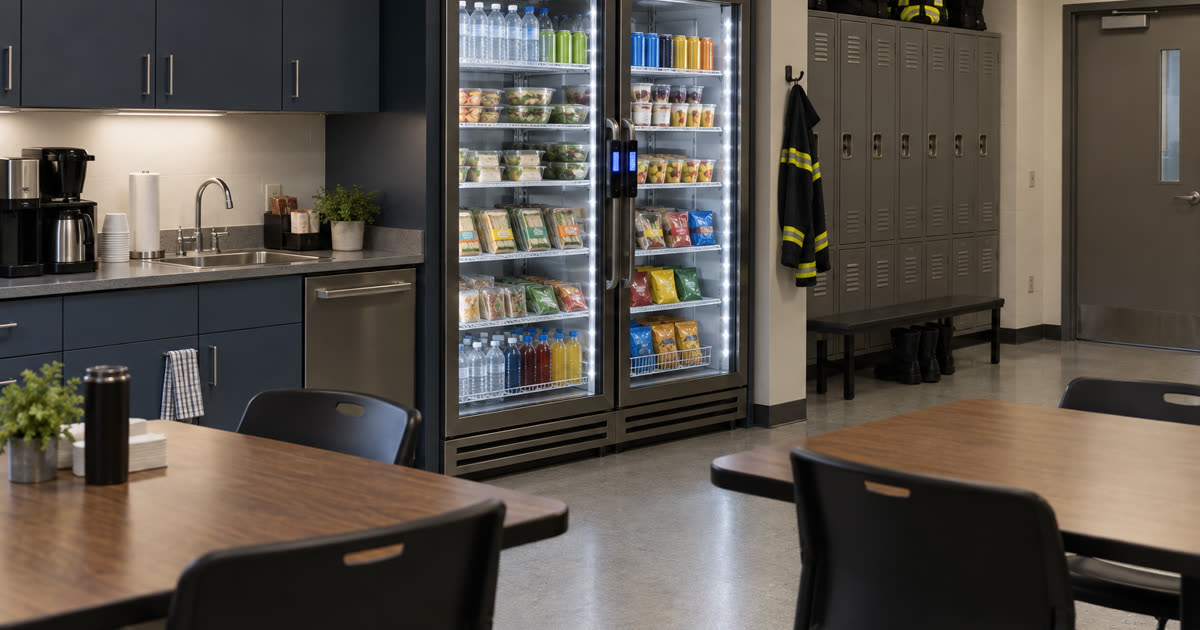
That is where a smart fridge or smart vending setup can make sense for a civic facility or public safety staff area. Not because the building needs another shiny amenity. Because staff food access has to work inside a building that already has rules, foot traffic, and service constraints.
Start with the staff path, not the machine
The first question is not which unit looks best. The first question is where staff already pause.
A civic facility may have one obvious breakroom. It may also have a back-office kitchenette or locker-adjacent corridor that sees more real break traffic than the formal lounge. Smart fridge planning should start with those patterns before anyone talks about equipment.
A good placement supports the path people already use. Bad placement asks them to detour across the building and then acts surprised when usage is weak.
For municipal and public-facing facilities, the staff path matters even more because the unit should not create confusion for visitors. A staff-only food access point belongs where it can serve employees without implying public concessions, agency endorsement, or a new service desk. The cleaner the placement boundary, the easier the unit is to understand.
Revvolto usually looks for the practical overlap: enough daily staff movement, a clear place to pause, and a service path that lets the unit be stocked without disrupting the building.
Keep service access boring on purpose
A smart fridge is only useful if it can be checked, stocked, and supported without becoming a building operations project.
That means facilities teams should think about the unglamorous questions early. Can a stocker reach the unit without crossing secured or sensitive areas? Is there enough room to open the door and load shelves? Is the placement protected from weather, crowding, and blocked access? Is power available where the unit can actually live?
Those questions are not small details. They decide whether the amenity stays simple or becomes another thing staff have to manage.
OSHA’s workplace sanitation rule is not a vending design manual, but it is a useful reminder that employee food and drink areas need basic cleanliness and order. The same practical mindset applies here. Put the unit where it can stay organized, where surrounding trash and spills can be handled, and where the food-access area does not fight the rest of the room.
This is also where Revvolto’s model matters. In qualified locations, Revvolto handles stocking and payment tech support. The facility still needs the right spot. The whole point is to avoid shifting food service work onto administrative staff.
Separate public access from staff convenience
Civic facilities often blend public and private movement in one building. That is normal. It is also why vending placement should be deliberate.
A smart fridge for staff should not look like an official public service. It should not sit where visitors assume it is part of a permit counter or city program. Public-facing buildings already have enough signs and questions. Food access should not add a new one.
For civic and public-safety facilities, the safest copy and placement logic is simple: staff amenity, not public promise. The unit can support people working inside the building without suggesting a relationship to any specific agency.
Accessibility still matters. The U.S. Access Board’s ADA guidance is a reminder that routes and clear floor space can affect how an object fits a room. Revvolto should not make site-specific ADA claims from a distance. But a facilities team can still use access basics as part of the early placement screen.
If the only available spot blocks a route or crowds a doorway, it is not the right spot. Convenience that creates friction is just clutter with better lighting.
Treat payment support like part of the room
Cashless vending works best when the payment experience is obvious without becoming the center of the room.
For civic facilities, that usually means a modern unit with clear product visibility and payment support that feels like part of the equipment. Staff should not need a tutorial. Facilities teams should not need to troubleshoot a mystery box every week.
Payment security is another reason to keep the language practical. PCI standards are broad payment-security standards, not a magic phrase to paste onto a vending placement. The right buyer question is more grounded: who supports the payment tech, how are issues handled, and how does the setup reduce staff involvement rather than increase it?
A smart fridge or smart vending unit should help the building avoid side chores. It should not create a refund desk, a stocked-by-committee pantry, or a shared fridge that slowly becomes everyone’s problem.
Revvolto’s role is to make that ownership cleaner. The building provides a qualified location with a useful staff audience. Revvolto brings the equipment, keeps it stocked on a regular cadence, and supports the payment layer.
The best civic placement feels quietly obvious
The goal is not to make a civic facility feel like a convenience store. The goal is to give staff a reliable food and drink option where the workday already pauses.
That could be a staff breakroom near a training area. It could be a back-office kitchenette in a municipal building. It could be a public safety station staff area where shift timing makes outside food runs inconvenient. The setting changes, but the test stays the same.
Does the unit support the staff path? Can it be stocked without drama? Does it avoid public confusion? Does it reduce internal chores instead of adding new ones?
Good vending is sized to behavior. Bad vending is sized to wishful thinking.
If your civic facility or public-facing staff area is trying to add better food access without creating another internal job, Revvolto can help evaluate whether a smart fridge or smart vending setup fits the space. Tell us about the location at revvolto.com/contact-us.



