
Lab and testing facility teams usually have a simple food access problem: people take short breaks, but the building layout can make every snack or drink run feel bigger than it should.
A smart fridge or smart cooler works best when it sits inside the staff break path, not near sensitive work areas or public-facing rooms. The goal is not to turn the lab into a market. The goal is to give your team a clean, contained grab-and-go point that fits the way the building already operates.
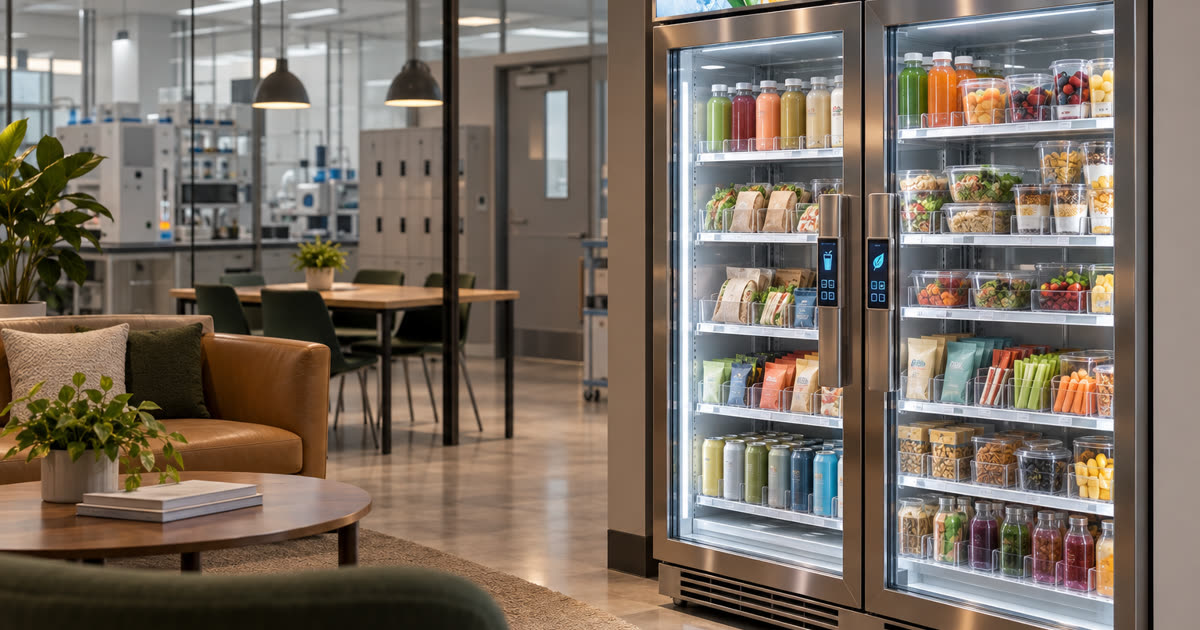
Put food access where breaks already happen
The best placement is boring in the right way.
Look for the staff lounge or corridor people already use when they step away from work. If the fridge sits too far from that path, people skip it. If it sits too close to controlled work areas, it creates friction for everyone who has to manage access.
A good location gives people enough room to choose quickly and move on. It also keeps the unit visible enough that the amenity feels intentional instead of hidden in a leftover corner.
Keep service access clean
The part buyers forget is service.
A smart fridge still has to be stocked and maintained. That means the placement should work for the people using it and for the team servicing it. A tight corner near restricted rooms may look convenient on a floor plan, then become annoying once carts and door swings enter the picture.
Revvolto handles stocking, payment support, and service for qualified locations. Your job is to give the unit a sensible home: enough clearance, a practical route, and a spot that does not interrupt normal building flow.
That sounds basic because it is. Basic is where a lot of amenity plans quietly win or lose.
For lab and testing environments, the service route matters because it protects both the amenity and the work happening around it. A restock visit should not send someone through controlled benches or sample handling areas. It also should not cut across secured doors or visitor check-in lanes. The best location lets Revvolto restock from a normal building path while staff use the unit from the side of the room that already supports breaks.
Clearance matters too. The ADA Standards are a useful planning reference for accessible routes and clear floor space, even before anyone talks about a specific machine. A smart fridge should not pinch a corridor or crowd a doorway. It also should not create a bottleneck where carts and people already meet.
Match the product mix to short shifts
Lab staff breaks are often short and uneven. Someone may have five minutes between test batches, while another person is coming off a longer documentation block. That usually favors compact food and drink options that do not turn the break area into a full meal operation.
A smart fridge can support that rhythm with cold drinks, fresh snacks, and grab-and-go items that fit the location. The point is not to overbuild the amenity. The point is to put useful options close enough that people can actually use them without leaving the building or relying on delivery for every small break.
Product mix should follow observed use, not a one-time guess. If morning crews buy more cold brew and yogurt, the inventory should reflect it. If late-day staff lean toward sandwiches and electrolyte drinks, the restock plan should notice. That is the advantage of a managed smart fridge over a forgotten machine in a back hallway.
Keep the lab boundary clear
Food access should support the workplace without blurring the line between break space and work space. That means keeping the unit in a staff amenity zone, not inside the lab environment itself. The cleaner the boundary, the easier it is for managers and facilities teams to understand how the setup fits.
This also keeps the conversation simple during site review. We are not asking a lab team to redesign its workflow around snacks. We are looking for the already-useful pause point, the practical service route, and the right unit format for the available room.
Choose the format around the room
Labs and testing facilities do not all have the same break setup. One building may fit a single smart fridge near a staff lounge. Another may work better with a compact smart vending setup near a training area or shared corridor.
The better question is not which format looks most impressive. It is which format your team will actually use without adding side work for managers or front desk staff.
That is where a site review helps. We look at traffic, service access, and product mix before recommending a setup. If the location qualifies, Revvolto typically installs and maintains the unit at no cost to the property.
For a lab manager or facilities lead, the best outcome is boring operational calm. Staff know where to grab something. The unit stays out of sensitive areas. Restocking does not interrupt controlled work. Payment support and product rotation are handled by the provider instead of becoming another internal ticket.
That is the difference between placing a smart fridge and merely buying equipment. Equipment creates a spot on the floor. A managed placement creates a reliable amenity.
If your lab or testing facility has the headcount but the break path is awkward, tell us about the location at revvolto.com/contact-us.



