
Austin has a lot of rooms doing more than one job.
A classroom becomes a founder workshop in the morning. A shared office turns into a board-training space after lunch. A community room handles volunteers and guests without much extra help behind the scenes.
That is the useful planning cue behind the City of Austin Economic Development Department’s announcement of Nonprofit Fundamentals Week. The city described a focused October 7 to 9 program for nonprofit professionals, plus year-round small-business classes. Revvolto is not affiliated with the city, the program, or any named training provider. The point for local facilities teams is simpler: when a room is used for training, people still need a clean break path.
A smart fridge or smart vending setup will not make a training program better by itself. That would be a silly claim. What it can do is remove a small but persistent friction point: where people get drinks, snacks, and simple grab-and-go food without adding another job to the person running the room.
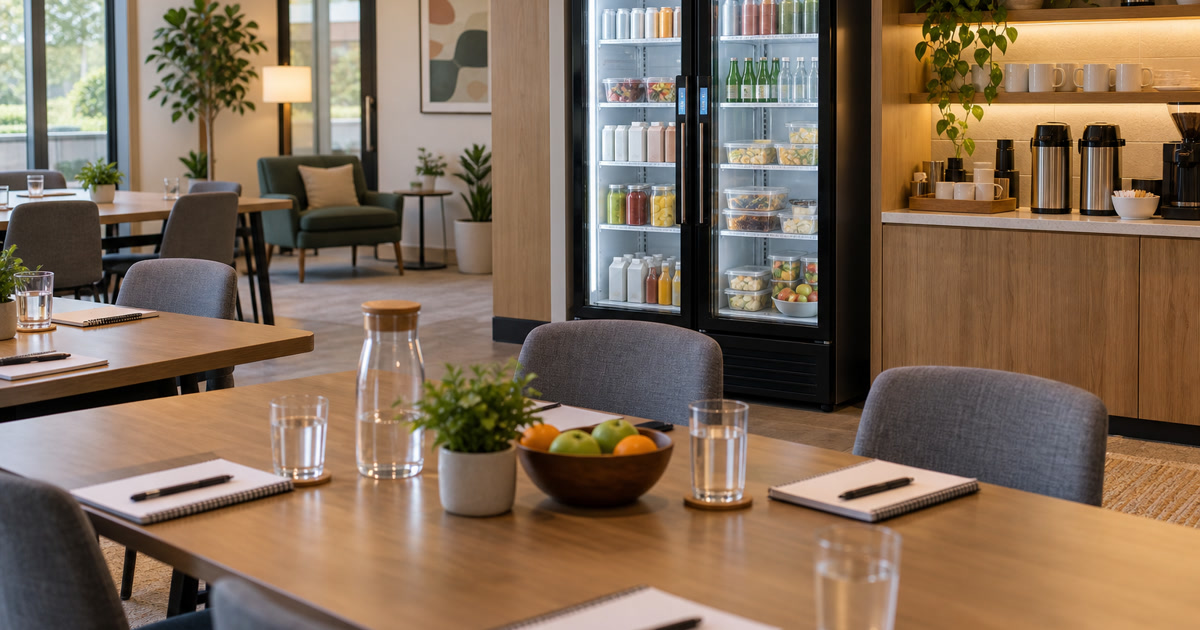
Training days create a different food-access problem
A normal office breakroom has rhythm. People know where the coffee is, when they usually step away, and which nearby options are worth the walk.
A training day is messier. People arrive at the same time. Breaks cluster. Some attendees are new to the building. The person leading the session is trying to keep the agenda moving, not answer snack questions or point everyone toward the closest store.
That is why training rooms, nonprofit offices, and shared community workspaces should treat food access as part of the room plan. Not the main event. Just a practical support layer.
The mistake is waiting until the room is already packed and then realizing the only options are a distant kitchen, a front desk stash, or someone making a run. That setup quietly taxes the team. It interrupts staff. It creates clutter. It makes the break feel like an errand instead of a reset.
A modern smart fridge can sit near the training path, not in the way of it. The best location is usually close enough to be obvious during a break and far enough from the speaker area that people are not crowding the front of the room. That small placement choice matters.
The best location is near the daily route, not the podium
For nonprofit training rooms and workforce-class spaces, the useful question is not “Can a fridge fit?” Most rooms can fit something.
The better question is: where do people naturally pause without blocking the class, the hallway, or the person coordinating the day?
That usually points to a side wall or a staff-adjacent break area. The unit should be visible enough that people find it on their own. It should also leave room for restocking without threading through a classroom setup.
This is where old vending thinking falls apart. A bulky machine parked wherever there is an outlet is not a plan. A smart fridge or modern smart vending cooler works better when the building team thinks about traffic, service access, and who owns the day-to-day details.
For spaces that run classes or small-business workshops, the right placement can protect staff time. People can grab something quickly. The room lead can keep moving. The facility team does not inherit another messy table of donated snacks and half-empty drink packs.
Service ownership matters more than the appliance
The machine is the visible part. The operating model is the part that decides whether people love it or ignore it.
Training spaces should not create snack duty for program staff. They already have enough going on. A useful setup needs clear ownership for stocking, payment support, and maintenance. Otherwise the fridge becomes another shared-space chore with a plug.
Revvolto’s model is built around removing that burden for qualified locations. We stock and maintain modern smart vending and smart fridge options, with cashless payment support and ongoing service. In many qualified placements, that can be done typically at no cost to the location.
That wording matters. Site fit still depends on traffic, placement, and service access. A small room used once a month is different from a training center with steady weekly activity. The honest planning question is whether the space has enough recurring use to support the amenity without forcing staff to manage it manually.
For Austin nonprofit teams and shared office spaces, that is the real buyer question: not whether snacks are nice, but whether the food-access plan reduces friction without creating another job.
What to check before adding a smart fridge
Start with the movement pattern. Watch where people enter, where they wait, and where they go during breaks. If the unit sits on that natural daily route, it feels useful. If it sits in a hidden corner, it becomes a scavenger hunt.
Next, check service access. A stocked fridge needs restocking room. It needs a clear path. It should not depend on squeezing through a live classroom or interrupting a registration table.
Then think about product mix. Training rooms usually need simple choices that work across a mixed group, from cold drinks to lighter grab-and-go options. No health claims. No magic productivity promises. Just practical food and drink people can use during a long day.
Finally, decide who should not own it. If the answer is the receptionist or program manager, the plan should be adjusted. A smart fridge only earns its place when it supports the day without handing the mess to someone else.
The Austin takeaway
The City of Austin’s nonprofit training announcement is a reminder that local workspaces are not just offices. They are classrooms, volunteer hubs, and community infrastructure.
Those spaces need practical support. Food access is one of the small pieces that can make a long training day easier without turning into a side project.
For qualified Austin-area locations, Revvolto can help plan a smart fridge or smart vending setup around the actual room and the service route behind it.
If your training room or shared workspace has steady traffic and no clean food-access plan, tell us about the location.



