Station No. 10 opened in Round Rock. That is local news with a practical lesson for any team commissioning a new staff facility: test meal availability after the building starts operating, not just when the floor plan looks finished.
Community Impact reported that the city unveiled the station on November 5. The approximately $9.1 million facility at 4380 E. Old Settlers Boulevard has four apparatus bays and will serve the city’s northeast. The official project page identifies it as one of the public-safety projects approved in the 2023 bond election.
Revvolto has no affiliation with the city or its development team. The opening creates a timely buyer moment. Once a public-safety building moves from plans to real shifts, managers can see where refrigerated vending would help and where it would get in the way.
A new building still needs an operating-day test
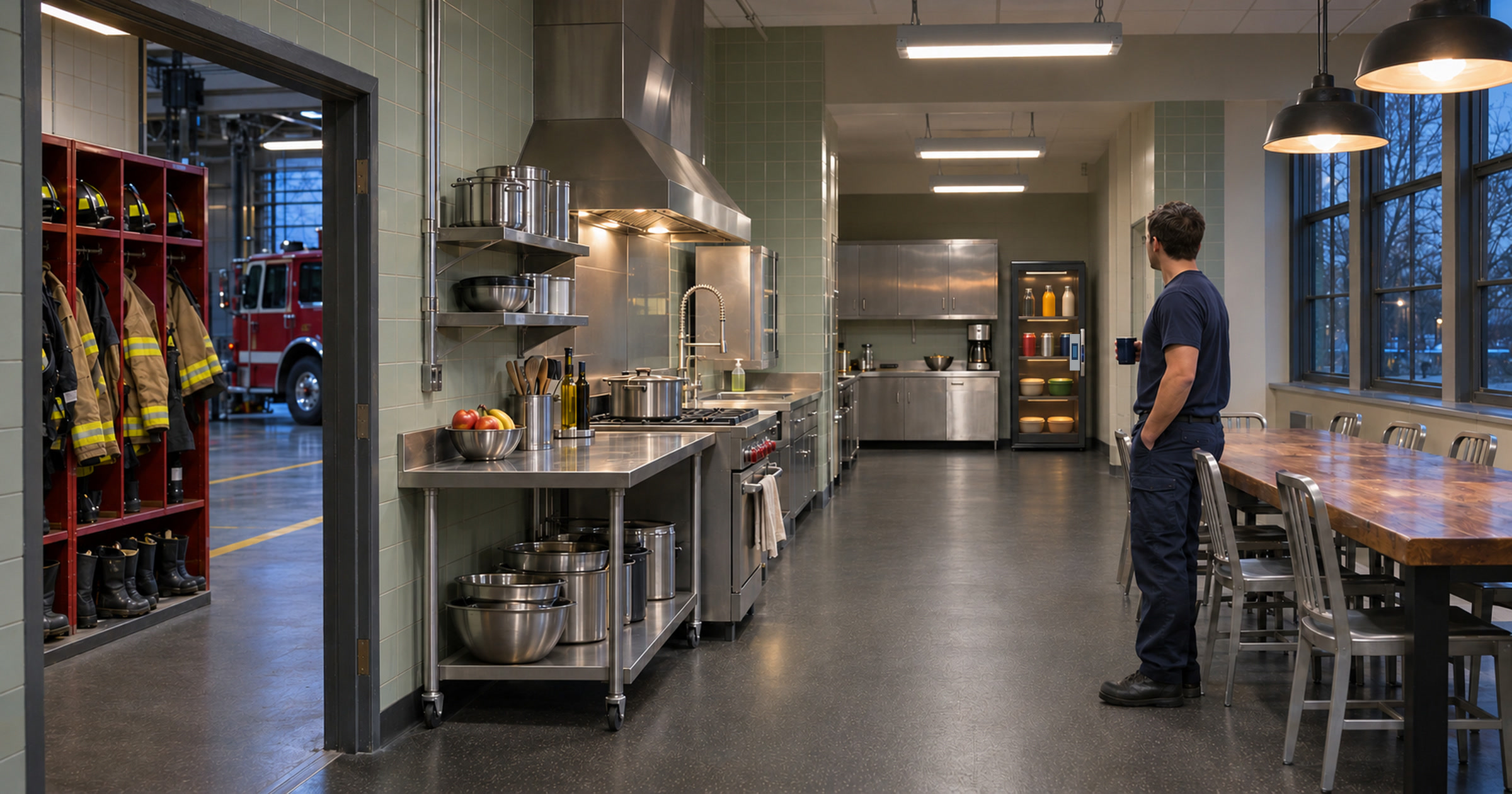
Architectural plans can show doors and counters. They also map equipment zones and circulation. They cannot fully predict how a team uses the building at 6 a.m., during a shift change, or after an interrupted meal.
That matters because a vending decision is not only about finding an empty wall. A good location has to work during the real day. Staff must be able to reach it without crossing an operational route. Restocking must be possible without blocking a doorway. The machine also needs enough room for normal use, cleaning, and service.
The opening of Fire Station No. 10 creates a better time for that review than the drawing phase. The building can now be observed under actual conditions. Facilities leaders can compare the intended layout with the movement they see.
Start with the staff zone, not the public entrance
A public-safety building has a clear operational purpose. Meal access cannot compete with that purpose or blur public and staff-only areas.
The practical question is narrow: is there an employee area where people already pause, with a clean replenishment route and no conflict with apparatus movement?
That might be near a break area. It could be beside a training room or another shared staff space. It should not be selected because it is the first visible corner inside the building.
Visibility matters, but operational fit matters more. A refrigerated unit placed in the wrong area becomes clutter. One placed where staff already stop can extend availability without assigning somebody to collect money, shop for inventory, or monitor a shared snack shelf.
Review the route from both sides
Facilities teams often review a location from the user’s point of view. That is only half the job.
Walk the route a staff member would take. Then repeat it with a replenishment cart. If either trip crosses a sensitive work area or creates a pinch point, the location is weak.
The review does not have to be complicated. Observe several parts of the operating day. Check whether the door can open fully. Confirm that nearby seating or stored gear will not drift into the clearance area. Note whether a replenishment visit would interfere with normal activity.
This is where a post-opening check earns its keep. It replaces assumptions with evidence from the building itself.
Match the format to the actual food gap
Not every staff facility needs the same setup.
A smaller cashless vending machine may be enough when demand centers on drinks and packaged snacks. A refrigerated cabinet can make more sense when the desired mix includes chilled meals or fresher grab-and-go choices. A larger micro market requires more room and more deliberate traffic planning.
The right choice depends on observed demand, available space, and replenishment access. Bigger is not automatically better. The best format fits the shared staff space without becoming another facilities project to manage.
Revvolto provides modern cashless smart fridges and vending options, then handles stocking and ongoing service. Qualified locations can often receive a setup at no cost to the property, but placement and qualification still matter. No building is a fit just because it has employees and a blank wall.
Make the first month a measurement period
Opening day is not the end of facilities planning. It is when the building begins producing real evidence.
For the first several weeks, watch where staff naturally take short breaks. Pay attention to times when the kitchen or existing food option does not line up with work. Identify whether people leave the building for a basic drink or meal because nothing convenient is available inside.
Those observations beat guessing at demand. They help a provider recommend the right equipment, product range, and visit rhythm.
They also help facilities teams reject a bad idea early. If the only available location disrupts an operational route, the answer may be to wait or choose another break space. A credible assessment can end with “not here.”
Keep ownership clear
A food amenity fails quickly when responsibility is vague.
Someone should know who handles equipment support, who replenishes inventory, and where staff report a problem. That does not mean the building team should absorb those jobs. It means the service model should answer those questions before installation.
Revvolto’s model is designed to keep those recurring tasks with the provider. The property supplies a qualified location and normal coordination. Revvolto maintains the equipment and stock based on the agreed setup.
That separation is especially important in a public facility. Staff time has a better use than tracking snack inventory or troubleshooting a payment issue.
The buyer decision after a ribbon cutting
Station No. 10 is a specific city project, not a Revvolto case study. Its opening still points to a broadly useful decision.
When a new facility begins operating, do not rush to fill every amenity gap. Run a short on-site check under real conditions. Find a staff location that supports availability without interfering with the building’s primary work. Confirm the replenishment route. Then choose the smallest format that solves the observed problem.
That is how equipment planning stays practical. The machine is not the plan. The operating day is.
If your Austin-area facility has moved from construction into real use, Revvolto can assess the space and tell you whether a stocked, maintained cashless setup fits. Request an assessment.