
Austin’s newest cybersecurity training space is a good reminder that some teams work in long, focused blocks. The University of Texas at Austin announced a new home for its Regional Security Operations Center, where student analysts and professional staff work on public-sector cybersecurity work.
This is not about UT needing Revvolto. It is about what specialized work areas reveal for any facility team planning staff food and drink.
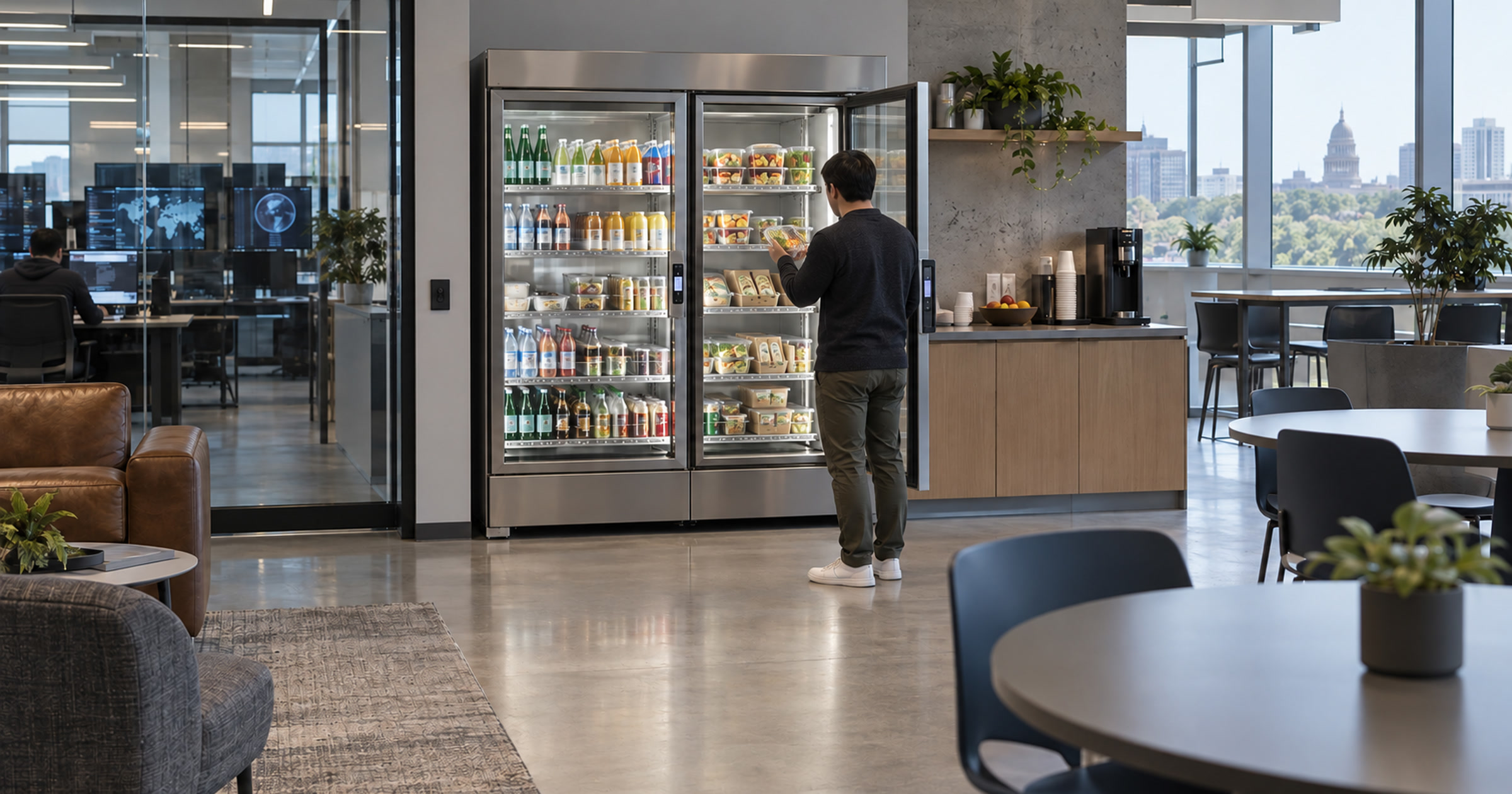
When people are tied to monitoring rooms or training schedules, leaving the building for every quick meal is not a small interruption. It can break the rhythm of the day. A managed fridge or cashless vending setup gives the building a cleaner option: stocked meals and cold drinks nearby, without asking the team to run a snack corner on the side.
Focused teams do not use the building like a lobby
A technical team may spend hours in one area, then move into a meeting room or quiet support area. That rhythm is different from a public lobby. The food setup should fit the people who are actually inside the workday.
For a cybersecurity office or operations center, the question is not whether the room looks impressive. The question is whether people can get a drink or quick meal without leaving the controlled part of the building every time.
That does not mean every specialized facility needs a cafeteria. Many do not have the volume or labor for that. A smart fridge can cover the middle ground. It gives the team a stocked option near the lounge while keeping payment and restocking outside the staff’s daily chore list.
The best setup feels boring in the right way. People know where it is. The unit is easy to see. Restocking does not block the room. Nobody has to remember who bought drinks last week.
There is also a morale point hiding inside the operations point. People notice when the building makes the long day easier. A nearby cooler will not fix every workplace problem, and it should not be sold that way. But it can remove one small daily annoyance: the scramble for something quick when the clock is tight and the team still has work to finish.
Put food near the real stop, not the showpiece room
Technical spaces often have rooms built to impress visitors. Those are rarely the best place for vending. The better spot is usually quieter: a team lounge or a small seating area people already use between work blocks.
That placement matters. If the machine sits too far away, people skip it. If it is too close to the main work area, it becomes noise. If it is tucked behind furniture, the building has bought an amenity people forget exists.
A glass-front vending unit should sit where the day naturally resets. That may be near the coffee area. It may be beside a seating zone. It may be close to a training room where people move between sessions.
The service side matters too. A modern unit needs door swing and electrical planning. It also needs enough room for restocking. Those details are easier to solve before furniture and room layouts are locked. Waiting until the end usually turns a simple amenity into a compromise.
Product mix should match focused work
Teams doing focused technical work do not need a snack wall trying to be cute. They need practical food and drink that fits a serious day. Cold drinks and simple meals usually matter more than novelty.
That is where managed service earns its keep. The building team should not have to guess what disappeared first or turn one employee into the informal inventory manager. The unit should be stocked on a regular cadence. Payment should be cashless. The product mix should adjust as usage becomes clear.
For staff teams, the right assortment is not about pretending the room is a store. It is about covering the moments when people have ten minutes, not forty. A good setup helps the day keep moving without adding another system for employees to babysit.
Revvolto’s role is the practical part. We help qualified Austin-area sites plan the format and install the equipment. Then we handle stocking, payment tech, and maintenance.
Plan the amenity before the workday hardens
The UT cybersecurity space is a local example of a broader planning point: specialized teams need support rooms that respect how the work actually happens. Once a team is already operating, the easiest vending location may not be the best one.
Facility teams should ask a few plain questions early. Where do people step away from the main room? Where can a glass-front fridge be seen without becoming a distraction? Where can restocking happen without interrupting the work?
Those questions are small, but they shape whether the amenity gets used. A well-placed unit can make the lounge more useful. A poorly placed one becomes a machine people pass on the way to something else.
For cybersecurity offices and technical work areas, food and drink planning belongs in the room plan, not in the leftover-space plan.
If you are planning a break room or technical team space in the Austin area, tell us about the location at revvolto.com/contact-us.



