
Austin public venues are not just offices with better floors. A lobby can become a gallery, a meeting point, and an evening reception space in the same week. When a room works that hard, food access should be part of the plan instead of a folding-table fix.
The local hook is the City of Austin’s 2026 to 2028 public art page for its current arts display. The official city page says the 19th exhibition features more than 100 artists from across Greater Austin, opened with a public reception on Oct. 2, 2026, and keeps artwork in the first-floor atrium during regular business hours.
Revvolto is not connected to the exhibition. The lesson is the building use case. If a public space invites people to linger, the drink and snack plan belongs in the same conversation as layout and staffing.
Civic galleries move differently than offices
Office breakrooms are usually predictable. People know where the fridge is. They know when the rush happens. They know who cleans up when a tray goes sideways.
Civic gallery spaces work differently. A first-floor atrium can serve staff in the morning, visitors during business hours, and event guests after work. The same room can shift from quiet viewing to reception traffic in a few hours.
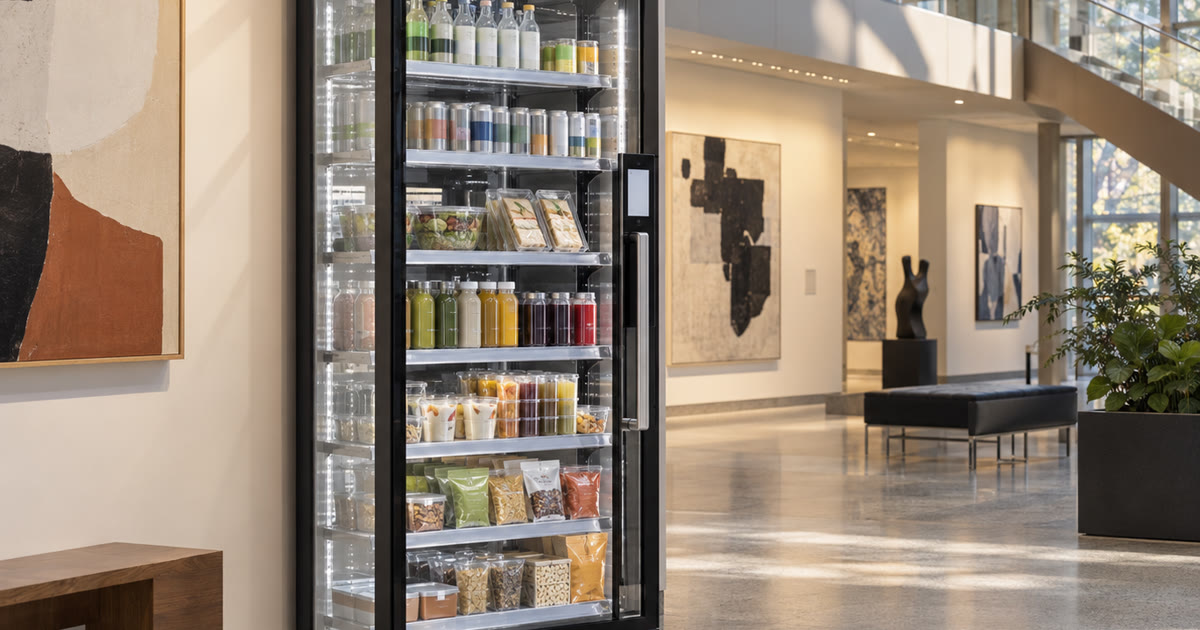
That mix matters for vending placement. A modern unit should not block an art route, crowd seating, or look like a forgotten appliance. It should sit where people already stop, with room for the door swing and a clean service route.
The best spot is not always the most visible wall. Sometimes it is the alcove just outside the atrium. Sometimes it is the staff-adjacent corridor that still works for approved public use. Sometimes the right answer is a compact cooler instead of a larger market setup.
A public building has to protect the room first. The vending plan should respect that.
The real issue is service ownership
Public and community buildings already carry a lot of small operational work. Front desks answer questions. Facilities teams handle rooms and after-hours setup. Event staff think about furniture and guest flow.
A snack table adds more work than it looks like. Someone buys items. Someone stores them. Someone watches the mess. Then the same basic question comes back all night: where can people get a drink?
A stocked, cashless cooler changes that job. With the right site fit, we install and maintain the unit. We also handle stocking. Your team is not asked to become a tiny convenience store in the corner.
That matters most in mixed-use civic spaces because the audience keeps changing. Staff, visitors, and meeting attendees do not all arrive with the same schedule. A smart fridge or glass-front cooler can serve the weekday rhythm and the occasional event spike without asking reception staff to manage inventory.
That does not mean every public building is a fit. It means the question should be asked before the room is already open and the workaround is a folding table.
Plan around where people stop
The exhibition is a strong local signal because it turns a municipal space into a public viewing destination. But the better buyer lesson is not about one reception. It is about the everyday waiting points that remain after opening night.
People stop near lobby seating. They wait near elevator banks. They gather outside meeting rooms before the next agenda item. Staff step into back-of-house corridors when leaving the building is not realistic.
Those moments are where vending earns its keep. If the unit is too far away, people ignore it. If it is too close to the main entry, it creates clutter. If it sits in a room that gets locked after hours, it stops matching the building’s actual rhythm.
For civic and gallery-style spaces, use a plain test. Can people reach it naturally? Can the team service it cleanly? Does it make the building easier to use without making the room feel commercial?
If the answer is yes, the amenity can feel like part of the building. If the answer is no, even a good machine becomes visual noise.
The unit should look like it belongs there
A civic gallery has a different bar than a warehouse breakroom. The equipment has to look maintained, modern, and quiet enough for the room around it. That usually means a clean glass-front cooler, a small touch panel, and simple product organization.
Product mix should also match the setting. Public buildings and community venues usually do better with simple grab-and-go choices than a novelty assortment. Drinks, light snacks, and prepared items can support longer visits without turning the space into a food court.
The same rule applies to micro markets. A larger setup can work in the right tenant amenity room or staff area, but it has to fit the space. If the building only has a narrow lobby edge, a compact smart fridge may be the better move.
That is where Revvolto’s role is practical. We look at the room, the traffic pattern, and the likely audience before recommending the format. The point is not to place the biggest possible amenity. The point is to place the one people will actually use.
What to check before adding vending to a civic space
Start with the building’s real movement. Where do visitors wait? Where do staff take breaks? Which areas stay open during evening events?
Then check the operational fit. The vending machine needs power, room to open, and enough demand to keep the assortment fresh. The team also needs a clear answer for who handles restocking and maintenance. If that answer is the reception counter, the plan is already wobbling.
Finally, check the tone of the room. A gallery-style lobby has to feel welcoming first. The cooler works when it supports that feeling instead of competing with it.
Austin’s civic and arts spaces keep showing how buildings can do more than one job. Food access should be planned with the same care. If your building has a public lobby or event room where people already stop, tell us about the location. We will help you decide whether a smart vending setup, a smart fridge, or a compact micro market belongs there.



