
Austin is asking for public input on mobility hubs, and that is a useful signal for any building team near changing travel patterns. The SpeakUp Austin mobility hub survey describes hubs as places that connect transportation options with public-realm support.
That list is not a vending plan. It is not a Revvolto partnership. It is still a planning cue.
When more people shift between transportation modes and nearby destinations, the building entry starts doing more work. A smart vending Austin plan can support that movement inside the private spaces where people already pause, without turning the front desk or property team into the snack department.
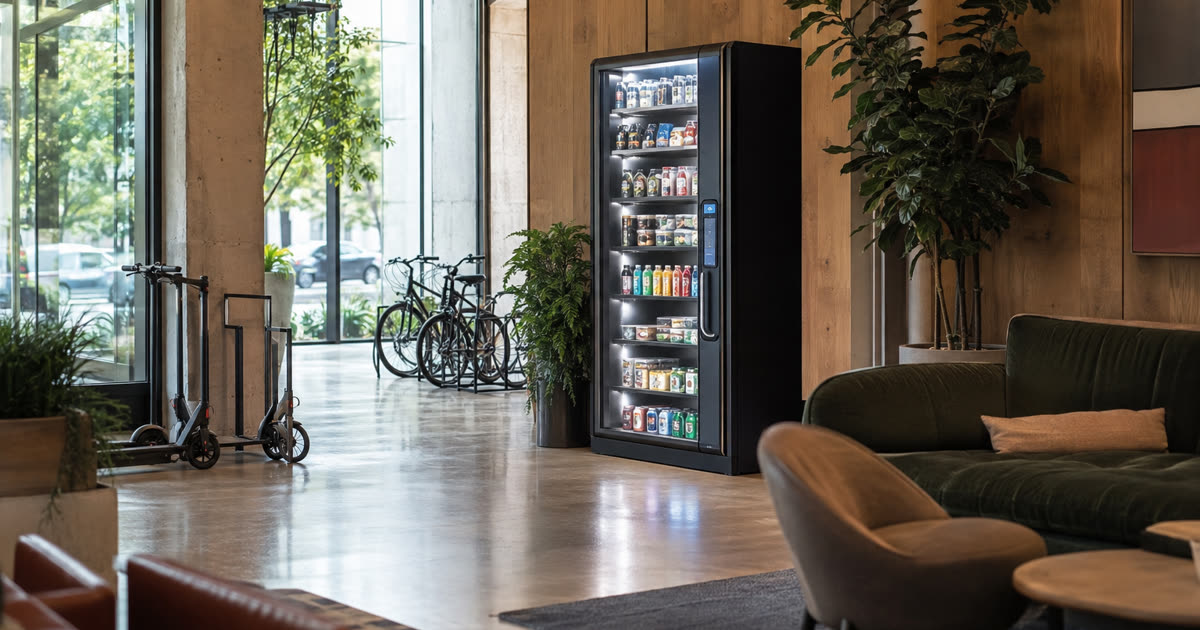
Mobility hubs make building entries work harder
A mobility hub is about connection. People are not simply arriving. They are switching modes, checking timing, or passing through before the next thing on their calendar.
That matters for nearby office, residential, and shared-work buildings. The food access question is not just, “Is there a cafe nearby?” The better question is, “Where do people already stop long enough to want something simple?”
Sometimes that answer is a tenant lounge. Sometimes it is a package-room path. Sometimes it is a small common area near bike storage, elevators, or a shared kitchen. The placement should respect building flow instead of fighting it.
Smart vending works best when it sits on a natural route. If people have to hunt for it, the amenity becomes decoration. If it blocks circulation, it becomes friction with a plug. The sweet spot is visible, easy to reach, and simple to service.
For Austin buildings near mobility changes, that means food access should be part of entry planning early. Not after the room layout, access plan, and tenant operations are already locked.
Food access should match the pause path
The SpeakUp Austin page points to practical hub support such as seating, shade, and information. Those details point to a bigger idea: people value useful support when they are between places.
Private buildings can apply the same logic indoors. A smart fridge, smart cooler, or compact micro market does not have to dominate a room. It can sit where the pause already happens.
That might be near a coworking coffee bar where members arrive between meetings. It might be in a resident amenity lounge close to the mailroom. It might be in a staff area where teams come in before a shift and do not have time for a full off-site stop.
The product mix should follow the route. Morning-heavy traffic may call for cold coffee, water, and light breakfast items. Late afternoon movement may call for drinks, snacks, and simple grab-and-go options. Staff-only spaces may call for a different mix than visitor-facing spaces.
None of that requires a big public claim. It requires watching how people actually move through the building.
A traditional snack setup can get messy fast. Someone has to buy inventory, watch stock, and handle the awkward payment problems. That is how a nice amenity quietly becomes one more recurring task.
Revvolto’s job is to keep that workload off the building team. We handle stocking, payment support, and unit service for qualified locations.
Smart vending is a service decision, not a gadget decision
The hardware matters. Clear glass, cashless payment support, and stocked refrigerated options make the amenity feel modern instead of dusty.
But the service model matters more.
If a building adds food access near an entry or tenant amenity area, someone must own the routine. Products expire. Popular items move faster than expected. Payment issues happen. The equipment still needs attention. The difference between a useful smart vending setup and a forgotten appliance is usually service ownership.
That is why building teams should ask practical questions before choosing a location.
Can the unit be restocked without interrupting the main path? Can people see it without crowding the entry? Is there enough daily traffic to support a stocked program? Does the room have clean access, power, and a layout that will still make sense six months from now?
For mobility-adjacent buildings, those questions get sharper. Arrival patterns can change. Common areas can pick up more waiting. Tenant lounges can become spillover spaces. A vending location that looks fine on a floor plan may feel awkward once real foot traffic shows up.
The best time to solve that is before the room is treated as finished.
How Austin building teams can use the mobility hub cue
The useful move is not copying a public mobility hub indoors. Please do not turn your lobby into a transportation science fair.
The move is to audit the private pause points around the same behavior. Where do people wait, switch gears, or enter after a trip? Where do staff take a quick break when leaving the property is inconvenient? Where do visitors naturally look for a simple drink without asking the desk?
From there, food access becomes a layout decision. A smart fridge may fit a narrow staff room. A glass smart vending cooler may work better in a visible tenant lounge. A compact micro market may make sense when the room has enough traffic, space, and service access.
The setup should feel intentional. Not hidden in a hallway. Not jammed beside a doorway. Not placed where restocking creates a daily obstacle course.
Austin’s mobility hub planning is a reminder that movement is part of the built environment. People do not experience buildings as static boxes. They experience them as routes, waits, and small decisions made on the way to something else.
Smart vending belongs in that conversation when it supports the route.
Revvolto can help plan the food access before the room is done
Revvolto brings modern cashless smart vending, smart fridge, and micro market options to qualified business and property locations. We handle stocking, payment support, and service so the amenity does not become another internal job.
For Austin buildings near mobility hubs or busy tenant entrances, the right question is simple: where will people already pause?
Answer that first. Then choose the format.
If your building is planning tenant amenities or entry-adjacent food access, tell us about the location at revvolto.com/contact-us.



