
Recreation facilities have a weird food problem hiding in plain sight.
They are busy in waves, not in one tidy lunch window. A youth sports night can fill the lobby. A senior program can end right before the next class checks in. Staff may be moving between the front desk, activity rooms, and court areas while visitors are looking for something simple to grab.
That does not mean the front desk should become the refreshment counter.
A cashless machine or cooler gives these facilities a cleaner option. Food and drinks sit in the right part of the building. Payment stays cashless. Restocking and service stay with Revvolto. The point is not to make the facility feel more commercial. The point is to keep small food and drink requests from landing on the wrong people.
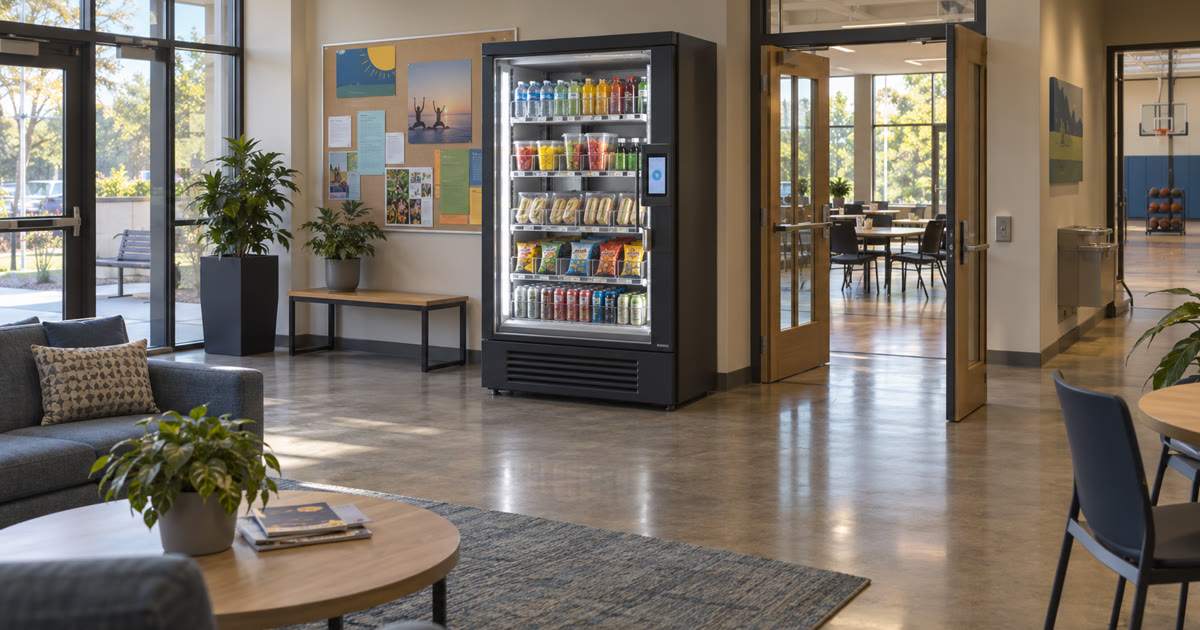
Why community centers are different from office breakrooms
These buildings serve mixed traffic. Staff use the space one way. Visitors and program participants use it another.
That changes the vending decision.
An office breakroom can usually serve one known group. A recreation facility may have evening classes, weekend events, and lobby waiting time in the same week. The right setup has to be easy to find without getting in the way of check-in or room turnover.
That is where an unattended cooler beats the “put snacks somewhere and hope it works” approach. A modern unit can sit near the lobby or a room entrance. People get a quick cashless option without adding a staffed counter.
The buyer question is not, “Can we fit a vending machine here?”
The better question is: where can food access help the building without creating another job for the team?
Put the unit where waiting already collects
The best location is usually close to a natural stopping point. That might be a lobby seating area, a court corridor, or a hallway outside multipurpose rooms. The unit should be visible enough that people notice it before asking staff where to get a drink.
It should also stay out of the way.
These buildings may have stroller traffic and mobility aids in the same entry zone. Add deliveries and class turnover, and a bad location gets annoying fast. Placement should leave clear walking space and avoid blocking queues or room entries. General accessible-route guidance from the U.S. Access Board is a useful reminder here: floor space and route clearance are not decorative details. They affect whether an amenity feels helpful or annoying.
That does not make vending placement a legal certification exercise. It means the unit should be planned like part of the room, not dropped into the first empty corner.
Revvolto can help evaluate whether the better fit is a single cooler, a vending unit, or a compact market-style setup for eligible sites.
Keep front-desk staff out of food requests
The most expensive version of a simple amenity is the one that quietly creates work.
If staff have to collect cash and answer product questions, the amenity starts to feel like a second job. If they also have to chase service issues, it becomes a bad trade. Community recreation teams already have enough moving parts.
A managed setup should reduce those interruptions. Cashless payment keeps the transaction simple. Inventory visibility helps guide restocking. A service plan gives the site a clearer answer when something goes wrong.
That service ownership matters more in a public-use building than it does in many private workplaces. When traffic comes in waves, small issues get noticed quickly. An empty cooler after a program night or a confusing payment screen at a busy desk creates frustration in exactly the wrong place.
The goal is simple: give people a better option without making the staff become the operator.
Choose products for the building rhythm
Community centers do not all call for the same product mix.
A fitness-heavy recreation center may lean toward cold drinks and quick snacks. A facility with long evening programs may call for more grab-and-go food. A building with staff who stay through back-to-back programs may benefit from a mix that works for workers as well as visitors.
The product mix should follow the actual use pattern. That is one advantage of working with a stocked and maintained provider instead of trying to manage a small retail corner internally. Revvolto can adjust assortment over time based on what moves, what sits, and what the building can reasonably support.
There is also a restraint piece here. Public recreation buildings do not benefit from a loud retail wall screaming for attention. The better version is useful, clean, and easy to understand.
The practical test before adding smart vending
Before a recreation facility adds a machine or cooler, the team should answer three questions.
First, where do people already wait without blocking access? Second, who owns restocking and service when the building is busy? Third, does the product mix match the programs people actually use?
If those answers are clear, the amenity can become a quiet operational upgrade. If they are fuzzy, the machine can become one more object for staff to explain.
Revvolto is built for the better version: modern cashless vending and cooler options, stocked and maintained by us, typically at no cost to qualified locations.
If your center has steady traffic and the check-in team is already fielding food questions, tell us about the location at revvolto.com/contact-us.



