
Austin’s newest construction information push is a reminder that building access is not static. The sidewalk may be open, but the routine can still feel different.
Austin Transportation and Public Works published its October 5 Austin Mobility News with two useful signals for downtown property teams. The edition points readers to CTXGO for construction information. It also notes upcoming work affecting traffic at Fifth Street and Lavaca Street.
That is not a vending story on its face. It is a building-operations story when people still have to move through the day while the street outside changes.
The local lesson is simple: when movement around a building gets less predictable, the inside plan matters more. A stocked on-site option can keep a small errand from becoming a second trip through a disrupted block.
Detours hit the small breaks first
Construction rarely breaks a whole day at once. It usually breaks five-minute decisions.
Someone who would normally step out for coffee may decide the detour is not worth it. A service worker may stay inside because loading access changed. A tenant team may avoid leaving together because the sidewalk route feels awkward.
None of that needs a dramatic headline. It is the boring operational stuff that shapes how a building feels.
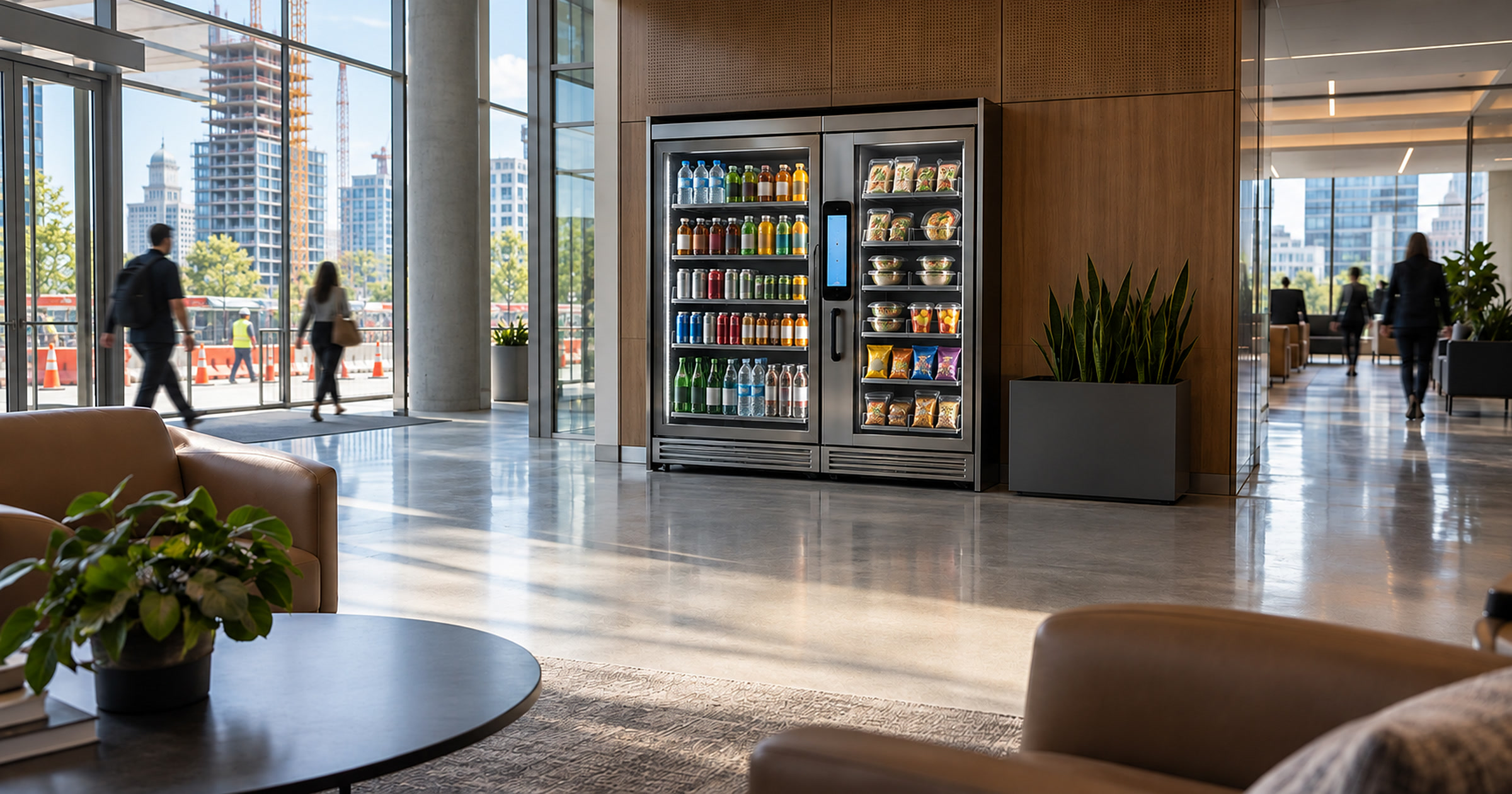
For downtown offices and mixed-use properties, a modern vending unit can cover that gap without turning reception into the snack department. The unit belongs near a natural waiting point. That might be a lobby edge. It might be a staff route. It might be a tenant amenity area.
The point is not to replace local restaurants. The point is to give people one simple option when leaving the property becomes less convenient.
That difference matters during construction weeks. The best amenity often removes a tiny friction point before it becomes another complaint.
Start with the route people actually use
A construction notice should not make a property team panic-buy amenities. It should make the team walk the building.
Which entrance gets busier when the usual curb lane is awkward? Which elevator bank turns into the waiting spot? Which staff route quietly carries more traffic when regular access gets messy?
Those questions matter more than the machine model. A good setup starts with movement. The vending format works best when it meets the building’s real routine instead of demanding a new one.
That is where older vending thinking falls apart. A large machine in a dead corner may technically be available, but it does not solve the break problem. A compact glass-front cooler near the right doorway can do more useful work than a bigger setup nobody passes.
Revvolto’s role is to help match the format to the space. Some buildings call for quick drinks and snacks. Others need a broader stocked mix. Some locations may not have enough daily use to justify placement at all. The useful answer comes from traffic and service fit, not from forcing the same unit into every property.
Ownership matters when the block is busy
The more a building is dealing with outside friction, the less it needs another inside chore.
That is the part buyers often underestimate. Inventory, payment support, and upkeep all become real work if nobody owns them. A snack shelf that looks friendly on Monday can look abandoned by Thursday. A fridge that nobody manages can turn into a problem instead of an amenity.
A managed program is different because the responsibility is clear. Revvolto provides the equipment for qualified locations. We stock it, maintain it, and keep the payment experience modern.
For construction-affected downtown buildings, that ownership can be the difference between a useful amenity and a messy side project. The goal is not to add clutter. The goal is to make the building easier to use when the street outside is less predictable.
A good setup should also respect the space. It should not block circulation. It should not rely on staff to explain everything. It should look intentional and be easy to maintain.
That is the standard. Anything less is just furniture with snacks, and downtown teams have enough furniture already.
Plan before the detour shows up
The Austin Mobility News item is useful because it shows how often movement changes around the city. Some changes are large. Some are one intersection. Some last a weekend. Some quietly reshape a tenant’s routine for weeks.
Building teams do not have to solve the whole city. They have to solve their own inside route.
Before the next street-work notice hits your block, look at the places where people already slow down. A smart fridge may belong near a lobby edge. A glass-front unit may make sense near a staff break area. A compact micro market may fit a larger amenity room.
It may not belong in the prettiest corner. It belongs where a real person would use it when leaving is inconvenient.
That is the practical test. If the amenity saves a trip and reduces desk interruptions, it is worth exploring. If it only photographs well, skip it.
Revvolto helps Austin-area properties evaluate whether smart vending, a smart fridge, or a compact micro market makes sense for the building. The best fit depends on daily use and service access.
If a street project or tenant movement is exposing a gap in your building’s setup, tell us about the location at revvolto.com/contact-us.



